Gigafact Expands Efforts to Strengthen Local Journalism and Combat Online Misinformation

As misinformation increasingly spreads across social media platforms and online forums, Gigafact is working with local news organizations across the United States to provide short, evidence-based fact checks designed for modern digital audiences.
The initiative focuses on helping local newsrooms respond quickly to rumors, public confusion, viral claims, and civic misinformation circulating online through a format known as “Fact Briefs.” These concise reports are designed to answer public questions clearly and directly, often with a simple “yes” or “no” response backed by verified sourcing and local reporting.
Gigafact describes its mission as rebuilding “factual foundations locally” at a time when many Americans now receive information primarily through platforms such as X, TikTok, Instagram, BlueSky, WhatsApp, and other rapidly moving digital spaces.
The organization partners with nonpartisan local media outlets to identify trending claims and public concerns within communities. According to Gigafact, more than 2,000 Fact Briefs have already been published through collaborations with regional and investigative news organizations across the country.
Participating publishers include outlets such as The Colorado Sun, Wisconsin Watch, The Nevada Independent, CT Mirror, Fort Worth Report, El Paso Matters, MinnPost, Oklahoma Watch, San Jose Spotlight, and several others focused on state and local reporting.
The Fact Brief model is intentionally designed around changing media consumption habits. Each brief remains under 150 words and presents a direct factual clarification on issues ranging from local policies and elections to healthcare, legislation, environmental concerns, and public safety.
Recent examples include fact checks on whether Connecticut Senator Richard Blumenthal voted to block U.S. arms sales to Israel, whether Missouri issues traffic violation warnings through text messages, and whether funeral pyres are legal in Colorado.
Gigafact argues that this format not only counters misinformation but also helps rebuild public trust in local journalism by meeting audiences where they already consume information online. The organization also provides training, editorial tools, and support to help newsrooms identify conversations and rumors that may require factual clarification.
The broader initiative reflects growing concern over the fragmentation of public information ecosystems and the decline of trust in traditional media institutions. Local journalism organizations across the United States have increasingly explored new formats and engagement models to maintain relevance and credibility amid changing digital behaviors.
Gigafact positions Fact Briefs as “informational building blocks” aimed at helping communities navigate online information environments with clearer, source-based reporting while strengthening civic engagement and accountability.
Learn more here: https://gigafact.org
Article Explores Anti-Roma Prejudice, Identity, and Integration in Europe
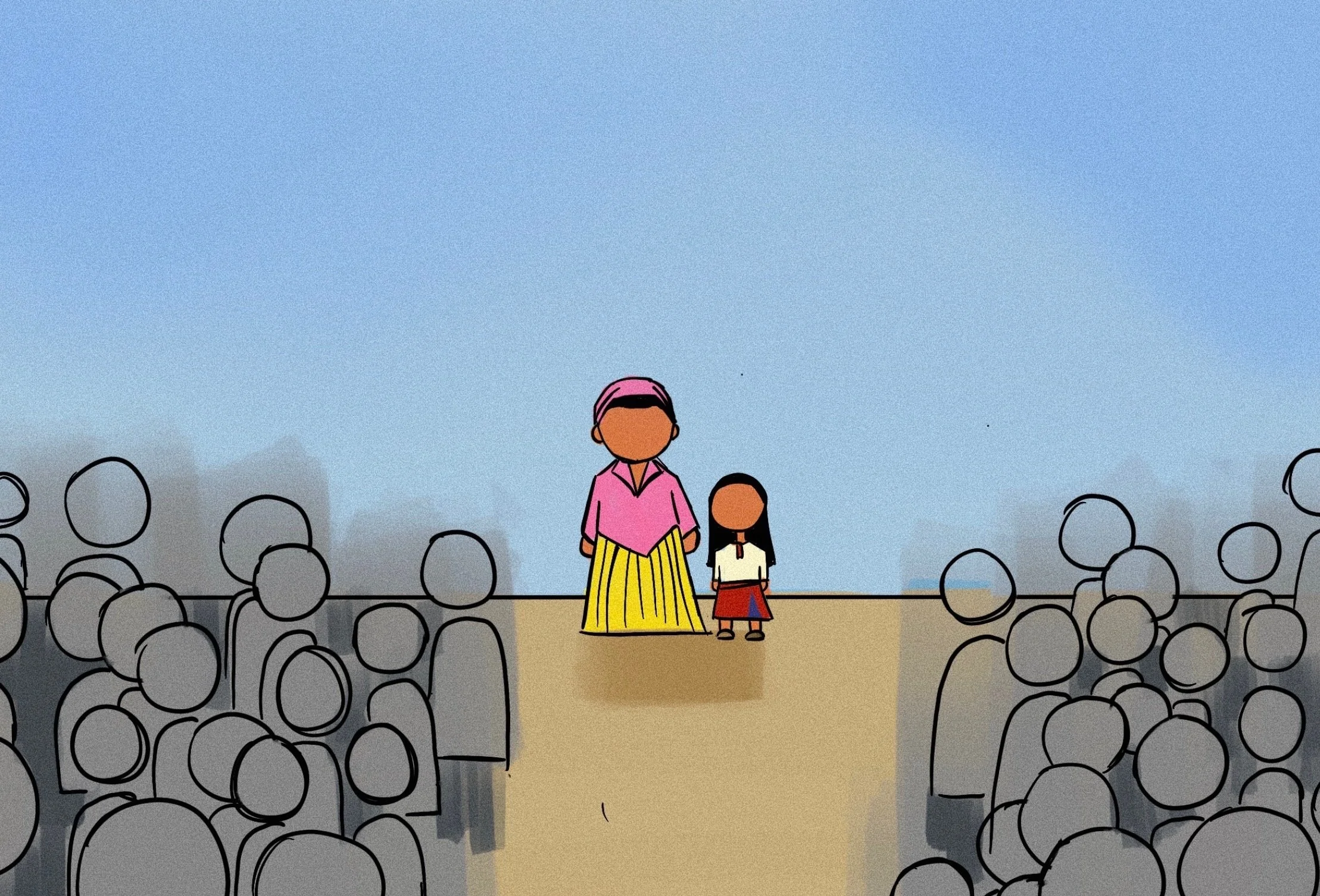
A recent essay published in The Phillipian examines the persistent discrimination faced by Roma communities across Europe, while also exploring deeper questions surrounding identity, integration, historical memory, and representation.
Written by Isabella Mazzi, “The Roma Problem Isn’t What You Think” reflects on the author’s experiences researching Roma communities in Serbia and engaging with activists, educators, entrepreneurs, artists, and organizers connected to Roma advocacy and social development initiatives.
The article opens by reflecting on long-standing stereotypes surrounding Roma people, including fear-based myths historically passed down through generations in parts of Europe. Mazzi uses these cultural memories to examine how anti-Roma prejudice has remained deeply embedded in everyday social attitudes despite broader narratives of European liberalism and multiculturalism.
The Roma, often historically referred to by the contested term “Gypsies,” are Europe’s largest ethnic minority and have faced centuries of marginalization, exclusion, forced displacement, and violence. During the Holocaust, hundreds of thousands of Roma people were persecuted and murdered by the Nazi regime, though their suffering has often received less public attention than other aspects of European wartime history.
Seeking to understand contemporary attitudes toward Roma communities, Mazzi worked with the Roma Education Fund (REF) in Belgrade, a non-governmental organization focused on education and social inclusion. Initially, the author encountered what appeared to be widespread public support for Roma integration and equal treatment. Educational access, healthcare support, and institutional outreach efforts were often presented as signs of progress.
However, the article argues that beneath this outward acceptance lies a more complicated reality. According to Mazzi’s observations, many individuals who claimed to support Roma equality still maintained social distance and implicit prejudices. Examples included reluctance to engage socially with Roma families or subtle resentment toward programs aimed at improving Roma living conditions and opportunities.
The essay also explores tensions within Roma identity itself. Through interviews with successful Roma professionals, artists, and organizers, Mazzi describes differing perspectives on representation, visibility, and collective identity. Some interviewees questioned whether public recognition of their achievements came from merit or from institutional efforts to showcase diversity and inclusion success stories. Others emphasized the importance of collective advancement and public role models.
A central theme of the article is the challenge of self-definition. Mazzi argues that Roma history has often been erased, fragmented, or filtered through the narratives of dominant societies. While Roma culture, especially music and artistic traditions, has become internationally recognized, the article notes that some Roma intellectuals and activists believe these representations can also reinforce stereotypes and oversimplified cultural images.
Drawing on ideas from scholar Margareta Matache and broader discussions around anti-Roma racism, the article suggests that material progress alone may not fully address exclusion unless accompanied by stronger recognition of Roma history, identity, and self-representation.
The piece concludes by emphasizing that the Roma are not outsiders to Europe, but have been part of the continent’s social fabric for centuries. It argues that confronting anti-Roma prejudice requires not only institutional reform and improved living conditions, but also a deeper reckoning with historical narratives and cultural stereotypes that continue to shape public perceptions today.
Read the full article here: https://phillipian.net/2026/05/01/the-roma-problem-isnt-what-you-think/
Raoul Wallenberg Centre Highlights Human Rights Advocacy and Global Justice Efforts in April 2026 Update
The Raoul Wallenberg Centre for Human Rights (RWCHR) has released its April 2026 update, outlining ongoing advocacy efforts, legal initiatives, international partnerships, and campaigns focused on political prisoners, atrocity prevention, antisemitism, and global human rights protection.
One of the major developments highlighted in the update was testimony delivered before Canada’s Standing Committee on Justice and Human Rights by RWCHR Chief General Counsel Angela Marinos. During the hearing, Marinos called for reforms to Bill C-16, also known as the Protecting Victims Act, emphasizing the importance of strengthening protections and accountability mechanisms within Canada’s justice framework.
The organization also renewed focus on Sudan as the war there entered its third year. RWCHR joined leading experts in urging the Canadian government to adopt a ten-point action plan addressing atrocities and the humanitarian crisis unfolding in the country. The proposed plan seeks a broader and more coordinated Canadian response to the ongoing violence and displacement.
In connection with these efforts, RWCHR hosted and recapped a Sudan roundtable discussion examining the humanitarian, political, and legal dimensions of the conflict. The event brought together experts and advocates working on international accountability and civilian protection.
The update additionally marked Earth Day by highlighting the cases of political prisoners imprisoned for environmental advocacy and activism. Among those featured were Daria Egereva, Pham Doan Trang, and Dr. Gubad Ibadoghlu, whose cases were presented as examples of the growing risks faced by individuals advocating for environmental justice and human rights under authoritarian systems.
RWCHR’s work also appeared prominently across international media and policy discussions throughout April. Coverage included concerns regarding the admission of former Iranian Revolutionary Guard Corps officials into Canada, analyses of antisemitism trends in Western countries, commentary on hostage diplomacy involving Iran, and advocacy for political prisoners and prisoners of conscience.
The organization’s Executive Director Judith Abitan published work examining international legal frameworks and advocacy strategies for defending political prisoners globally, while RWCHR leaders and fellows contributed to discussions on diplomacy, authoritarianism, and state repression in outlets including Reuters, The Globe and Mail, The Hill Times, EU Observer, and the Jewish Telegraphic Agency.
The report further announced several new institutional partnerships and appointments. Human rights advocate Irwin Cotler joined the Advisory Board of the McCain Institute’s John McCain Freedom for Political Prisoners Initiative and also became part of Fortify Rights’ Leadership Council, both focused on strengthening global accountability for human rights abuses and supporting imprisoned dissidents.
Partner voices featured in the update included commentary from Senior Fellows and international advocates such as Michael Ignatieff, Vladimir Kara-Murza, and Susanne Berger, who addressed issues ranging from diplomacy and authoritarianism to the imprisonment of dual nationals in Iran and political repression globally.
The April update reflects RWCHR’s continued focus on mobilizing international legal advocacy, public awareness, and policy engagement around democracy, human rights, political imprisonment, and the protection of vulnerable communities worldwide.
Read more here: https://www.raoulwallenbergcentre.org/en/
New PHRI Report Examines Silencing of Palestinian Healthcare Workers in Israel
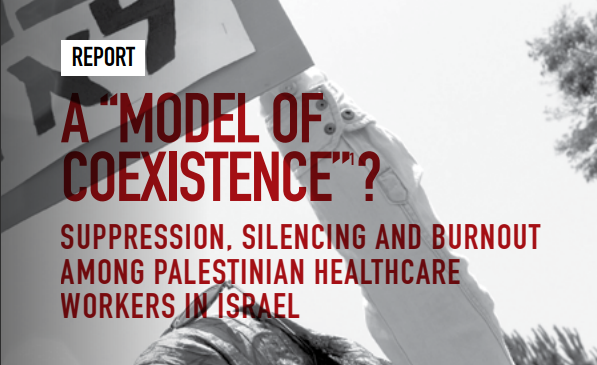
Physicians for Human Rights-Israel (PHRI) has released a new report titled “All This Coexistence”, examining the experiences of Palestinian citizens of Israel working within the country’s healthcare system and documenting what the organization describes as growing patterns of suppression, silencing, and discrimination since October 2023.
Based on nearly a year of research, interviews, and testimonies from healthcare professionals, the report challenges the widely promoted image of the Israeli healthcare system as a neutral space of coexistence and equality. Instead, it presents accounts from Palestinian healthcare workers who describe increasing pressure, fear, and restrictions surrounding speech, identity, and political expression within hospitals and clinics.
The report documents dozens of disciplinary hearings and clarification meetings conducted across at least 15 hospitals and all four Israeli health maintenance organizations. According to the findings, healthcare workers were questioned or disciplined for actions such as sharing social media posts, liking content online, changing profile pictures, or expressing opinions related to the war in Gaza.
Testimonies included in the report describe physicians, nurses, and other medical staff being pressured to explain or retract their views, with some facing formal sanctions. Others reported broader workplace environments shaped by fear and surveillance, including pressure to avoid speaking Arabic in professional settings and what the report characterizes as informal “loyalty tests.”
One physician quoted in the report described a sense of emotional detachment and exhaustion within the workplace atmosphere:
“It’s difficult for us, but we cannot speak… We have become a machine. Without emotion. We just work, tick boxes, receive a salary… I asked myself—what am I doing here? I’m not doing my job… That’s why I had to stop.”
The report argues that these experiences cannot be separated from wider political and social dynamics inside Israel, including rising nationalism, militarization, and structural inequality. According to PHRI, the healthcare system reflects many of the same societal tensions visible elsewhere in public life.
Researchers also point to a growing contradiction between the public image of healthcare institutions as spaces of partnership and coexistence, and the lived experiences described by many Palestinian staff members working within them.
Alongside documenting individual cases, the report calls for institutional and policy changes aimed at protecting freedom of expression, ensuring workplace equality, and creating safer professional environments for Palestinian healthcare workers. Its broader message emphasizes the need to acknowledge existing inequalities rather than suppress discussion around them.
The publication contributes to ongoing conversations surrounding civil liberties, labor rights, healthcare ethics, and the impact of the Gaza war on social relations within Israeli institutions.
Read the full report here:
https://www.phr.org.il/wp-content/uploads/2026/04/6579_PalestinianHelathcareWorkers_Paper_Eng.pdf
Attack at White House Correspondents’ Dinner Renews Focus on Political Violence in America
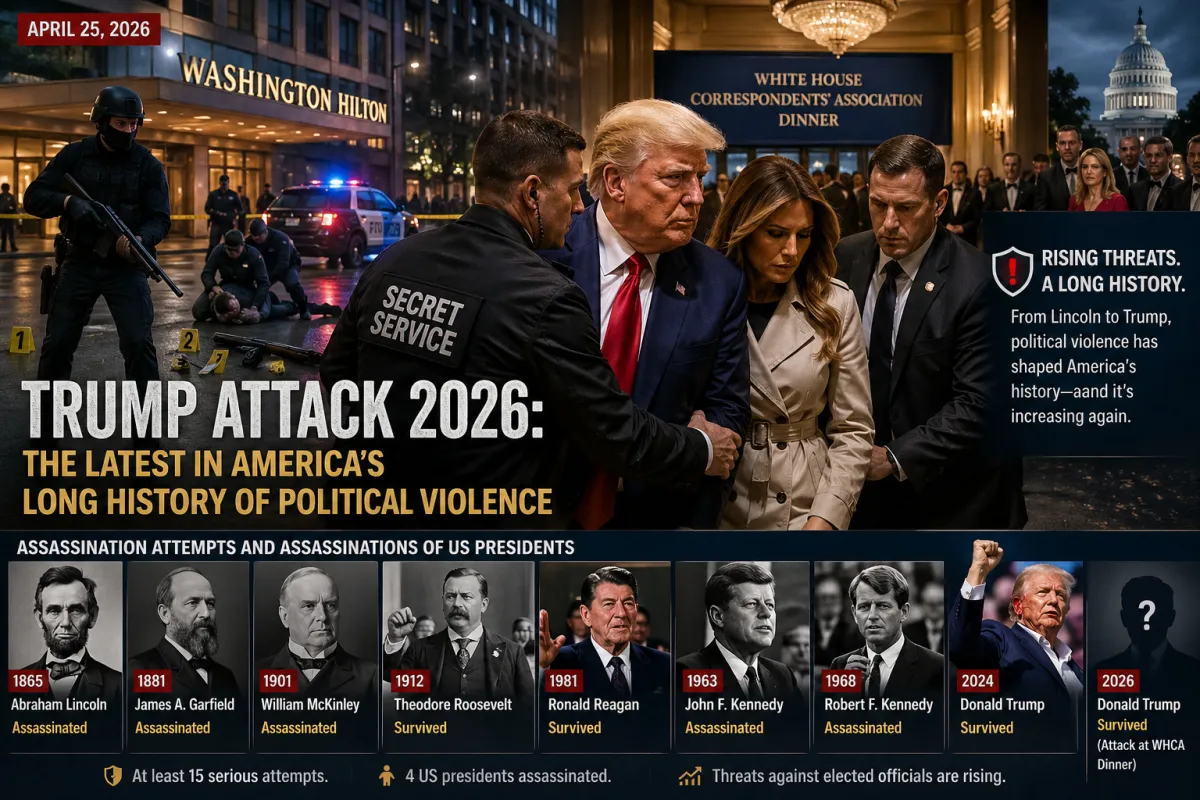
A recent security incident at the White House Correspondents’ Association dinner has reignited conversations around political violence and the long history of assassination attempts targeting American presidents and political leaders.
On April 25, 2026, Secret Service agents evacuated President Donald Trump and First Lady Melania Trump from the annual dinner at the Washington Hilton after an armed man reportedly opened fire on security personnel at a checkpoint inside the hotel. The suspect, identified as Cole Tomas Allen of California, was arrested at the scene after being subdued by security officers. Authorities stated that he was carrying a shotgun, handgun, and knives and had apparently been staying at the hotel where senior political officials and members of the media were gathered.
The incident has raised fresh concerns about political extremism, public safety, and the broader climate of polarization in the United States. Trump later told reporters that he believed he had been the intended target of the attack.
The Washington Hilton itself carries historical significance in the context of presidential security. In 1981, President Ronald Reagan was shot and wounded outside the same hotel during an assassination attempt carried out by John Hinckley Jr. That attack became one of the most well-known incidents of political violence in modern American history.
The latest incident also follows two assassination attempts against Trump during the 2024 presidential campaign season. In July 2024, Trump was injured during a shooting at a campaign rally in Pennsylvania that left one attendee dead and several others wounded. Later that year, another armed suspect was arrested near Trump International Golf Club in Florida after being discovered hiding near the property while Trump was present.
Historians and political analysts note that political violence has long been woven into American history. According to the Congressional Research Service, at least 15 direct assaults against presidents, presidents-elect, and presidential candidates have occurred over the course of U.S. history, resulting in multiple deaths.
The first U.S. president to be assassinated was Abraham Lincoln in 1865. Presidents James Garfield and William McKinley were also assassinated while in office, and President John F. Kennedy’s assassination in 1963 remains one of the most defining moments in modern American political history.
Other presidents and political figures survived assassination attempts, including Theodore Roosevelt, who famously continued delivering a speech in 1912 after being shot in the chest during a campaign event in Milwaukee. Roosevelt’s eyeglass case and folded speech manuscript reportedly slowed the bullet enough to save his life. His response became one of the most dramatic moments in presidential campaign history.
The article also highlights how shifting political tensions and deepening divisions have intensified concerns in recent years. The January 6, 2021 attack on the U.S. Capitol, escalating threats against elected officials, and repeated incidents involving political figures have contributed to growing fears about democratic stability and civic discourse in the country.
Observers point to increasing polarization, online radicalization, and widespread distrust in institutions as factors contributing to the current environment. The combination of political rhetoric, media fragmentation, and ideological extremism has created conditions where threats and violence are becoming more visible in public life.
The recent attack has once again drawn attention to the challenges facing security agencies tasked with protecting public officials while preserving democratic openness and civic engagement. At the same time, it has renewed broader conversations about how political tensions are reshaping American society and public discourse.
Read more here: https://mypluralist.com/2026/04/26/trump-attack-2026-history-of-us-presidential-assassinations/#google_vignette