Debate Grows Over the Future of the U.S.-Israel Security Relationship
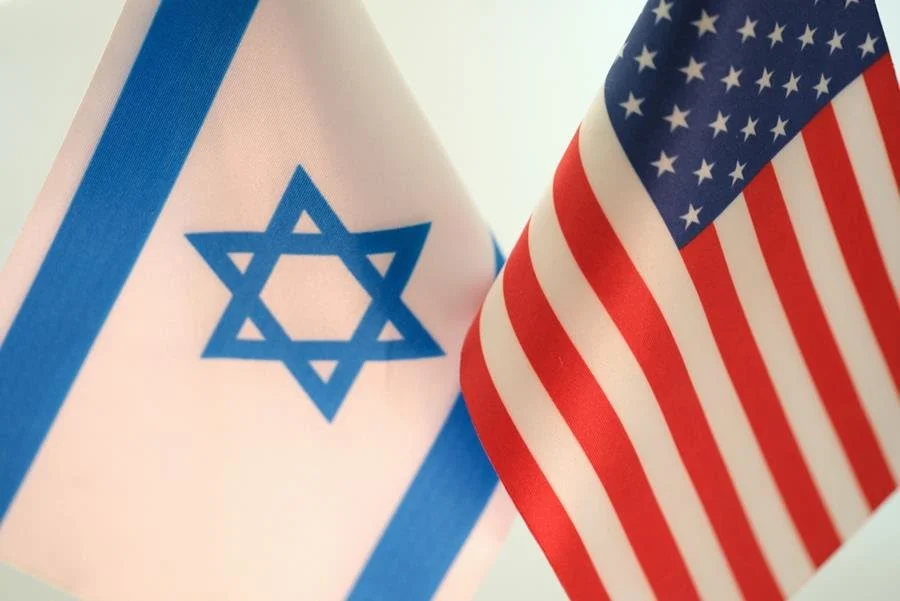
A new analysis published by Israel Policy Forum examines the evolving dynamics of the U.S.-Israel security relationship at a moment of increasing political debate and shifting public opinion in the United States.
Written by Rachel Brandenburg, the article explores how recent developments in the Middle East, combined with changing attitudes among American lawmakers and voters, are prompting renewed discussion about the future structure of U.S. security assistance to Israel.
The discussion follows two Joint Resolutions of Disapproval introduced in the U.S. Senate over arms sales to Israel. Although the resolutions were not expected to pass, they received unprecedented support among Senate Democrats. According to the analysis, 40 of 47 Democratic senators voted in favor of one resolution and 36 supported the other, reflecting growing frustration surrounding the wars in Gaza and Iran, as well as broader concerns about American military support for Israel.
The article also points to recent polling data from the Pew Research Center, which found a notable decline in favorable views of Israel among younger Americans. Among Americans under 50, 60 percent reportedly expressed unfavorable views, while that figure rose to 75 percent among those aged 18 to 29. These shifts are presented as part of a broader trend that could significantly influence future policy debates in Washington.
At the same time, Brandenburg notes the paradox shaping the current moment. Militarily, the United States and Israel have never cooperated more closely, particularly during recent operations involving Iran. Yet public support for that same partnership appears to be weakening.
Rather than viewing this moment solely as a crisis, the analysis argues that it may also present an opportunity to rethink the foundations of the bilateral relationship ahead of the expiration of the current 10-year Memorandum of Understanding (MOU) in 2028. The agreement, signed in 2016, currently provides Israel with $3.8 billion annually in U.S. security assistance.
The article suggests that the next phase of the relationship should be framed less as a donor-recipient arrangement and more as a strategic partnership between two technologically advanced allies with shared interests. It highlights how Israel’s economy, defense sector, intelligence capabilities, and innovation ecosystem have evolved significantly over recent decades.
Brandenburg argues that future negotiations should focus on comparative advantages, mutual security interests, and evolving regional realities rather than assumptions rooted in past geopolitical conditions. Potential areas of future cooperation could include joint research and development, co-production agreements, technological innovation, artificial intelligence, and healthcare collaboration.
The piece also acknowledges that U.S. military assistance does not necessarily provide Washington with the level of political leverage many policymakers assume it does. This raises questions about how future support mechanisms should be structured and justified, both strategically and publicly.
Ultimately, the analysis frames the current period as a transition point. It suggests that while the U.S.-Israel partnership is likely to remain important, the framework governing that relationship may need to evolve in response to changing regional politics, public opinion, and security priorities.
Read the full analysis here: https://israelpolicyforum.org/wp-content/uploads/2026/04/Policy-Pulse-424.pdf