
The Lessons of Hiroshima Shared Through Peacebuilding and Leadership at the University of Michigan
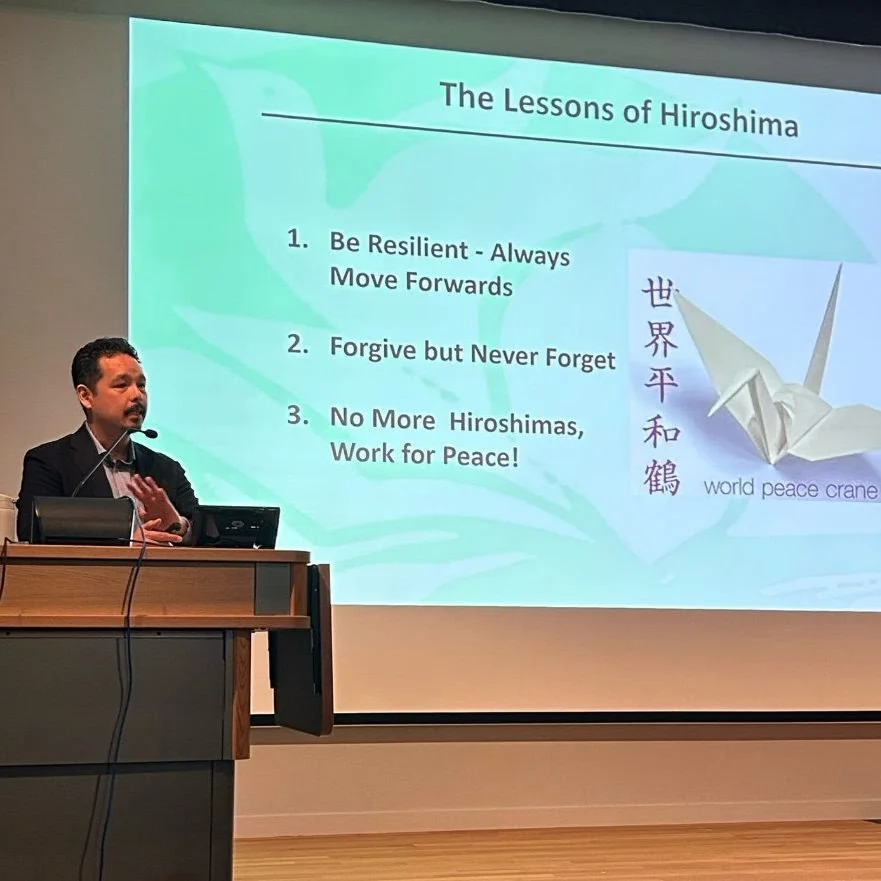
The enduring message of Hiroshima took center stage last month during a two-day symposium at the University of Michigan focused on peacebuilding, leadership, and nuclear disarmament. Organized by the Barger Leadership Institute, the event brought together educators, filmmakers, and peace advocates to reflect on how the lessons of Hiroshima continue to shape conversations around global conflict and human responsibility.
Among the featured speakers was Ray Matsumiya, Director of the Oleander Initiative, an organization dedicated to empowering peacebuilders through programs, workshops, and study tours in Hiroshima, Japan. During the symposium, Matsumiya shared insights from his work in Hiroshima and the Middle East, highlighting how historical memory and dialogue can contribute to more mindful approaches to leadership and conflict resolution.
The event, titled The Lessons of Hiroshima: Cultivating Mindful Leadership, opened with a screening of The Vow From Hiroshima at the historic State Theater in Ann Arbor. The film, which explores the legacy of atomic bomb survivors and the global movement toward nuclear disarmament, drew a packed audience and sparked conversations about the continuing relevance of Hiroshima’s history in today’s world.
The following day, discussions continued at the University of Michigan Museum of Art, where a panel of speakers explored themes related to peace education, leadership development, and the human consequences of war. Alongside Matsumiya, the symposium featured Dr. Connie Tingson Gatuz, Associate Vice President for Student Life; Mitchie Takeuchi, producer of The Vow From Hiroshima; Dr. Kathleen Sullivan, Director of Hibakusha Stories; and Dr. Ram Mahalingam, Director of the Barger Leadership Institute.
Together, the speakers reflected on how educational initiatives and storytelling can foster empathy, historical awareness, and civic engagement. Discussions also emphasized the importance of intergenerational dialogue and the role universities can play in promoting peace-oriented leadership.
The Oleander Initiative’s participation highlighted its broader mission of connecting individuals from around the world through immersive peacebuilding experiences in Hiroshima. By engaging participants with the city’s history and the stories of hibakusha, or atomic bomb survivors, the initiative seeks to encourage deeper reflection on violence, reconciliation, and global responsibility.
The symposium also underscored the continued importance of cultural and educational spaces in addressing global issues. Through film, conversation, and shared learning, events like this create opportunities for communities to engage with difficult histories while considering pathways toward a more peaceful future.
The full symposium recording, including the section featuring the Oleander Initiative, has been made available online for public viewing.