Reece Wallace

I am a Tufts alumnus and proud member of EPIIC’s 2015-2016 colloquium on the Future of Europe. With encouragement from Sherman, IGL staff and my EPIIC classmates, I was supported at every step of my college journey across the social sciences and humanities and from Medford to Oxford and back.
Graduating with a degree in philosophy in 2019, I went on to focus in philosophy at the University of Chicago’s Master of Arts Program in the Humanities. My thesis centered on the moral and political philosophy of Martin Luther King, Jr., weaving together longstanding interests in the interface between philosophy, intellectual history, and “the real world”.
I have since worked as a writer in a range of professional contexts. After a stint as a reporter on the financial industry, I worked as a proposal writer for the Foundation and Institutional Advisory practice at AllianceBernstein, a global asset manager. I currently work on proposal writing and business development for the Foundations and Endowments Specialty Practice at Truist Bank.
I look forward to more professional twists and turns as I explore the challenges and opportunities around me. For now, I’m happy to have landed back in my hometown of Houston, where I enjoy reading, fishing, and mild winters.
This exchange was had during his time as a Masters student at the University of Chicago. We begin with his time at Tufts and in EPIIC. We touch upon his chief interests in moral and political philosophy, literature, history, and the humanities generally. We also discuss his aspirations to find a vocation in teaching, practicing journalism, or otherwise engaging in the publishing and editorial world. I expect he will find the means to combine his many interests and pursuits, knowing him to be both a deep thinker and an integrator of ideas. I know he will do great things in any and all domains he engages in.
Reece is among the most thoughtful and intellectually principled people I’ve met. It’s a privilege to have known him as a classmate in EPIIC, and now to have him as a friend.
- Jerome Krumenacker, 2019
EPIIC was one of the first experiences you opted into entering Tufts. What drew you to the course as a freshman? How did it shape the rest of your college experience?
I probably would never have heard of EPIIC if it hadn't been for Caitlin Thompson, who at the time I started at Tufts was an upperclassman instructor in the Experimental College and my orientation leader. She spoke about EPIIC in a way that no one else was talking about their schoolwork. I couldn't quite tell what she was getting at (who can know what they're really getting into before they actually get into EPIIC?) but something about the challenge, the camaraderie, and the clarity of purpose she described cut through the noise of orientation week. I went to Sherman's information session a few days later and somehow decided I would give this thing a shot. It was the first academic and intellectual risk I'd ever really taken, but it felt like the right one to take.
In the short term, EPIIC gave me a taste of social science and its complicated interface with the world. It helped me hone in on themes I found resonant and let me follow up on those interests. In my case, those interests tended in the direction of political theory, which is part of the reason I went on to major in philosophy.
As much as any experience I had in college, EPIIC taught me to seek out difficulty. To seek out difficult ideas and debates, but also to seek out the complex social circumstances they're embedded in. It's easy (for me, anyway) to go through the motions, seeking the path of least resistance and avoiding the intellectual and social-emotional risks of important work. But you just can't do that and succeed in a project like EPIIC. You need to learn to be confident in what you know and honest about everything you don't. You need to trust other people and take seriously the trust they put in you. You need to know how to lead and how to follow. You need a sense of your horizons. I think EPIIC gave me those skills and that sense.
Overall, The experience was breathtaking--breathtakingly challenging, breathtakingly fun, breathtakingly meaningful. I came away from the year with new standards for myself and my work, and friends who continue to hold me to them.
Is there anything particularly unique and meaningful about the friendships you made?
I'm definitely introverted, and often shy to boot, but I love people. More often than I'd like, I have the experience of wanting deeply to connect with and feel comfortable around people I admire and feeling like I fail at it. There are steps I can take to improve myself and manage that feeling, but to some extent I think it'll follow me wherever I go. For whatever reason, though, the friends I made in EPIIC are that rare type who put me totally at ease. Not intellectually at ease (they can think circles around me), but as their friend and fellow traveler. My friends from EPIIC are some of most thoughtful, kind, and humane folks I know.
You studied philosophy at Tufts, and I know you to be sensitive to the tension between the life of the mind and the call to civic engagement. How have you navigated that tension through your time at Tufts? How did EPIIC influence your approach?
Philosophy felt like the right place to sit with various tensions. For one, it's right there at the intersection of the humanities and social sciences, disciplines I love and whose boundaries are very porous. Although they're often hybrids, I think philosophers are very much humanists in this respect: they worry about how and whether they can justify their work in a world that demands action. There are purists who dismiss this worry, but more who take it seriously. The professors and classmates I found in philosophy, as in so many other places at Tufts, grappled honestly with the tension of theory and practice. In particular, I'm grateful to have been a student of Lionel McPherson and Erin Kelly, excellent thinkers who shaped the academic interests I'm pursuing in grad school. Maybe most of all, I admire Susan Russinoff, my advisor. She's a fantastic teacher and an advocate anyone would be lucky to have. They are all people who recognized their stake in the world and took responsibility for it. I think I discovered that ethos in EPIIC, and I've tried to stay close by it ever since.
Near the end of my time at Tufts I had the chance to join the Ethics Bowl team, one of the nerdier things I did as an undergraduate (and that's saying something). I joined up at the prompting of some good friends and with the encouragement of Professor Russinoff, our coach and sponsor. As a practical ethics contest, it falls naturally at the intersection of philosophy and the world, of thinking and acting. This was a place I wanted to be.
I didn't realize at the time that Ethics Bowl would lead me farther beyond the ivory tower than I had imagined. In my last semester, my teammates and I traveled to MCI Concord, a prison, to work with incarcerated students on ethical reasoning and help facilitate a version of our competition. It was intense, humbling, and amazing to start a conversation with the students at Concord about justice and punishment and the ways we have of thinking through our responsibilities to each other. I can't imagine a higher purpose for philosophy, for academia, or for life than to struggle with these issues.
You have a deep interest in a broad range of eclectic topics, including, for example, international justice, theory of mind, and nuclear security. What core principles and convictions tie together how you think about these themes?
I wish I had a good answer! The honest through-line is probably that I have too much time on my hands. Like a lot of topics I'm interested in, they are all conditions in the lives we live and the society we share. They’re all given, in the sense that they came before us, but not in the sense that they're unchanging. I think if we pay attention, we can notice the circumstances under which they do change, and consider what that means for us.
I've been thinking especially about how notions of identity condition us to think about ourselves and the problems we face. Racial, ethnic, gender, and national identities are all critical background conditions which, as we're seeing now, sometimes break into the foreground in our personal and political lives. They are incredibly consequential, and yet they change constantly, and faster than we recognize. I'm interested in how and whether philosophical analysis can pinpoint what we mean when we talk about these identities, how we use these identities in practice, and how we ought to think about, talk about, and use them.
What drew you to the Masters in the Humanities at the University of Chicago? Will you gravitate to a particular discipline, or choose a multidisciplinary focus?
I'll probably focus somewhere between political philosophy and literature. If that doesn't sound like a focus, well, I can't argue with that. Unlike a lot of other, more specialized master's programs, the MAPH allows you to work across and even beyond the traditional humanities disciplines over the course of the degree. I think a tragedy of the disciplines, or at least of grad school, is that you have to sacrifice so much interesting, worthwhile stuff in order to gain "expertise" in something. I really appreciate that I can make my own way here and stave off some of the pressure to specialize for a little while.
What are the virtues of generalizing? How does resisting specialization allow you to grow in ways you might otherwise not?
Hopefully I'll learn more and more about the virtues of generalizing as I go! As far as growth is concerned, I think being a generalist forces you to first articulate and then address problems and projects, making the case for their importance in terms that aren't domain-specific. Needless to say, we can't do without specialists. But I think specialists sometimes fall into a blinkered worldview that sets the agenda for them. Often that's what we want--it's an efficient way for super-competent people to prioritize and throw themselves at prescribed challenges. On the other hand, there's always going to be an important place for people who, because they don't have the scaffolding of a particular professional community or a narrow skill set, have to set think hard about setting the agenda in light of the connections they see between things.
What’s next for you? What are your aspirations?
I'm using this year to hone my academic and non-academic writing skills, which I'd love to put to use somehow.
From there, whether I go the PhD route or not, I plan to give myself at least a year out in the real world, and I'd like to fill it with something worthwhile.
By "real world," I mean the world that exists outside the incentive structure of the research university system. I think it's hard to overstate how much that incentive system distorts values, relationships, and self-image (in good and bad ways), and it's always worth reminding myself of that fact as I consider the costs and benefits of a career in or outside academia.
Journalism really interests me, for example. Teaching, too. Ultimately I don't want to be too precious about what comes next. I want to be grateful for now, and for all the opportunities I'm unbelievably lucky to have moving forward.
What draws you to writing and journalism? The joy of the act? An impact you aspire to have?
Both! My own writing certainly hasn't made an impact in the world, but it has definitely impacted me. There will never be anything else like writing as a tool for learning. And when it's done really well, it's one of the best forms for sharing what you've learned. I hope that someday I'll have learned something well enough to help someone else understand it. I would be in a position to do for others what great writers do for me every day.
Whose writing and philosophy do you admire?
These days I'm interested in Emmanuel Levinas, Hannah Arendt, and especially Martin Luther King, Jr. Each of them formulated compelling responses to unimaginable injustice. In King's case, he's only fairly recently been taken up by scholars as a full-fledged philosopher instead of rather than just a great orator. This is long overdue--his thinking about justice, ethics, and nonviolence are subtle, powerful, and highly relevant today.
The Life That Remains: Photographing America’s Rural Spaces

Photo: Danny Wilcox Frazier
Taught by Danny Wilcox Frazier, this tuition-free workshop invites photographers with strong connections and commitment to rural issues, both in and outside of the United States, to the small town of Mexico, Missouri. The weeklong program is funded by VII to support photographers from low-income communities as well as those working on issues about underrepresented populations.
Mexico, like many cities in the Midwest, is a town built on a small industry that no longer exists there. Over 22% of the population lives below the poverty line, along with nearly 29% of children and 70% of mixed-race residents. The workshop will not shy away from the struggles many residents in Mexico face, but will also emphasize the perseverance and strength that the town’s residents have long shown. Small-town America is full of life, a perspective often lost in oversimplified views from the outside.
The thrust of the workshop will be to help photographers bring a unique personal voice to their projects, and take home a new way of seeing not only their own work but also the world of documentary photography. The experience will instill strong technical skills to transform photographs from single images into photographic series. The workshop will also teach the fundamentals of visual literacy and how to use photography as a tool for social justice.
In committee with VII Academy Curator Yonola Viguerie, VII Trustee Jennifer Gross, and VII Foundation Manager of Operations Amber Maitland, below are our selections for the workshop.
A retrospective on the workshop and its value to the participants can be found here.


Foundry Photojournalism Workshop

“Foundry comes to the heart of Africa and invites photographers from across the continent and beyond to a week of inspiration and education.
We look forward to continuing the workshop started by Eric and Sharon Beecroft and made possible by
all the loyal Foundry volunteers over the years!
Seven days of inspiration.
Each evening students attend presentations from our world-class list of instructors: photojournalists who regularly work with and for National Geographic, The New York Times, TIME, Newsweek, Stern, and countless other international publications.
Seven days of education.
With classes for beginners to professional photojournalists, our instructors challenge and teach you how to create visual stories.
Seven days of community.
Foundry is a bonding experience that creates friendships and networks that last a lifetime.”
This workshop’s tremendous and numerous instructors are Edward Echwalu, Andrew Esiebo, Mariella Furrer, Ron Haviv, Krisanne Johnson, Daniel Schwartz, my former student Nicki Sobecki, Sarah Waiswa.
Given the large number of positions open to participants, we divided the applicants between Jerome and I, Nicki, Ron, and Jennifer Gross, according to financial need. Below are the selections Jerome and I made from the tranche we were assigned.
Here is a retrospective on the workshop and its impact on participants.


A reaction to Stephen Miller
Today, I read with ongoing dismay a profile of Stephen Miller, for me one of the most odious and noxious characters of the Trump entourage. I had initially thought that Steve Bannon with his admiration for Julius Evola https://www.nytimes.com/2017/02/10/world/europe/bannon-vatican-julius-evola-fascism.html
would be the flag-bearer of disaster, but Miller has proven far more invidious.
It is so sad for me, as I identify strongly with my Jewish cultural heritage and inspired by its prophetic ideals, to realize and acknowledge that this man has Jewish origins, though he has already repudiated by members of his family and his rabbi. To know he is not fazed by the scenes of forcible family separations and refugees in US detention camps, but rather eager to promote such policies as an alleged deterrent, is mortifying.
Similarly, I am astounded and horrified by the news that members of high school varsity water polo teams in Orange County CA celebrated their victories with the sieg heil and the playing of Wehrmacht songs.
However, I also continue to be surprised at my own naive reaction, since I now recognize there are many millions of my fellow citizens who subscribe to racist nationalist thinking, and with the fecklessness of a degraded, slavish, sycophantic GOP, I no longer wonder how the Weimar Republic succumbed to Nazi control in the 1930s. My nightmare is that I am living through such times.
A few days ago, I saw the following quote, which has been widely circulating, and I imagine that many of you have as well:
“Families are torn apart; men, women and children are separated. Children come back from school to find that their parents have disappeared. Women return from shopping to find their houses sealed, their families gone.”
Though they describe scenes now tragically familiar to us in the aftermath of the recent ICE raids, these words are not from contemporary ties. They are chillingly an excerpt from the diary of Anne Frank.
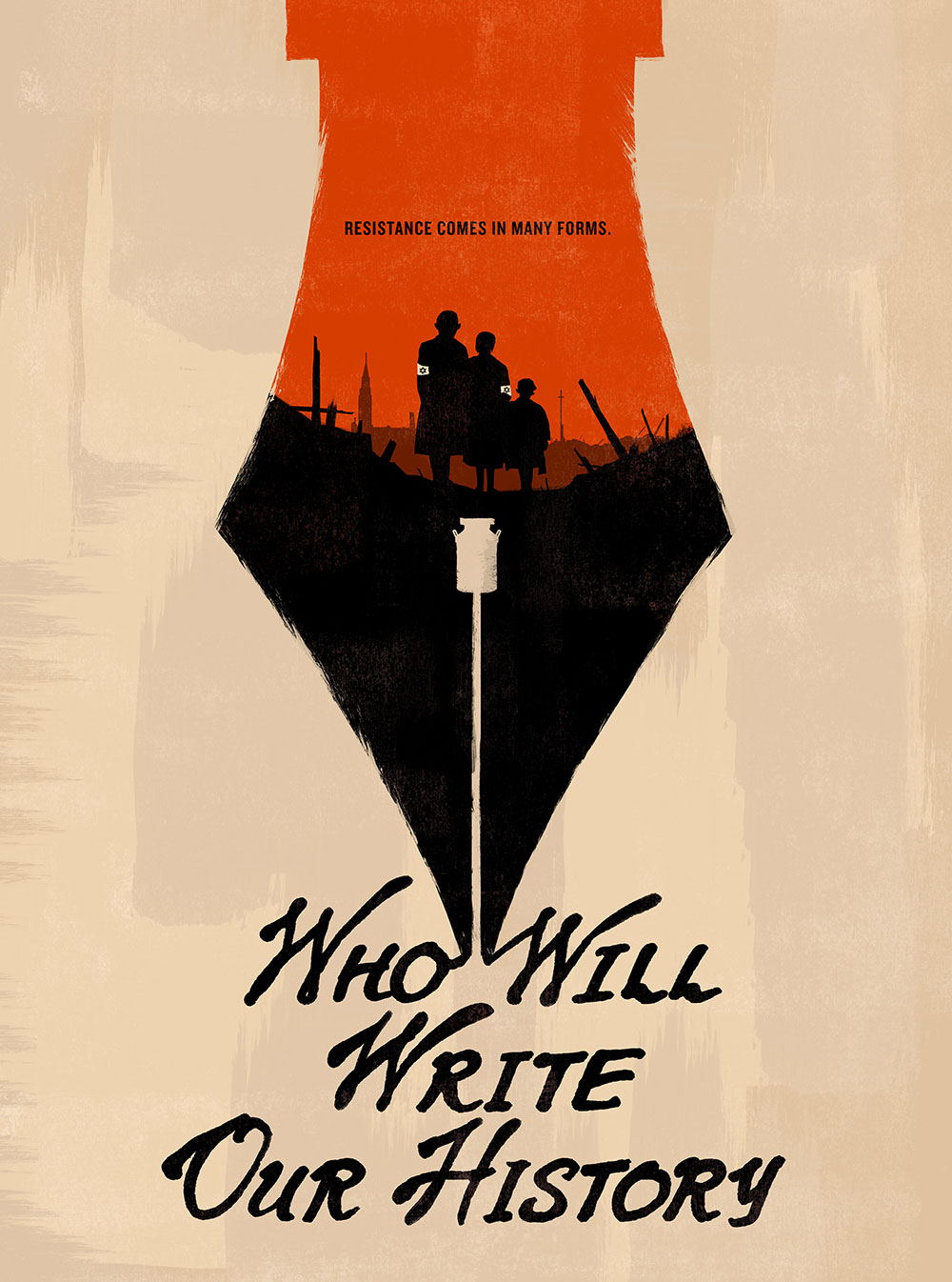
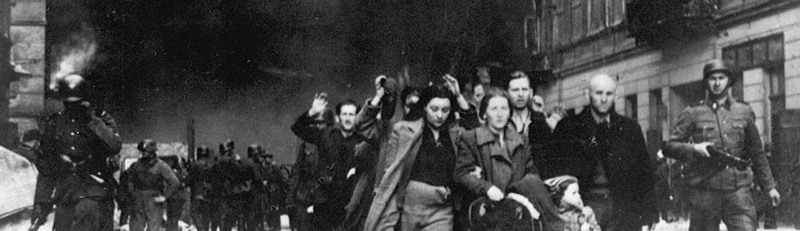
Iris and I just saw the film Who Will Write Our History? at the Am HaYam Havurah Film Festival in Wellfleet, documenting the courageous life of Emanuel Ringelblum and other Nazi-resistors in the Warsaw ghetto. It chronicles their effort to record that desperate episode of the Holocaust through documenting their quotidian life in stashes of secret buried archives.
The film has astounding relevance for today, particularly in the manner in which the Nazi propaganda machine portrayed the Jews in despicable racist terms. The role of Jewish police in the roundup and deportation in the Warsaw ghetto is portrayed as a pathetically misguided act of desperation by individuals hoping to save their lives and their families. What horrid choices were presented by the Nazis in such extreme circumstances.
That we now have members of our own Jewish community such as Kushner or Miller is so demoralizing, and calls for strenuous counteraction. “Never Again,” must mean “Never Again to Anyone.”
I think the Mass Association of Social Studies teachers should include this film in their curriculum.
I began my Institute’s Inquiry high school program in 1999 when I was asked by teachers who were affiliated with Educators for Social Responsibility (now Engaging Schools), based in Cambridge, to address a meeting of their membership and the general membership of the MASST about the curriculum I instigated for the 1998 EPIIC Covert Action and Democracy year. We created a curriculum for the Association. It was written by my good friend Professor Steve Cohen, who I soon thereafter hired as Inquiry’s first coordinator. Its researcher was Heather Barry, my EPIIC student in 1998 , who is currently the Institute’s Associate Director.
Jess Ostfeld joins LEAP

Jess is one of the wonderful students I had the pleasure to mentor in my role for the Albright Institute at Wellesley College. Given her interest and undergraduate research in environmental policy and sustainability, I introduced her to Peter and to LEAP, which sponsored her internship in water research in France’s Alsace region. Jess kept a journal to which she recollected the following in 2019:
This week was an introduction to the subject matter, study site, and my colleagues. This summer, I will be helping Agnes Lambardche collect data for her thesis on hydrology of groundwater-fed streams in the Alsace region. Last summer, Serge Dumont noticed that these streams reached such low levels that fish and plants perished. In the nearby areas farms use groundwater during the summer to water their fields, particularly maise. Maize, or corn, does not normally grow in France, but its production has been encouraged by EU policies, such as the CAP program. These dynamics show just how complex the issue is, how it is has been shaped by local geography and commerce, regional and national agricultural goals, and international policy.
University of Strasbourg PhD student Agnes Labarchede, and her advisor, Geography and Development Professor Carmen De Jong, have done a wonderful job in working with governmental agencies so that there is minimum overlap and maximum collaboration. One of the main reasons why I wanted to work with Carmen and Agnes this summer was to learn how to work with policymakers and governmental agencies to shape policy through research. Given Carmen’s previous work on artificial snow, the resulting media stories, and her success in shaping policy at her focal sites, I have hope that their research will help improve Grand Est (the French Region within which the study is taking place) water management. Over the summer, I look forward to learning from them both about successful stakeholder involvement, media relations, and how to translate complicated scientific jargon into something everybody can understand.
After the image: Making Books and Exhibitions

“This three-day workshop with Philip Blenkinsop and Daniel Schwartz in Sarajevo addresses the critical period between the end of a photographic project and the moment when a designer genius embarks on squeezing your images and vision into a book that will neither make you proud nor rich, or when an artist-turned-curator hijacks them to illustrate his agenda. In other words, the period when you need to exercise an author’s authority but still want to listen to those with experience in making books and exhibitions. Generally, it is a period marked by mental exhaustion, self-doubt, and disappointment. Nothing you had envisaged in the field seems to work on pages or walls. Your “best” images prevent you from seeing the true good ones, and there are gaps in the narrative which you are not able to bridge. You stare at your work and your work stares back at you. You are locked in a struggle that is neither stalemate nor armistice. What you need is a breakthrough! To see your work from the outside. But how to achieve this perspective? Moreover, not every great photographer is the best editor or curator of her/his own work.”
This workshop asked critical questions:
Why, in the first place, make a book or an exhibition?
If you can choose, which should it be: a book or an exhibition?
When should you think about a book or an exhibition?
What are the motivation and raison d’être of a book or an exhibition?
Will it be a book or an exhibition that flatters your ego or that makes an impact?
Do you envisage a book or an exhibition before you set out to take the photographs?
Or do you want to turn an existing body of work into a book or an exhibition simply because you want to move on?
Who will publish the book? Who will host the exhibition?
Who is your audience?
Participants, selected from across the Balkan region, brought existing bodies of work or work in progress, photocopies or prints of the images considered, flat plan sketches and drafts of book dummies or maquettes. During the workshop, they were encouraged to forego InDesign and other digital platforms, and use physical spreads of their printed work to explore the composition of a book or exhibition.
In committee with VII photographer Ron Haviv, and VII Foundation staff Diane Wargnier and Amber Maitland, we selected the participants below as scholarship recipients for the workshop.
A retrospective on the workshop and its value to the participants can be found here.


Ukrainian Stories

Photo by Anush Babajanyan
During this nine-day workshop, each participant will go through the beautiful process of building a story, with the support of John Stanmeyer and Anush Babajanyan. In addition to practical work, lectures on narrative development, the language of photography and the art of visual storytelling will be given. There will be discussions about today’s constantly changing field of photography and how your career and purpose expands through the art of visual narratives and social media communication.
The creation of a concise body of work is one of the aims of this workshop, but the most important goal is the learning experience itself, and the beautiful process of overcoming the challenges while making a story happen. These gatherings with Anush and John are more spiritual and expansive than pragmatic.
This workshop will teach, but it will also inspire participants to become a better photographer and visual storyteller. VII also believes in the importance of creating and expanding its community by sharing intimately and candidly the experience of decades in the field of its photographers.
In committee with VII Academy Curator Yonola Viguerie, VII Trustee Jennifer Gross, and VII Foundation Manager of Operations Amber Maitland, here are our selections for the workshop:


Nichole Sobecki - "Her Take: (Re)Thinking Masculinity"

One of my extraordinarily talented former students, Nichole “Nicki” Sobecki, is now one of the VII Photo Agency’s photographers.
She has just visited Boston with other members of the “Seven of VII” - the seven women of VII Photo Agency - to present on their project “Her Take: (Re)Thinking Masculinity.”
Nicki is an EPIIC alumna, and one of the first formidable student leaders in the Institute’s inaugural photojournalism program, Exposure.
Her stellar undergraduate documentary work with Exposure included A Khmer Prognosis: Health in Cambodia, Disarming the Kibus: Rwanda and the Democratic Republic of the Congo, Battle for Lebanon: The Nahr Al Bared Conflict, and Between Bhutto and the Border in Pakistan. In Rwanda, she also created the Amahoro Project: Obstacles and Advances in Rwandan Reconstruction (Amahoro Kinyarwanda word for “peace”).
She shot and edited the video documentary “The Luckiest Man: Gun Violence in Urban America,” and “Shooting for Peace” in Uganda.

Nicki presenting her photography
I brought her and her colleagues in “Seven of VII” to the Albright Institute at Wellesley, where she also presented her work on refugees impacted by climate change in Africa.
One of her colleagues who presented with her was Sara Terry. LINK
Sara was one of Exposures mentors, and her Aftermath Project co-led Exposure trips in Uganda and at Wounded Knee.

Sara Terry, center
College Freedom Forum, Boston

The Human Rights Foundation has just convened a highly successful College Freedom Forum in Boston, a formidable evening presenting inspiring and compelling witnesses to our hostile current international environment for human rights.
The speakers provided a wonderful juxtaposition between the cautiously optimistic scholarly context provided by Steven Pinker; the unbelievable courage of Abdalaziz Alhamza in the face of ISIS death squads; the galvanizing presence of Leyla Hussein, who is highlighting female genital mutilation as a global human rights issue; the candor and good humor of Enes Kanter in the face of persecution by Erdogan’s regime in Turkey (luckily, since he was traded to Portland, I will not need to have any rooting interest in the Knicks!); the incredible performance, resilience, and moral courage of Wuilly Arteaga; and Ti-Anna Wang’s ordeal as the daughter of a Chinese prisoner of conscience.
Our intent was to create this program as a consortium of universities and colleges in Greater Boston. Of the 275 people who attended the three hour event, most students from over twenty universities and colleges, including Harvard, Northeastern, Boston University, Boston College, Wellesley, Tufts, and Emerson.

Eliza Ennis, Abdalaziz Alhamza, Amitai Abouzaglo
The Forum was co-sponsored by the International Relations Council of Harvard University, with the invaluable help of their wonderful President Eliza Ennis. Without her intervention, we would not have been able to secure Harvard’s Science Center as our venue, and our audience would have been quite diminished. The International Relations Council will act as the liaison of the Human Rights Foundation at Harvard, and will be responsible for selecting each successive generation of Harvard Oslo Scholars.
I was delighted to see Amitai, who last year was selected to be the first Oslo Scholar from Harvard. I am excited to see the development of his Embodying Peace in Israel-Palestine initiative.

Steven Pinker, Jianli Yang
It was wonderful to reconnect with Jianli Yang, a Chinese dissident who began his activist career at Tiananmen Square, and founder of the Citizen Power Initiatives for China. I keynoted his conference on constitutional issues and minority rights in China at the Weston Theological Center, and worked to help secure his release in 2007 when he was a prisoner of conscience in solitary confinement in China for his nonviolent labor rights activism.

Abdalaziz Alhamza, Amitai Abouzaglo, Jerome Krumenacker

Wuilly Arteaga
Wintersession Culmination
The culminating project of the Albright Fellows occurs during Wintersession, when the students give group research presentations before the Scholar in Residence. This year, they presented to Amb. Samantha Power.
I had last met Samantha when she and I were ushers at the memorial service of a wonderful mutual friend, Amb. Jonathan Moore, at Harvard’s Memorial Church.
I approached her to ask if she would deliver an inaugural Lecture on Ethics and Global Affairs at Institute for Global Leadership in honor of Jonathan, and she agreed. This is the last program I initiated for the Institute.

Albright Institute Faculty Director, Professor Takis Metaxas, and Ambassador Samantha Power

Takis Metaxas and Secretary Madeleine Albright
Albright Institute Wintersession

The most gratifying aspect of Wintersession for me is meaningfully interacting with the wonderfully impressive Fellows.
I look forward to working with them, opening my network to them, and connecting them to experts and practitioners I know in the subject areas they will be researching for their group presentations to Samantha Power.
As one example, yesterday I had breakfast with a close friend, Dan Holmberg, who is open to corresponding with all of the Fellows. He has decades of experience in foreign aid, disaster response, and public health issues in Africa and the Middle East.
I am also enthusiastic to learn of the personal and professional trajectories and aspirations of the Fellows, and hope to assist them into the future wherever I can. Among the students who spoke with me on the opening day, one already has an admirable background in sustainable development and is interested in the LISD’s LEAP program.
Another is a young woman from Kashmir who intends to work in development in the region upon graduating, and would love to be connected to Healing Kashmir, whose founding director Justine Hardy is a good friend, and whose program manager is my wonderful former student Cody Valdes.
Here are the research groups and their eclectic topics:

The Legacy of the Arab Spring in Egypt
Rhea Mehta, Sabrina Beaver, Yuxi Xia, Tanvi Kodali, Mariana Hernandez

Climate Change Lawsuits by Youth Against Australia
Alexandra Saueressig, Charlotte Kaufman, Megumi Murakami, Annabel Rothschild, Kavindya Thennakoon
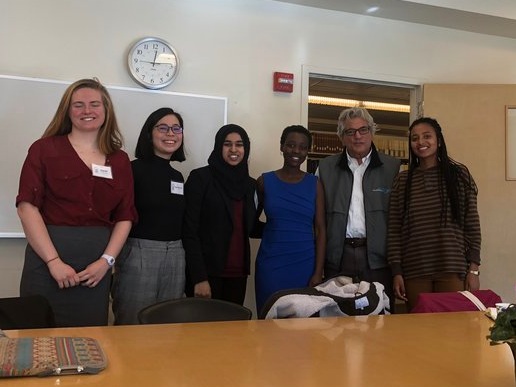
Populist Authoritarianism in Brazil
Sarah Smith-Tripp, Hazel Wan Hei Leung, Aniqa Hassan, Christine Halle Rubera, Emma Burke

Authoritarian Challenges to the European Union
Frances Dingivan, Xiao Rosaling Liang, Abeer Dhanani, Maheen Akram, Emma Carter-LaMarche

Tech Policy in the Chinese Market
Gabriela Varela, Sarah Winshel, Natalia Bard, Aida El Kohen, Jessica Ostfeld
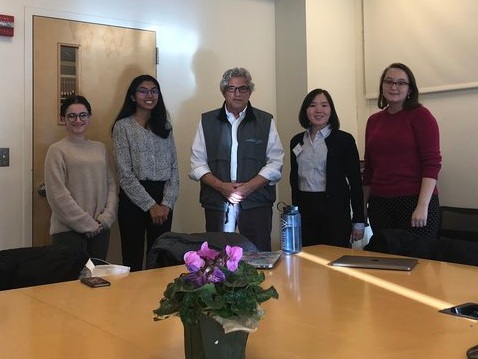
Democratizing Access to Antimalarial Medication
Soumaya Difallah, Tarushi Nigam Sinha, Daria Osipova, Hollis Rammer, Esa Tilija (not present)

Political Violence in South Africa
Yookyung Sandra Chung, Denise Becerra, Yashna Shivdasani, Mar Berrera, Alberta Born-Weiss
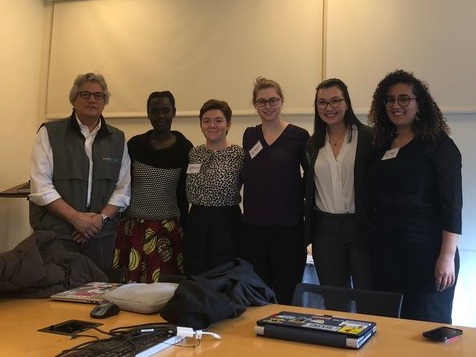
Erasure of Rohingya Cultural Identity and Narratives in Myanmar
Tine Oginga, Elizabeth Lambert, Maggie Ugelstad, Catherine Stauber, Malak AlSayyad
VII Foundation Newsletter

The VII Foundation is entering a very exciting 2019, with the culmination of its Peace Project, the creation of a full-fledged Academy in Perpigan, France, and much else.
I have finished reviewing the manuscript for the forthcoming Peace Project book, which I found fascinating and tremendously powerful. The book, which will cover the tremulous peace in Bosnia, Cambodia, Lebanon, Liberia, Northern Ireland, and Rwanda, features contributions from eminent journalists and photographers who reported on the former conflicts.
Particularly meaningful is VII’s profile of Shahidul Alam, and its creation of two student grants at the Danish School of Media and Journalism, one in honor of Shahidul and the other in honor of the late Alexandra Boulat:
Shahidul Alam
On November 20, 2018, after more than 100 days in prison, Shahidul Alam, a member of our VII Foundation Advisory Board, was released on bail, but the case against him has not been dropped. If convicted after trial, he faces a jail term of up to 14 years on charges of spreading propaganda against the government under Bangladesh’s Information Communication and Technology Act (ICT), a law that human rights groups have decried as ‘draconian.’
He has received a number of awards recently, some accepted by friends and family who fought for his release from prison. These include the Frontline Club Tribute Award, the Lucie Humanitarian Award, and being named among TIME magazine's Person of the Year 2018.
VII Photo Agency and the VII Foundation were involved in advocating for Shahidul’s release. Board member Sherman Teichman led that initiative for the Foundation and we will continue to support Shahidul in the coming months. The VII Academy will be supporting the Chobi Mela Festival, which was founded by Shahidul in Dhaka, Bangladesh, in February by sending teachers to work with Bangladeshi students during the festival.
Alexandra Boulat & Shahidul Alam Grants
After a research trip by Gary to the Danish School of Media and Journalism in Aarhus, Denmark, we stepped in to replace two grants that had been withdrawn from the school by the Danish Government (due to reduced funding for journalism education) for students from the majority world. We asked that one grant be given to a female and one to a male student and that they be given in honor of Alexandra Boulat and Shahidul Alam. Once the grants were announced, there were over 50 applicants in 48 hours. The Directors of the Danish School selected Deepti Asthanafrom India, who received The Alexandra Boulat Grant, and Mushfiq Mahbub Turjo from Bangladesh, who received The Shahidul Alam Grant to study photojournalism for one semester in the spring of 2019. Both grants were funded by the VII Academy with funds donated by Jennifer and include accommodation, tuition, and some expenses.
The Alexandra Boulat Grant is given in remembrance of the late prize-winning French photographer who was a member and co-founder of VII Photo Agency. The Shahidul Alam Grant is given in honor of the great importance Shahidul Alam has for the development of independent photojournalism, particularly elevating the presence of young men and women from the majority world.
Shahidul Finally Receives Bail

Shahidul, who has been in jail and repeatedly denied bail since early August, has finally been given leave from detainment by Bangladesh’s High Court. The charges brought against him by the government, however, have not been dropped, despite an international outcry denouncing them as an act of intimidation and stifling of free expression.
Seminar on Behalf of Jamal Khashoggi and Shahidul Alam

I spoke today on behalf of Jamal Khashoggi and Shahidul Alam, with Ambassador William Milam, who has served as US Ambassador to Pakistan and Bangladesh, for the Bangladesh Progressive Alliance of North America and Amnesty International, in an event at Harvard entitled “Implications on Human Rights and Democracy in the Age of Targeting of Media and Journalists.” My remarks touched more broadly on the fate of global journalists in a world now debased even more by the rise of Trumpian fake news, and on the avenues available to us to combat this.
This event was co-sponsored by Harvard’s undergraduate International Relations Council, whom I advise, and introduced by its President, Eliza Rebellion Ennis.
I had met Jamal Khashoggi at events organized by the Human Rights Foundation, the last being at 2018’s Oslo Freedom Forum, where I sat in on a late night conversation on an effort to increase the impact the Arab Tyrant Manual, an “independent online publishing platform focused on freedom, human rights and the fight against all forms of authoritarianism globally.”

That our government seeks to avoid really confronting the atrocity of his murder hurts in a more personal way than anything Trump has done heretofore.
The continued imprisonment of Shahidul Alam, with whom I serve on the Advisory Board of VII Photo Foundation, is now seemingly totally lost and obscured in the news cycle here. In a Dhaka jail since his abduction in early August, he has repeatedly been denied bail by the High Court, and continues to be slandered as a “traitor” by Bangladesh’s ruling party.
A Moment in Time

Adam White, Mike Niconchuk, Taarika Sridhar, Amit Paz
In the space of twenty-fours on the 22nd and 23rd of September, I was visited by six of my alumni. I dined with Taarika Sridhar, of the EPIIC year on South Asia, and a member of PPRI and Empower; Adam White, an EPIIC engineering student also of the 2009 South Asia year; Mike Niconchuk, a co-founder of the BUILD program; and Amit Paz, a former student leader of NIMEP and contributor to its Insights magazine. The following day, I was visited again by Amit, and by San Haddad, who participated in the 2000 EPIIC Global Sports year.
Taarika is in her third year at Northeastern Law School, and will be clerking for another EPIIC alumnus, Jacob Silberberg, her mentor at Ropes & Gray.
Mike is now off with alum Biz Herman to the Za’atari refugee camp in Jordan, where they are working with Questscope.
Adam White is off to Cairo working on traffic management with SIPA and MIT professors.
Amit is working for Baker Tilly on a very sensitive project affecting what is possibly left of the Israeli-Palestinian peace process and he has asked for my student interns from Wellesley to assist him.
Ghassan is in the midst of writing his critical book on the Palestinian and Israeli Olympic files and the politically-motivated distortion of their history, and organizing to create a center for sport and conflict studies in Jerusalem with the International Olympic Academy.
First Meeting with Albright Institute Fellows

I have held my first session with the Fellows of the Albright Institute at Wellesley, for whom I serve as their inaugural Fellows Mentor.
I presented a talk on the topic of “Distorted History and the Perversion of Politics,” which is both of profound personal interest to me and, I believe, critical to understand at our own current juncture in history.
To impress on the Fellows the importance of challenging their convictions and preconceptions, I heavily referenced a book which has challenged my own, In Praise of Forgetting by David Rieff. Writing as a contrarian to the aphorism that “those who do not remember history are doomed to repeat it,” Rieff questions whether collectively remembering the traumas of the past really leads to reconciliation or justice in the present.
On this theme, I introduced them the work of EPIIC alumna Dacia Viejo Rose, with whom I had the recent pleasure of reconnecting as I interviewed her for EuropeNow on her research.
The talk was attended by a large cohort of Wellesley students, many of whom were not Fellows. I was pleased by their enthusiasm and receptivity to the topic, and I am eager to beginning working with them individually.
Shahidul Alam Denied Bail

Shahidul Alam is still being held in Dhaka Central Jail after his bail plea was denied by the Dhaka Metropolitan Session Judge’s Court. His bail petition had been repeatedly deferred by the High Court of Bangladesh for nearly a month, and and an order to grant him status as “Division 1 Under Trial Prisoner,” filed on August 27th, was implemented only yesterday.
We are in contact with his lawyer, Sara Hossain, to learn of what we can do to help his situation from afar. We are also receiving regular updates on his situation.
Lumay Wang and Padden Murphy


I spent the Rosh HaShana holiday at Three Forks, the headwaters of the Missouri River, in Bozeman, Montana, and in the mountains of the magnificent Big Sky country. Perfect, cool, crystalline days magnificently elevating my spirits, especially at the top of Big Sky Mountain at over seven thousand feet. With its panorama and broad horizon, the perfect setting for reflection for an agnostic pantheist. I’ve now descended from the mountain, surely without “tablets,” back into this too fraught and demoralizing a world, certain that the Institute has helped mentor a rising new generation of committed ethical activists.
I was in Three Forks because I had the privilege of officiating as Justice of the Peace for the wedding of two of my former Institute students, who I introduced to one another a decade ago, Padden Murphy and Lumay Wang. Exemplary students, extraordinary educational and professional trajectories, and now wonderful friends. They are also very good friends with my son, Nathaniel, who was a groomsman, and many of their common Tufts friends gathered to celebrate. Amazing youngsters.
Padden was one of my EPIIC students, a Synaptic Scholar, the founding editor of Discourse, a co-founder of our civil-military program, ALLIES, and a member of our human rights photojournalism program, Exposure. Lumay, likewise my EPIIC student, who succeeded Padden as editor-in-chief ofDiscourse, graduating with Phi Beta Kappa, and Summa academic status.
In one of my marriage remarks, I made note of the integrity and perceptiveness of these young people who in creating Discourse had already a decade ago anticipated the severe political antagonisms now engulfing us, and the dangers of the lack of civility and decency.
It is this generation that hopefully will finally galvanize sufficient others of their Millennial peers to get to the polls in fifty four days.
The letter below was composed by Lumay in 2014, and sent to the Provost of Tufts University, as part of an external review process of the Institute conducted by the university.
Letter Signed by Over 100 Alumni
We write to you today as Tufts alumni who have had the great fortune of being involved with the Institute for Global Leadership (IGL) when we were students. The experiences that the IGL opened to us were integral to our Tufts education, and in many cases they influenced our careers and our concepts of active citizenship. We believe the IGL is one of the most unique, innovative, and valuable parts of Tufts University.
Some of us conducted research through various IGL grants; some started new programs such as ALLIES and the Compass Fellowship for Social Entrepreneurship; some studied complex problems through EPIIC, the rigorous yearlong class. We have gone on to be public servants, international negotiators, journalists, entrepreneurs, academics and more. All can attribute a strong influence on our careers to the IGL because of the passionate and enthusiastic leadership in Sherman Teichman and Heather Barry. They and the institution help students“make it happen.”
The IGL is one of the few outlets on campus that is willing to take a risk on a student’s idea, to push us to be grounded in reality, and to take a stance on how we want to make a positive impact in the world. It connects what we learn in the classroom and read in books to events happening today and the power of our agency. The achievements and failures of our pursuits are lessons that we will take after our time at Tufts. We appreciate that the IGL nurtured our aspirations but did not hold our hands to achieve them. Nothing prepares you so well for the real world as understanding our limitations and learning to overcome them.
We have many stories of alumni who found a jumping off point into their careers, and it was not in the classroom. It was while talking with guest speakers, conducting research, participating in a workshop, or a student-lead trip, all sponsored and organized by the IGL.
As Tufts moves forward with the ten-year strategic plan (T10), we applaud the emphasis on increasing opportunities for transformational experiences on campus. Without a doubt, the IGL excels at providing those experiences to any student who walks through the creaky door of 96 Packard Ave. Under Sherman’s leadership, the IGL has transformed the lives, perspectives, and careers of countless students. The IGL’s commitment to active learning outside of the classroom is the future of higher education, and will be replicated not just at Tufts but also around the world. The institution represents Tufts’ commitment to active citizenship to the greatest degree.
We are happy to discuss our experiences at Tufts and the IGL at any time, and we appreciate the opportunity to share our perspective.
Sincerely,
Lumay Wang
Solar for Gaza Published
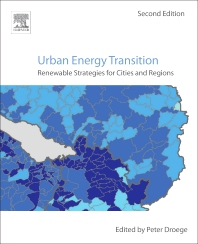
The Solar for Gaza research project that we began in 2009 as a collaboration between the Institute for Global Leadership, the Arava Institute for Environmental Studies, and the Institute of Architecture and Planning of the University Liechtenstein, has been published in Urban Energy Transitions 2nd ed, edited by Peter Droege and distributed by Elsevier.
“Solar for Gaza: An Energetic Framework For Renewable Peace and Prosperity for Gaza and Its Greater Region,” is now featured as a chapter 2nd edition of Urban Energy Transition, edited by Peter. We revived and published it as an example of Israeli-Palestinian cooperation, penetrating the current self-defeating climate of anti-normalization, with hope in its message of "an alternative to war through alternative energy." My co-author with Peter is Cody Valdes, an Institute alumnus who was instrumental in developing Solar for Gaza at the Institute (Cody was also invaluable in helping me develop The Trebuchet in its infancy).
Also acknowledged is Hannah Flamm, one of my previous wonderful assistants who, as an Institute student in 2010, conducted a Solar for Gaza training workshop, “Assessing Renewable Energy Potential in Palestine,” together with Dr. Tareq Abu Hamed. They convened Palestinian, Israeli, and other international scientists, engineers, professors, and entrepreneurs.
We relied on the insights of Sara Roy, a senior research scholar at Harvard's Center for Middle Eastern Studies and renowned Gaza expert, for the chapter introduction framing the current Gazan situation (her daughter Annie Schnitzer was the first LEAP Fellow while a Wellesley undergraduate student).
For more information and to order the book:
https://www.elsevier.com/books/urban-energy-transition/droege/978-0-08-102074-6
Millennium Fellows Retreat Outcomes

I have received the following reaction from Daniel Bennet about the session of the Millennium Fellows retreat I led at Waterloo in July:
A HUGE thank you to you for coming out to Waterloo to join us. I’m thrilled by the connections you established and the actions that were able to come out of it. This is fantastic and a best-case outcome for any session. At the end of the day, what are all our efforts to “connect” people worth if they don’t yield some sort of synergy that translates to actions afterwards. I had very positive reviews and the shear number of follow-ups you reference below is evidence of that success. I do think it was a learning experience, and for future iterations there are certainly changes we can make intentionally to structure the session differently, but honestly - it was great. Thank you again. Hopefully I will have a good sense of our funding situation for next year in October/November, at which point I would love to reconnect and discuss further collaboration.
I am very excited to stay in touch with the Fellows, and to create interfaces between them and my community. Here are some of the connections I have begun to make, and will be making:
• Ali Ahmad has written me from Beirut and we will be working together on developing common contacts in the MENA region as I pursue my desire to revive Pugwash chapters and thinking.
• I will introduce Mark Boris Andrijanic to the Council for European Studies, having been asked by him to help create a conference in Ljubljana on "The Future of Europe," with the Trilateral Commission.
• Lauren Bohn turns out to be best friends with my close alum Biz Herman. I hosted Lauren at my home for dinner a few days ago, and met her partner Andrew Gruen, who has asked me to collaborate with on the development of a stronger Gates Fellowship alumni group he has been tasked to create.
• I introduceed Priyali Sur to Shahidul Alam and George Mathew, who are working with me on Rohingya concerns to help her develop her 2017 Atlantic Council Fellows group initiative on refugee assistance. I am on the Strategy Board of both the VII Foundation and Music for Life International.
• I will help Artemis Seaford in her own refugee work. She highly regards my very good friend and alum Sasha Chanoff. I helped him create his organization RefugePoint and continue to serve as a strategic adviser for RP.
• I introduced David Martinez, my alums Matan Chorev and Dan Feldman who will be invaluable allies for the Atlantic Council.
• I introduced Ben Flatgard to Lucas Kello and his highly regarded work on cyber, The Virtual Weapon
• Maria Lourdes, is close friends with Javier El-Hage, who taught her brother in law school, and is now the Chief Legal Officer of the Human Rights Foundation, for whom I am a Strategic Advisor.
• Laura Klick has just joined the Board of Seeds of Peace. I helped design their initial curriculum, hosted their first cadre of students at Tufts, and mentored their program's first adult leaders at Boston's Outward Bound Thompson Island in 1993.
• Marta Poslad is an Humanity in Action Fellow, a program I helped grow in its earliest days with founder Judy Goldstein. She serves on HIA's Board with my alum and another very close friend, Ben Harburg, who will be one of The Trebuchet’s first funders