Bearing Witness: Physicians for Human Rights Israel Amid War and Atonement
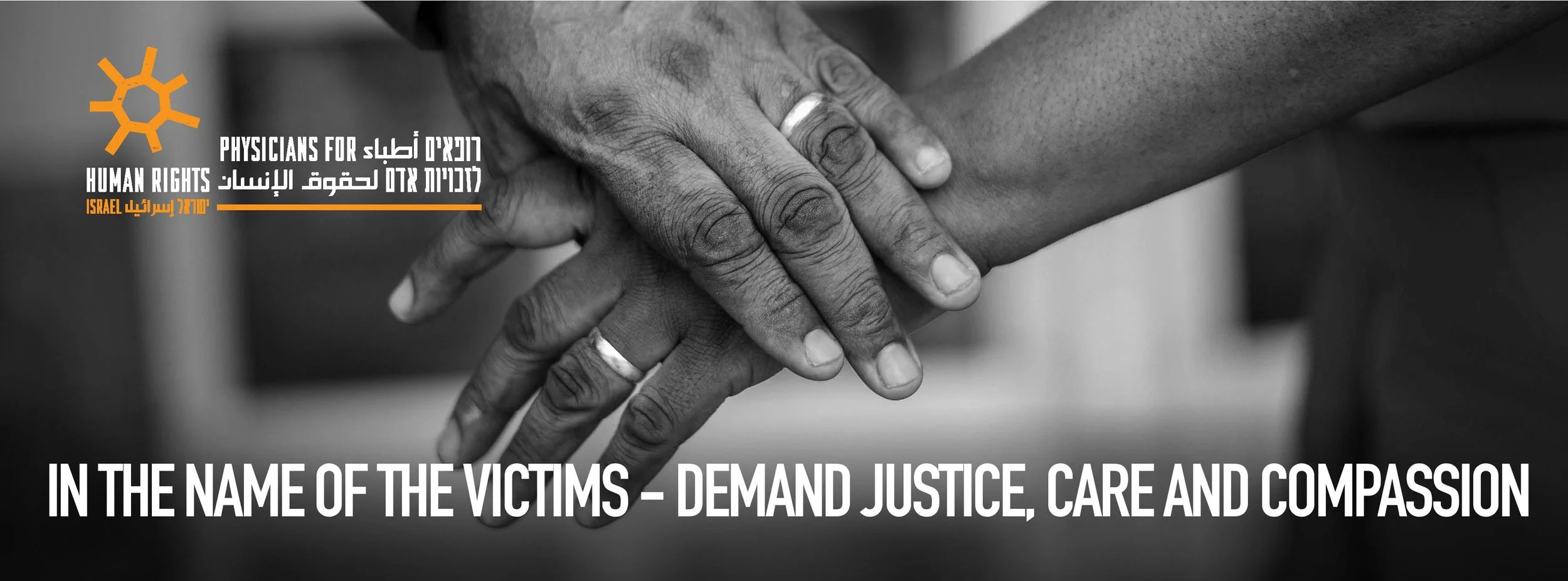
As the Jewish calendar turns to a season of forgiveness and atonement, the stark reality in Gaza tells another story — one of destruction, displacement, and famine. Against this backdrop, Physicians for Human Rights Israel (PHRI) continues its urgent work documenting violations, supporting vulnerable communities, and advocating for systemic change.
Testimonies from Gaza
PHRI has been gathering and analyzing testimonies from displaced women in Gaza who experienced pregnancy and childbirth under conditions of starvation, destroyed infrastructure, and lack of access to healthcare. These accounts reveal unimaginable suffering, raising questions of survival that resonate deeply with families everywhere. Documenting and sharing these stories remains critical in exposing the human cost of war.
Deaths in Custody
In parallel, PHRI is documenting the alarming number of Palestinians who have died in Israeli custody since October 7 — now approaching 100 cases. The causes range from violent injuries and medical neglect to harsh detention conditions. In many cases, families may never learn how their loved ones were taken from them.
Support for Status-less Women
PHRI’s Open Clinic continues to serve women without residency or citizenship in Israel, including those seeking pregnancy terminations. A forthcoming position paper will call for systemic reforms to ensure that the public healthcare system provides these essential services. For many of these women, who face daily survival struggles and past traumas, access to such care is a matter of dignity and justice.
A Call for Solidarity
PHRI emphasizes the urgent need for international attention, support, and advocacy. As Deputy Director Lee Caspi wrote: “We need you at our side in this new year, as darkness continues to close in on us, so we can continue bringing forward the victims’ voices and demand justice, care, and compassion.”
Support their work: Physicians for Human Rights Israel (PHRI)
Special Report: Linking Education and Public Safety in Chicago
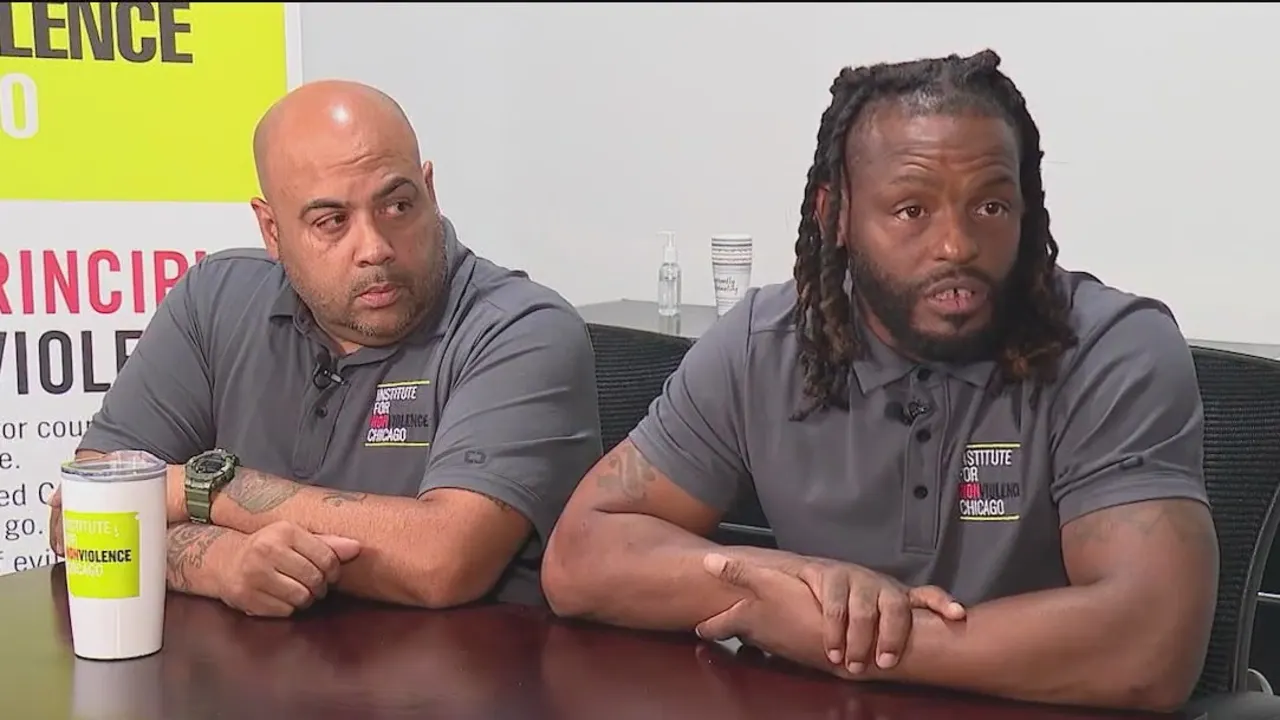
Chicago street rivals become graduates and mentors through College Unbound program. Source: Fox32 Chicago.
A recent Fox News Chicago special report has spotlighted an innovative partnership between the Institute for Nonviolence Chicago and College Unbound, showing how higher education can play a vital role in reducing crime.
Chicago’s Equity Dashboard reveals significant disparities in degree attainment: Black and Latino residents hold fewer college degrees compared to their white counterparts. In neighborhoods such as Austin, West Garfield Park, and Back of the Yards—areas long affected by disinvestment—those rates are even lower.
Research demonstrates a clear connection between education and safety: individuals with a Bachelor’s degree are five times less likely to be incarcerated. Recognizing this, the Institute for Nonviolence Chicago has partnered with College Unbound to ensure its community violence intervention (CVI) team members can pursue degrees while continuing their full-time work.
Currently, over 20 staff members are enrolled in the program, turning their lived experience into academic credentials and applying that knowledge to frontline work in combating gun violence. As CEO Teny Gross noted, “We’re investing in our staff to make Chicago safer for everyone.”
Watch the full report here: Fox News Chicago Coverage
Navigating Humanitarian Realities: OCHA oPt’s Mapping Resources

The United Nations Office for the Coordination of Humanitarian Affairs in the occupied Palestinian territory (OCHA oPt) offers a valuable collection of interactive and thematic maps that aid understanding of humanitarian conditions. These maps shed light on issues ranging from movement restrictions and displacement to access to essential services.
Understanding the Maps
OCHA oPt’s Maps section organizes visual data into several categories and filters:
Themes such as access to services (health, education, water, sanitation), displacement, casualties, destruction of property, and movement and access issues like blockades or checkpoints.
Areas covering geographic zones including the West Bank (including Area C and East Jerusalem) and the Gaza Strip.
Types of maps, including barrier maps, closure maps, situation maps, thematic maps, and reference maps.
Years, offering a timeline of changes from 2015 onward.
Featured Maps & Highlights
Recent featured products include:
West Bank Access Restrictions Map | July 2025, detailing areas where movement is limited.
Population and Internal Displacement since 7 October 2023 | Gaza Strip, showing displacement patterns after renewed conflict.
Gaza Strip Access and Movement | July 2024, illustrating constraints on mobility and humanitarian access.
Gaza Strip: Humanitarian Access Constraints, updated as of June 2024.
These visual tools help stakeholders—from aid agencies to community leaders—analyze and respond to evolving humanitarian needs.
Learn more here: https://www.ochaopt.org/maps
The 2025 Goldziher Prize Opens for Submissions

The Goldziher Prize has announced its 2025 call for entries, seeking journalists and digital creators whose work illuminates stories of solidarity between Jews and Muslims. At a time when discourse is dominated by violence, polarization, and the rise of both Islamophobia and antisemitism, the prize seeks to highlight overlooked narratives of cooperation, connection, and hope.
Beyond the Binary of Conflict
Mainstream coverage often reduces Jewish–Muslim relations to a framework of conflict. The Goldziher Prize encourages storytelling that moves past this binary to explore the deeper truths — the relationships sustained by shared history, high-level diplomacy, everyday acts of decency, and a stubborn hope for something better.
The 2025 competition specifically invites journalism and opinion pieces that may grapple with contradictions and uncertainties but ultimately broaden public understanding. From accounts of international negotiations to local community collaborations, the prize values work that sparks curiosity and challenges stereotypes.
Honoring a Legacy
Named in honor of Ignác Goldziher, a 19th-century Hungarian scholar of Islam who championed cross-cultural understanding, the prize reflects his legacy of dialogue and respect. By awarding monetary prizes to journalists and creators worldwide, the Goldziher Prize continues to recognize excellence in storytelling that brings to light new and nuanced perspectives.
In spotlighting these stories, the organizers hope to expand collective vision and trace pathways toward resolution in an era overshadowed by division.
For more details on the prize and entry guidelines, visit The Goldziher Prize.