A Year of Refusing to “Unsee”: A Call for Awareness and Action
In a world increasingly shaped by information, narratives, and perspectives, the challenge is not always a lack of visibility, but sometimes a deliberate refusal to see. This idea is powerfully captured in China Miéville’s novel The City and the City, where two societies coexist in the same physical space yet are conditioned to “unsee” one another. What begins as an imposed practice becomes a deeply internalised reality, where entire communities, lives, and experiences are ignored despite being in plain sight.
This concept resonates strongly with ongoing global realities. Over the past year, organisations working at the intersection of human rights and healthcare have grappled with the consequences of such “unseeing” in the context of conflict and humanitarian crises. The question has not only been how to respond to urgent needs, but also how to maintain visibility, accountability, and ethical responsibility in environments where silence and denial can become systemic.
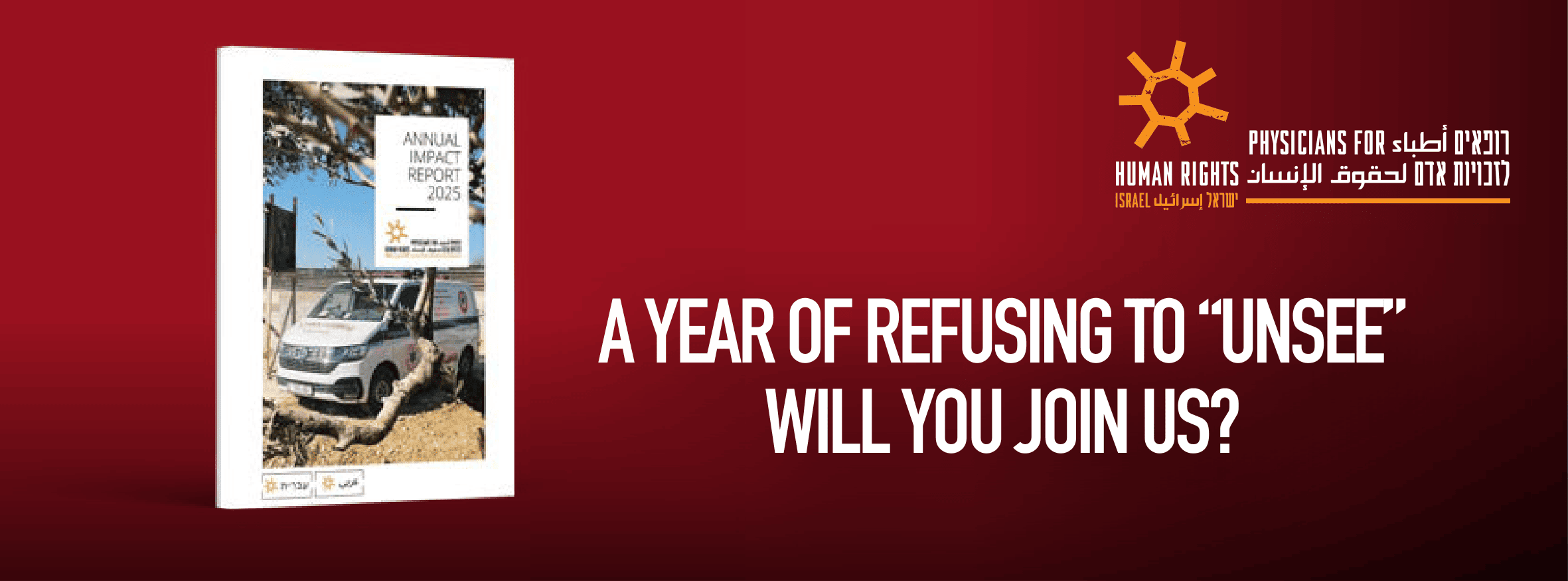
The recently released 2025 Annual Impact Report by Physicians for Human Rights Israel reflects this ongoing effort to confront invisibility. The report highlights a wide range of initiatives focused on protecting access to healthcare and advocating for vulnerable populations. These include work to secure medical rights for women and children without legal status, defending essential services for individuals experiencing homelessness, and sustaining the operation of mobile clinics in the West Bank to ensure continuity of care.
Another critical area of focus has been emergency medical access. Efforts have supported ambulance drivers working under extremely challenging conditions, striving to maintain the delivery of urgent care despite restrictions and ongoing violence. At the same time, advocacy continues around the movement of patients from Gaza to hospitals in East Jerusalem and the West Bank, an issue that remains unresolved and deeply consequential for those in need of specialised treatment.
The report also sheds light on concerns surrounding detention and healthcare access. Investigations have brought attention to cases of enforced disappearance and the conditions faced by detained individuals, including reports of widespread mistreatment and public health risks within detention facilities. Testimonies collected over the year have further revealed the experiences of healthcare workers from Gaza who have been incarcerated, highlighting ongoing efforts to secure their release and ensure their rights are upheld.
At its core, this work represents a broader shift from “unseeing” to “seeing.” It is not only about documenting events but about recognising them as matters that require response, accountability, and sustained engagement. Visibility, in this sense, becomes both a moral responsibility and a catalyst for change.
Community engagement plays a vital role in this process. Awareness, dialogue, and participation can challenge patterns of indifference and contribute to more informed and compassionate responses. The past year has demonstrated that even in difficult and complex circumstances, continued efforts to investigate, document, and advocate can create pathways toward greater accountability and justice.
As the themes of the report suggest, the act of “seeing” extends beyond observation. It calls for reflection, responsibility, and action. In a time when it may be easier to look away, the decision to remain aware and engaged becomes increasingly significant.
This moment invites individuals and communities alike to consider their role in shaping a more informed and responsive society. The question is not only whether these issues are visible, but whether there is a willingness to acknowledge them and respond.
Read more: PHRI’s 2025 Annual Impact Report