A Global Recognition for Integrity: Nikos Passas Receives International Anti-Corruption Excellence Award
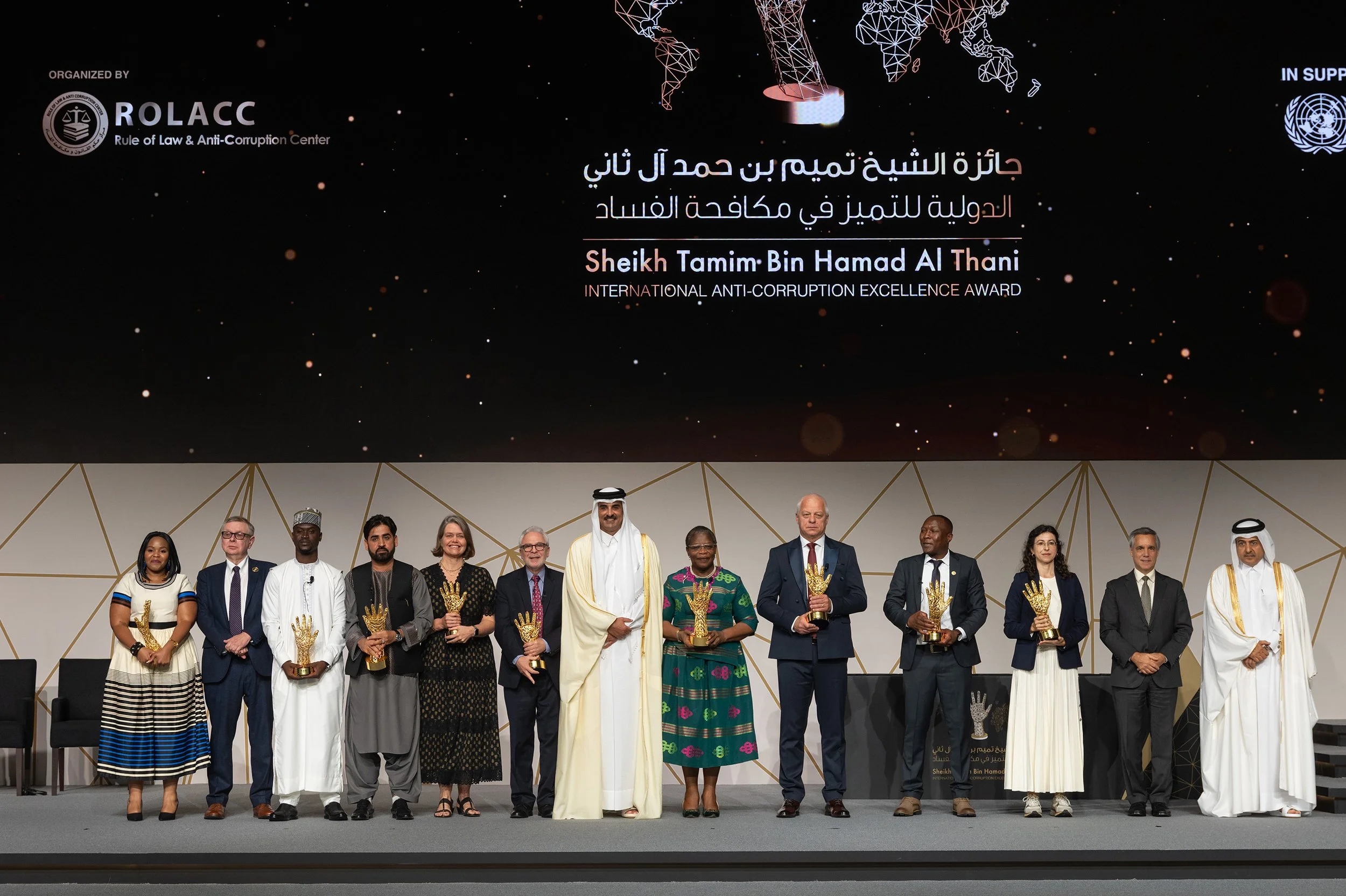
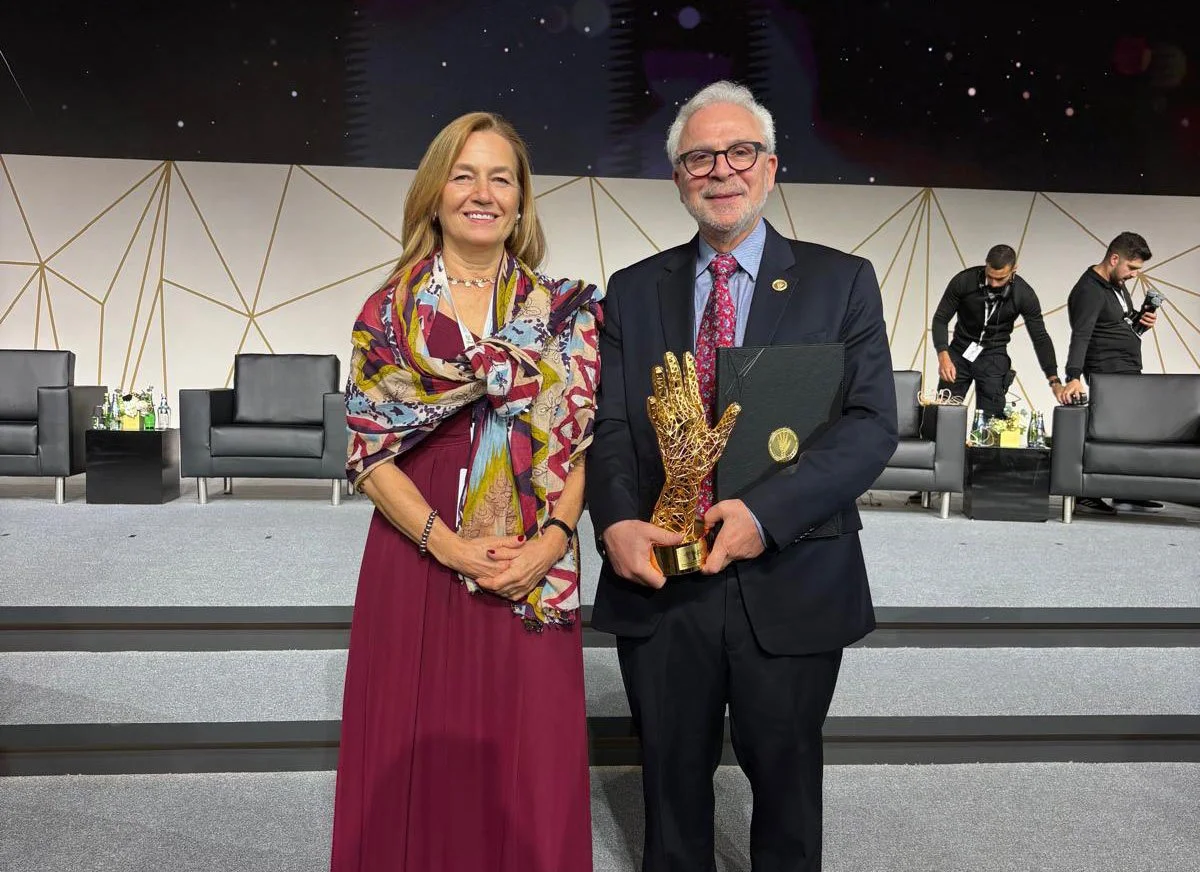
With his wife Healy and the International Anti-Corruption Excellence Award in hand last week in Doha. Nikos Passas dedicated the distinction to his three children and to Greece.
In a significant moment for global anti-corruption efforts, Nikos Passas, Professor of Criminology and Criminal Justice at Northeastern University, has been honored with the International Anti-Corruption Excellence Award. The recognition celebrates decades of impactful work dedicated to advancing transparency, accountability, and justice across borders.
The award was presented during the ninth Sheikh Tamim bin Hamad Al Thani International Anti-Corruption Excellence (ACE) Award ceremony in Doha, attended by global leaders, policymakers, and representatives from major international institutions.
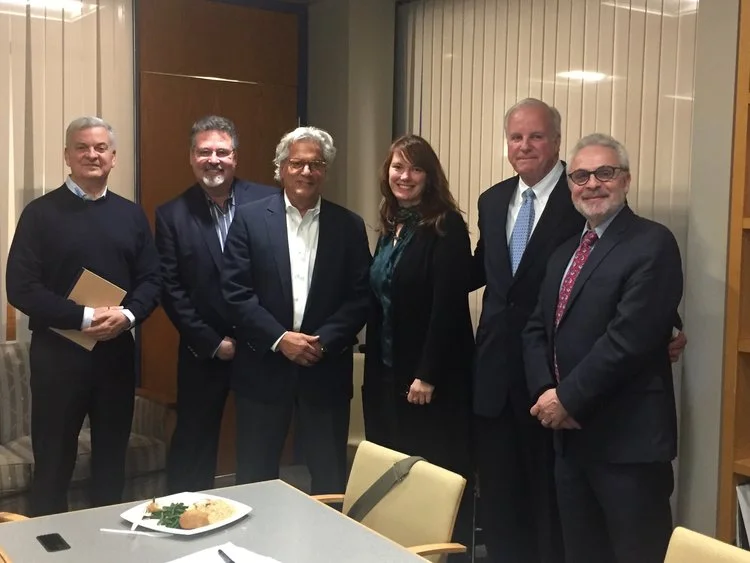
Sherman Teichman and Niko Passas at the Carr Center for Human Rights Policy of the Harvard Kennedy School in 2017.
He has been actively involved in the Confronting Corruption initiative of The Trebuchet. As part of his engagement with The Trebuchet, Passas has led several professional workshops addressing systemic corruption. These included sessions connected to the publication “It’s Legal but it Ain’t Right,” co-authored by Neva Goodwin, as well as more recent discussions focusing on corruption in Russia. His contributions have played a key role in shaping dialogue within the initiative.
A Career Dedicated to Combating Corruption
For more than 35 years, Professor Passas has been at the forefront of anti-corruption research and policy development. His work has significantly shaped global frameworks addressing financial crime, governance, and institutional integrity.
He has contributed to foundational international instruments, including the legislative guides for the United Nations Convention against Corruption and the United Nations Convention against Transnational Organized Crime. His contributions extend further into developing global tools such as the UN TRACK legal database and the UNCAC Implementation Review Checklist, used by over 190 countries.
With over 300 publications translated into multiple languages and collaborations with institutions such as the International Monetary Fund, World Bank, United Nations Office on Drugs and Crime, and the European Commission, his influence spans academia, policy, and practice.
The Philosophy Behind the Work
In a recent interview, Professor Passas emphasized a core principle that has guided his lifelong work: integrity over convenience.
He traces this philosophy back to his upbringing, highlighting the moral example set by his father, who chose ethical conduct over financial gain despite opportunities to do otherwise. This foundation shaped his understanding of corruption—not merely as illegal activity, but as a systemic issue tied to power, incentives, and institutional weaknesses.
Passas defines corruption as the abuse of entrusted power for personal gain, noting that its forms evolve depending on context. In modern systems, corruption often manifests not just through bribery, but through deeper structural influence—such as placing aligned individuals within decision-making roles, thereby undermining institutional integrity.
From Research to Real-World Impact
Throughout his career, Professor Passas has investigated complex financial crimes, including money laundering networks, informal transfer systems such as hawala, and large-scale international scandals. His work has informed regulatory frameworks, enforcement strategies, and prevention mechanisms across multiple jurisdictions.
Beyond research, he has delivered lectures and training programs in over 25 countries, equipping practitioners, policymakers, and academics with tools to better understand and combat corruption.
He has also proposed forward-looking ideas, such as the creation of observatories to systematically monitor corruption-related trials and generate data-driven insights. According to Passas, strengthening democratic processes requires informed public dialogue supported by credible evidence.
Central to his message is the concept of “eunomia”—a Greek term referring to good governance and the rule of law. His call is simple yet profound: not only to understand such principles, but to actively apply them.
The Award Ceremony in Doha
The award ceremony, held at Katara Hall in Doha, brought together distinguished global figures, including Sheikh Tamim bin Hamad Al Thani, senior government officials, and representatives from international organizations.
Professor Passas was honored in the Academic Research and Educational Materials category, alongside other global leaders recognized for innovation, journalism, youth engagement, and lifetime achievements in anti-corruption efforts.
The event highlighted the growing global commitment to integrity and showcased the diverse ways in which individuals and institutions are addressing corruption worldwide.
A Personal Dedication and a Continuing Mission
In his acceptance speech, Professor Passas reflected on the journey that led to this recognition, expressing gratitude to his family and mentors. He dedicated the award to his children and to Greece, his home country, emphasizing a vision for a future grounded in accountability, transparency, and justice.
He described the award not as a culmination, but as a renewed commitment:
“This award is not an endpoint, but a beacon… a nation built on integrity, accountability, the rule of law, good governance, and independent justice.”
Looking Forward
The recognition of Nikos Passas underscores the importance of sustained, research-driven approaches to combating corruption. His work continues to bridge theory and practice, influencing both global policy frameworks and local governance systems.
As corruption evolves in complexity, contributions such as his highlight the need for interdisciplinary collaboration, institutional reform, and a shared commitment to ethical governance.