
Noah Kazis
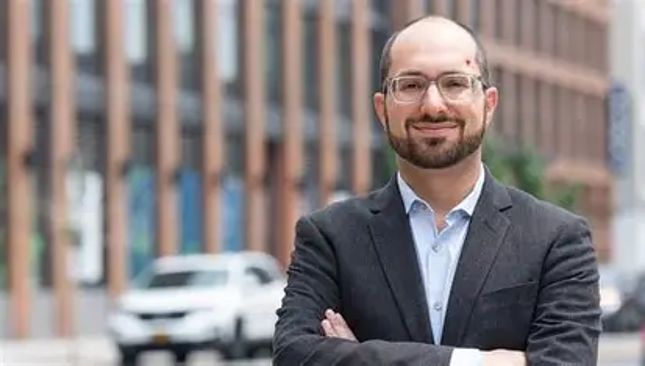
Noah Kazis is a legal scholar whose work examines how law structures the built environment, shapes patterns of urban inequality, and governs the distribution of opportunity across cities and regions. As an Assistant Professor of Law at the University of Michigan, he specializes in land use regulation, housing law, local government law, and urban policy, fields that collectively explore how institutions exercise authority over space, growth, and community formation.
Kazis’s scholarship investigates the legal and policy mechanics that determine housing supply, affordability, and spatial inclusion. He studies zoning reforms, municipal regulatory capacity, and the intersection of legal design with economic and demographic forces. Across his writing, he seeks to clarify how law can either entrench scarcity and segregation or enable more equitable, resilient, and adaptive urban systems. His work bridges doctrinal analysis, empirical research, and policy-oriented inquiry, reflecting a commitment to understanding law as an active lever for shaping material and social outcomes.
Before entering academia, Kazis served in the New York City Law Department as a Corporation Counsel Honors Fellow and later as Assistant Corporation Counsel, where he worked on matters including building emissions reductions, sanctuary city policy, and municipal charter reform. He also held a research fellowship at the NYU Furman Center for Real Estate and Urban Policy, producing research on zoning, land use, and housing markets. These professional experiences inform his academic perspective, grounding his theoretical work in the complexities of real-world governance and public-sector implementation.
Kazis’s publications span leading law reviews, interdisciplinary journals, and policy reports. His research addresses topics such as the effects of zoning on housing production, the evolution of local authority in times of social and environmental stress, and innovative pathways for increasing affordability through regulatory reform and adaptive reuse. He contributes regularly to broader policy discourse, engaging with public audiences on the challenges of housing crises, municipal decision making, and the future of urban governance.