Geoffrey H Lewis
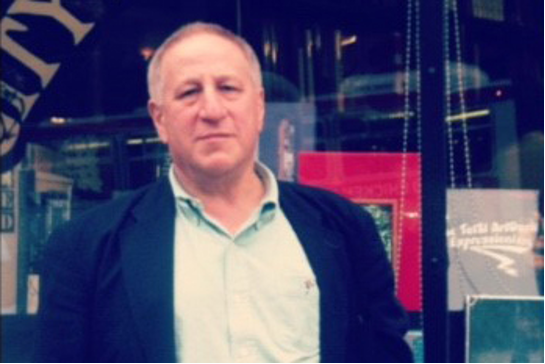
Geoffrey H. Lewis is an American attorney and civic leader whose career bridges law, international engagement, and sustained work on issues of Israel, diaspora dialogue, and regional peacebuilding. Based in the Boston area, Lewis has developed a professional profile that combines rigorous legal practice with decades of institutional service in Jewish communal leadership and cross-cultural initiatives.
Lewis earned his B.A. from Boston College (1974) and his J.D. from Northeastern University School of Law (1980). He is admitted to the Massachusetts and New York bars and has practiced before several federal courts, including the U.S. Supreme Court and the U.S. Court of Appeals for the First Circuit. As a partner at Kerstein Coren & Lichtenstein, LLP, he works across civil litigation, arbitration, mediation, corporate formation, and international business transactions. His portfolio includes advising U.S. clients engaged in investment and commercial development with Israel, reflecting a longstanding interest in the economic dimensions of regional stability and exchange.
Parallel to his legal career, Lewis has played a formative role in shaping communal and policy discourse on Israel and peace. He served as President of the Jewish Community Relations Council (JCRC) of Greater Boston, helping guide the organization’s public-policy stances and community engagement during a period marked by shifting geopolitical realities and a broadening spectrum of diaspora perspectives. He has also served on the Board of Directors of Combined Jewish Philanthropies (CJP), contributing to strategic frameworks for Israel engagement, community dialogue, and philanthropic coordination.
Lewis’s work extends internationally through his service on the boards of several organizations dedicated to coexistence, policy analysis, and cross-community understanding. These include the Israel Policy Forum (IPF), Americans for Peace Now, the Abraham Fund, and the University of Haifa. Through these roles, he has participated in organizational governance, educational initiatives, and policy advocacy supporting efforts toward a negotiated and sustainable resolution to the Israeli–Palestinian conflict. His perspective emphasizes dialogue, moderation, and the cultivation of civic spaces where disagreement can occur without fragmentation—an outlook he articulated in his published reflections on communal discourse and Israel-diaspora relations.
His writings and speeches highlight the importance of deliberative process, pluralism, and the ethical responsibilities of diaspora communities navigating the political complexities of the Middle East.