Nikias Stefanakis
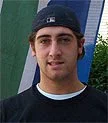
Nikias Stefanakis is a global strategist and consultant whose personal lived geography — Athens, Cambridge, Prague, Boston — shaped an international worldview from childhood. Born in Athens, Greece, moving through three countries before age 11, Nikias’ earliest experiences forged in him both a comfort with mobility and an instinct to decode complex cultural and economic systems — the exact instincts that later defined his academic focus and professional life.
Nikias is a proud graduate of Tufts University, where he majored in International Relations and Economics. At Tufts he was not only a disciplined scholar, but also a deeply engaged citizen of the campus. He played goalkeeper for the Tufts Men’s Soccer Team his first year and remained active in the International Club and the Tufts Hellenic Society.
As for the Institute for Global Leadership (IGL) at Tufts — Nikias’ undergraduate years were very much IGL-era years. While the publicly available record does not explicitly confirm a formal EPIIC seminar participation or specific IGL fellowships, Nikias’ International Relations major, his campus organizations, and his international lived biography put him in the intellectual orbit of IGL’s community and peer set at the time — students whose work was animated by real- world global systems, cross-border understanding, and rigorous policy thinking. His undergraduate profile reads as someone naturally adjacent to that ecosystem.
Professionally, Nikias has built a career in consulting, business strategy, and client advisory work — the type of strategic consulting that sits at the intersection of global markets, organization-building, and cross-cultural analysis. Colleagues and peers describe him as someone who reads organizations, reads people, and reads context — and then gives the kind of clear, precise advisory counsel that creates momentum.
His academic formation — Cambridge Rindge and Latin High School followed by Tufts — was in environments known for social justice literacy, internationalism, and intellectual pluralism. His familial roots in Greece, and youth in the Czech Republic in the years immediately after the fall of the Soviet bloc, gave him personal proximity to some of the most important political- economic transitions of the late 20th century.
Julie Chang
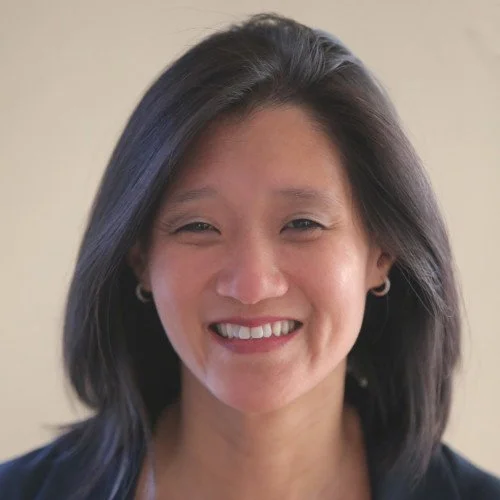
Julie Chang is a mission-driven entrepreneur and CEO whose career sits precisely at the catalytic intersection of infrastructure, sustainability, and innovation. Trained in engineering and management — including graduate studies at MIT’s Sloan School of Management — and further sharpened by her undergraduate experience at Tufts University, Julie has spent more than two decades taking technologies, ideas, and early-stage business models and scaling them into real operating businesses that improve lives, decarbonize systems, and modernize the built environment.
Her path has been marked by both technical depth and strategic leadership: she has led P&L growth, restructured business units for scale, and brought climate-positive technologies to market in the United States and internationally. As CEO, she is known for aligning diverse and cross- functional teams toward a shared transformative outcome — and then building the capital stack, regulatory strategy, and operating cadence that makes that transformation real.
Julie is widely recognized across her industry for thought leadership and results. She is the recipient of the Patrick McGovern Entrepreneurship Award; has been featured in Biz Journal’s “In Her Own Words” series, as well as the MIT Alumni Magazine — and her project leadership has been honored by both ACEC (the American Council of Engineering Companies) and AWWA (the American Water Works Association). She is a sought-after speaker and writer on the future of resilient cities, decarbonized infrastructure, and health-driven design.
Julie Chang is also a civic leader. She serves on the Board of Sustainable Westchester and the New York League of Conservation Voters, where she focuses on the activation of policy, markets, and community partnerships to accelerate climate transition and environmental equity in the greater New York region
Noa Sklar
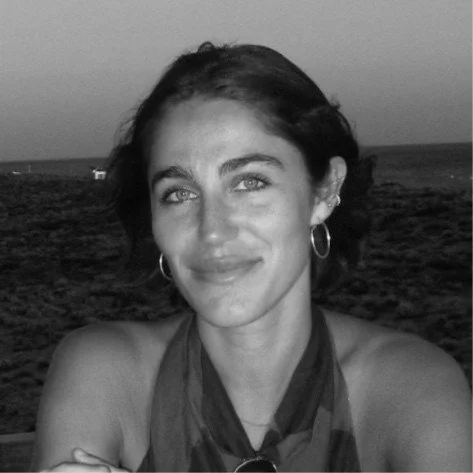
Noa Sklar is an inventive architectural designer whose work blends rigorous material inquiry with a nimble, programmatic imagination. Trained first in the visual arts and business at Tulane University and now completing a Master of Architecture at Parsons School of Design (The New School), Noa has developed a concentrated interest in the interstices of city fabric and the material stories that give places memory and meaning. Her Parsons thesis—an exploration of the “spaces that slip between” the Manhattan grid and an argument for weaving program and structure through those overlooked voids—demonstrates her ability to pair conceptual rigor with thoughtful spatial tactics.
Professionally, Noa brings this cross-disciplinary perspective to practice as an architectural designer with Rebelo de Andrade in Portugal, where she contributes to design, detail, and research across the studio’s built and speculative projects. Her international practice experience complements academic work that foregrounds materiality and sensory memory; earlier undergraduate investigation at Tulane focused on texture, material histories, and their connections to memory—an intellectual thread Noa continues to pursue in her built-environment work.
In addition to studio practice, Noa has participated in research roles that reflect her interest in the life-cycle and health of materials. She is listed as a student research assistant with the Healthy Materials Lab at Parsons’ Constructed Environments program, where her background in art, marketing, and architectural investigation supports interdisciplinary projects that interrogate material performance, sustainability, and embodied experience.
Joel Sklar
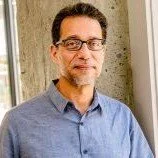
Joel Sklar is a civic-minded leader and seasoned real-estate developer whose career has shaped neighborhoods across Greater Boston. A proud honors graduate of the University of Florida, he earned his J.D. from Harvard Law School in 1989 and began his professional career in private practice, later moving into development and real-estate leadership. Joel joined Samuels & Associates as a principal in the late 1990s and today serves as President / Principal, where he oversees strategic planning, capital raising, acquisitions and transformational development projects — work that has included major Fenway-area redevelopments and urban mixed-use initiatives.
Beyond the boardroom, Joel has long combined civic stewardship with place-making. He has chaired the Boston Main Streets Foundation for nearly two decades, helping to channel grants, small-business support and creative neighborhood programming into Boston’s commercial districts. He also serves on the boards of Nuestra Comunidad Development Corporation (supporting affordable housing and economic development in Roxbury) and Boston Medical Center’s philanthropic trust — roles that reflect his commitment to equitable neighborhood revitalization and community wellbeing.
Joel’s career path includes partnership at the law firm Goulston & Storrs and leadership roles in real-estate development (including Director of Latin American Development for New England Development) prior to his tenure at Samuels & Associates, where he has been a driving force in place-making, finance, leasing and adaptive re-use projects. Industry peers regularly recognize his influence: he has been profiled in Boston Magazine and other trade outlets as one of the Boston region’s most influential real-estate figures.
James Intriligator
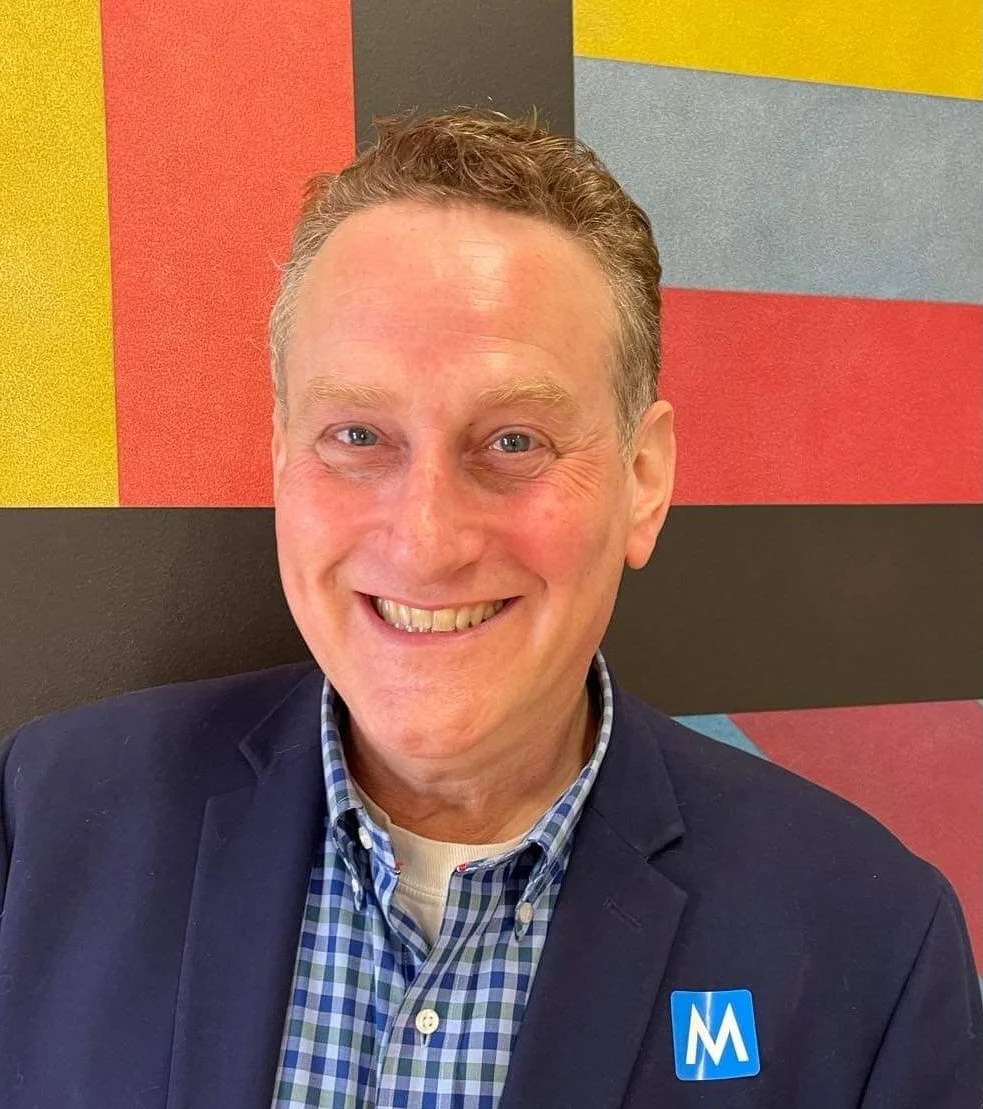
James Intriligator is a human factors engineer, designer, neuroscientist, and strategic innovator who treats AI not as a novelty, but as a new kind of thinking instrument. Trained as a cognitive neuroscientist at Harvard and seasoned in venture capital and high-tech consulting, he has spent three decades gliding across neuroscience, psychology, consumer psychology, systems design, behavior change, and civic innovation. James spent several decades developing new tools and methods (such as Multidimensional Task Analysis and Persona Multiplication) that help others develop innovations by looking through-and-across (“transversing”) dimensions, opportunities, and constraints. For James, large language models have become “transversal gliders” – tools that let him explore vast problem terrains, stitch together unlikely domains, and help others see design opportunities they did not know were there.
At Tufts, he is Professor of the Practice and Director of Strategic Innovation in Mechanical Engineering, where he has helped grow human factors from a niche program into a thriving ecosystem of undergraduates and master’s students. Through the IDEA Lab and IDEA Lab @ Fletcher, he now convenes more than 120 students from over ten majors and nearly every school at Tufts – engineering, arts and sciences, nutrition, medicine, and The Fletcher School – plus students from other universities and even high schoolers. They work on moonshot projects that range from refugee data infrastructures and climate resilience to assistive technologies and democratic innovation, with several efforts moving toward patents and commercialization and supported by an emerging open-source IDEA Lab toolkit for replication anywhere.
James is also a builder of bridges between universities, industry, and the public sphere. He has helped bring in more than $1.1M in external funding from agencies such as the Navy, Army, Air Force, DHS, FAA, and the Missile Defense Agency, as well as partners like Triton Systems, IDSS, Oculus Research, and Bose. His patents range from self-synchronizing animations to space-weather prediction techniques, and he is actively working with colleagues and technology transfer teams on IP strategies for a new generation of inventions. Alongside this, he has served as an innovation catalyst and consultant to companies from consumer goods, to banks, to AI-rich platforms, helping teams reframe problems, surface non-obvious opportunities, and move ideas toward market.
Pedagogically, James is an internationally recognized educator: HEA National Teaching Fellow, Vice-President (USA) of the International Federation of National Teaching Fellows, FRSA, winner of Tufts’ Teaching with Technology award, and repeatedly shortlisted for university-wide teaching honors. His course and professor evaluations are consistently high, and student comments describe him as “one of the most incredible professors at Tufts,” “a master who wants to share his knowledge,” and “a great professor and an even better human.” In recent years he has become a key voice helping colleagues and students use AI responsibly, delivering talks and workshops on ChatGPT, generative AI, and the future of innovation across Tufts and international teaching-fellow networks.
Beyond the lab and classroom, James works in what he calls “transversal design” – moving fluidly across art, technology, and social justice. He co-created the computer visuals for the touring Transversal Media works “Curie, Curie!” and “The Passage,” and he is developing a book on transversal design that weaves together design methods, ethics, and AI-enabled creativity. His civic and democracy work includes Education and Democracy United (EDU) and a wide array of collaborations on food systems, environmental justice, and public-interest technology. Colleagues and students repeatedly turn to him for something specific: the ability to listen carefully, traverse multiple domains at once, and surface ideas that make people say, “I hadn’t thought of it that way—but now I can’t unsee it.”
Sherman Notes: James and I have formed a uniquely productive and powerful professional relationship, centered around his distinctive, imaginative creativity, and Trebuchet projects. It is so importantly a far more personal bond, forged ironically remotely, with extensive Zooms and remote conversations over months of conversation and wild gliding voyages, during my infirmity, subsequent spine operation, and now extended recovery. We have so much in common. His warmth, and decency, his infectious good nature and ability to extend cannot be explained.
It is visceral and deep. I met him only once thus far in person! He arrived with his delightful wife, Susanne, an Unitarian Universalist Minister, one frigid late November night, at 10:30PM, toting a Zero Gravity chair to help me relax and prepare for my operation. Susanne went to Minneapolis to participate in the clergy demonstrations and training.
James is an irresistible, brilliant guy with the rare, long sought-after, “heart of gold!” I am so fortunate.
James Notes: I met Sherman through a chance introduction—and it felt a bit like stepping through a hidden door. A wonderful, empowering, and playful door into creativity and exploration. Sherman doesn’t simply have ideas; he seems to live inside an atmosphere of them: a buzzing cloud of depth, possibility, invention, rigor, and unusually good-natured humanity. Around him is a remarkable constellation of people—serious, curious, capable—each carrying their own lived experience and moral weight, and each somehow more reachable because Sherman makes the space hospitable. That ecosystem—Trebuchet and Convisero—feels like an Aladdin’s cave of civic intelligence: not just relationships, but resources, histories, and latent initiatives waiting to be activated. What excites me is not just the awesome people. Nor is it the “networking” in the usual sense; it’s the possibility of mobilizing this community into real artifacts and projects—briefs, curricula, convenings, prototypes, partnerships—that can travel outward and compound impact. I’m honored Sherman invited me in, and I’m genuinely looking forward to meeting others and contributing to help the community stay coherent, alive, generative, and able to turn conversation into action.
Updates from Kampala — Mengo Hospital, MoTIV, and Uganda’s Creative Future

A recent update from Kampala highlights developments in health care, education, and the creative economy, offering a look into several initiatives shaping progress in Uganda.
One visit included Mengo Hospital, a historic medical institution located near Namirembe Cathedral in Kampala. The hospital is nearing completion of its new Child Care Center, a project supported by Mengo Hospital Partners (MHP)—a group with long-standing ties to the Washington, DC community. The renovation addresses a clear need for expanded pediatric care, and the center recently hosted a soft dedication led by MHP board chair William Chin. Supporters hope the collaboration between MHP and Mengo Hospital will continue strengthening child-focused medical services for years ahead.
Another stop in Kampala was MoTIV (Maker of Things, Ideas, and Ventures), a growing production hub committed to supporting Uganda’s creative sector and stimulating inclusive economic development. Conversations there—and later at Cavendish University and Victoria University—centered on the relationship between the arts, public policy, and economic diversification. The discussions underscored a key theme: economies seeking resilience and inclusivity must diversify not only industries but also the approaches used to support them. Within that vision, the arts are seen as an essential contributor, capable of broadening civic imagination and enriching social life.
Interviews with Ugandan media also explored these ideas further. Conversations were held with:
Privah Eliberz Nuwamanya (NTV)
Patrick Kamara (93.3 KFM)
Edgar R. Batte (Daily Monitor)
For those interested, the NTV interview is available here, and the Daily Monitor article can be accessed here.
These engagements reflect ongoing efforts in Kampala to strengthen partnerships, promote creativity, and broaden opportunities in health, education, and cultural development.
Learn more about MHP’s work here.
A Dispatch from Gaza by Dr. Ezzideen
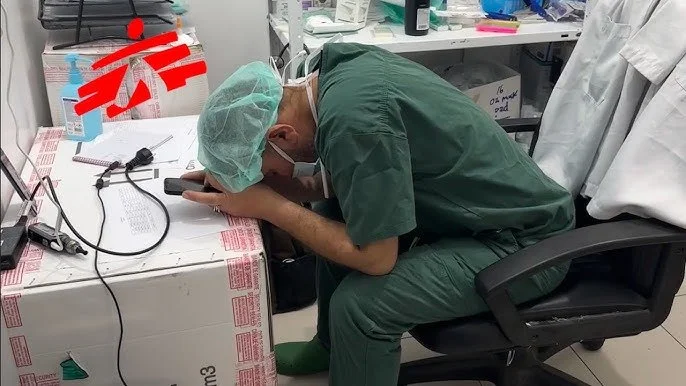
A widely shared reflection by Dr. Ezzideen has been circulating on social media, capturing the stark intersection of survival, duty, and dignity in Gaza. His account offers an unfiltered look into the daily moral burdens carried by civilians and medical workers amid the ongoing humanitarian crisis.
By Dr Ezzideen.
@ezzingaza
“
For days I had been preparing for this one day, not with strength, for I have little left, but with what remains of faith. Faith not in salvation, nor in men, but in duty, the stubborn, almost irrational duty to go on living when everything around you calls for death.
I had resolved to reopen the clinic. It was not a grand act, no, God forbid, but perhaps one small act of defiance against despair. For is it not true that even a spark trembles more brightly when surrounded by darkness?
At seven in the morning, I stepped into the street. The air smelled of dust and fatigue, and I felt both pride and shame, pride that I still walked, shame that I still could. We opened the doors, and people came, limping, pale, wordless. They carried their pain as if it were a second skin. And we worked, my hands trembling, my thoughts somewhere between heaven and madness. We had little medicine, yet we prescribed hope as though it were a drug that might trick death itself.
Until two in the afternoon, the world was reduced to one sound, the sound of suffering met with trembling compassion. A mother’s cry, a child’s shiver, a man’s silence. How strange that such a day, filled with pain, could feel almost holy.
When the last patient left, I wanted to rest. But rest, here, is indecent, a sin against those who cannot. So I walked to the market, following a rumor, the kind of rumor that, in our city, has replaced faith. I searched for medicines I could not find. I returned home empty-handed, empty-stomached, my body exhausted but my mind restless, burning, alive.
And then came a call.
“There’s a supermarket selling frozen chicken,” said the neighbor, his voice trembling like that of a man announcing salvation.
Without thought I ran. How absurd, how profoundly human, to run for a piece of meat while people lie dying. Yet I ran, as though my life depended on it. For perhaps it did.
I stood in line for over an hour, surrounded by faces that looked like mirrors of my own soul, faces of those who have lost everything yet still believe in the redemption of a small thing: food, warmth, survival. When my turn came, I bought two chickens. Only two. Yet in my heart it felt like I had won a war.
At 7:06 p.m., I returned home. My hands trembled. My back ached. I placed the two frozen bodies on the table and sat in silence.
And then the question, cruel, childlike, inevitable, rose within me:
Which was the greater victory today?
That I reopened the clinic and touched the wounds of the living?
Or that I brought home two dead birds for my family to eat?
Tell me, who among us can still tell the difference between the sacred and the absurd, between mercy and survival, between the healing of bodies and the feeding of mouths?
Here in Gaza, the smallest act is transfigured into a moral weight unbearable to the soul. To save a patient or to find food, both demand the same courage, the same humiliation, the same grace.
And so I sat there, my eyes fixed on those two chickens, and I felt, I swear I felt, that they were staring back at me, cold and mute, yet filled with the same mystery that governs all existence.
Perhaps this is how man survives: by assigning holiness to the trivial, by finding God even in the marketplace, even in hunger, even in absurdity.
Tonight, I am both doctor and beggar, both savior and fool. And if God still walks among us, He must walk disguised, perhaps as a man clutching two frozen chickens, refusing, in his own small way, to surrender.”
The full post can be accessed at the link below.
https://www.facebook.com/laura.londen.3/posts/by-dr-ezzideen-ezzingazafor-days-i-had-been-preparing-for-this-one-day-not-with-/25614730664798589/
Screening of The Chelsea Gateway Project at Temple Israel

The Chelsea Gateway Project is coming to Boston! After successful screenings in Chelsea, the film will be shown at Temple Israel on November 16 at 12:30 PM.
This short documentary — just under 18 minutes — explores powerful local stories and community experiences, offering a thoughtful and engaging look at the people behind the project.
Following the screening, Herb Selesnick will lead a moderated discussion, providing space for questions, reflections, and shared stories.
Event Details
Place: Temple Israel, Boston
Date: November 16, 2025
Time: 12:30 PM
RSVP: https://www.tfaforms.com/5065864?tfa_7=701VK00000ZMGBd
Sneak Peek
Watch a preview of the film here: https://vimeo.com/1078437873?fe=ci&fl=sv&share=copy
All are welcome to join for an afternoon of film, conversation, and community connection.
Webinar on Paramilitary Disarmament — Lessons from Northern Ireland for Today

The John W. McCormack Graduate School of Policy and Global Studies at UMass Boston is hosting an important Moakley Chair Webinar titled Disarming Hamas: Drawing on the experience of paramilitary disarmament in Northern Ireland: Parallels & Differences.
The conversation will explore what the Northern Ireland peace process — including the disarmament of the Provisional IRA — can teach the world about current challenges in the Middle East.
Event Details
Date: Tuesday, December 2, 2025
Time: 2:00 PM – 3:00 PM EDT
Location: Zoom (virtual)
Register: https://lp.constantcontactpages.com/ev/reg/dfn8zj3
Attendees will receive a confirmation email with the Zoom link upon registration.
Featured Speakers
Padraig O’Malley
John Joseph Moakley Distinguished Professor of Peace and Reconciliation, UMass Boston.
Lord John Alderdice
Former chairperson of the Independent Monitoring Commission (IMC), the body responsible for overseeing the disarmament of the Provisional IRA and other paramilitaries following the 1998 Good Friday Agreement. Lord Alderdice brings decades of experience in conflict resolution, negotiation, and post-conflict stabilization.
About the Webinar
This session will examine:
The parallels and differences between paramilitary disarmament in Northern Ireland and the situation involving Hamas.
Lessons learned from the Good Friday Agreement process.
Approaches to monitoring, negotiation, and achieving durable peace settlements.
The discussion offers an opportunity to hear directly from one of the central figures involved in the Northern Ireland peace process, alongside one of the leading scholars of reconciliation and conflict transformation.
Tel Aviv Marks 30 Years Since the Assassination of Prime Minister Yitzhak Rabin

A major public gathering took place in Tel Aviv yesterday to commemorate the 30th anniversary of Prime Minister Yitzhak Rabin’s assassination. More than 150,000 people assembled in Rabin Square for what has become the largest peace-focused rally in three decades, underscoring the scale of public engagement around democracy, coexistence, and the fate of remaining hostages.
The event brought together a wide spectrum of political and civil society figures. Speakers included Head of the Opposition Yair Lapid, Democrats Party Chairman Yair Golan, former hostage and Kibbutz Nir Oz member Gadi Mozes, former Minister Tzipi Livni, and Dr. Nasreen Haddad Haj-Yahya, Vice President of the New Israel Fund board. Across their remarks, speakers emphasized a shared message: the need to return to a path grounded in peace, equality, and partnership with Palestinian neighbors, and to reject hatred, racism, messianism, and political violence.
The rally also served as a defining moment for Israel’s liberal democratic camp, which has spent more than three years mobilizing publicly for democratic protections and for the safe return of kidnapped civilians. Organizers and attendees described the gathering as a powerful expression of collective resolve and a renewed vision of responsible, courageous leadership.
Recordings of the full memorial program are available in Hebrew, English, and Spanish, alongside a playlist of individual speeches and musical performances.
The event was supported by volunteers and partner organizations, including the UnXeptable movement, DID, and United for Israel, whose teams coordinated live translation and on-the-ground logistics.
Watch the event in full or view key speeches here:
A National Push for Psychedelic Research Gains Momentum Across the U.S.

A coordinated national movement is emerging around the future of psychedelic-assisted therapies, with states across the country advancing legislation, opening new funding streams, and forming working groups dedicated to studying the clinical potential of substances such as ibogaine. Researchers, lawmakers, and advocacy organizations are increasingly collaborating to establish regulatory frameworks centered on safety, scientific rigor, and medical responsibility.
Americans for Ibogaine (AFI) has become a key resource within this growing landscape, supporting state-level decision-makers as they explore ibogaine’s potential for treating substance use disorders, trauma, and related mental health conditions.
Arizona: $5 Million for Ibogaine Research
Arizona has opened applications for state-funded clinical trials following a $5 million allocation to study ibogaine’s safety and efficacy for neurological disease. The effort, championed by former U.S. Senator Kyrsten Sinema, highlights Arizona’s expanding role in psychedelic science. Dr. Sue Sisley of the Scottsdale Research Institute described the initiative as a crucial investment in addressing trauma and substance dependence, particularly among veterans and first responders.
California: Streamlining Psychedelic Research Approvals
California Governor Gavin Newsom has signed Assembly Bill 1103, which accelerates state approval of psychedelic research by reducing delays within the Research Advisory Panel of California. The law—supported by Veterans Exploring Treatment Solutions (VETS)—is expected to facilitate faster approval of FDA-authorized studies, including future ibogaine trials.
Colorado: Toward Regulated Therapeutic Access
Colorado is on track to become the first state to establish regulated therapeutic access to ibogaine through its Natural Medicine Health Act. The Natural Medicine Advisory Board has voted in support of adding ibogaine to its definition of “Natural Medicine,” pending compliance with international sourcing rules. Governor Jared Polis has publicly signaled support as rulemaking and budgeting begin.
Indiana: Dedicated Funding for Emerging Research
Indiana’s biennial budget includes $300,000 annually to support ibogaine research, expanding the state’s existing Therapeutic Psilocybin Research Fund. While this does not authorize treatment or patient trials, it marks another meaningful step toward advancing evidence-based research.
Kentucky: Renewed Discussion After State Testimony
Following testimony before the Kentucky Senate Health Services Committee and a public address at Centre College, lawmakers are reassessing how ibogaine research could be incorporated into the state’s opioid response strategy. Legislators are now evaluating options to join other states pursuing ibogaine-supported research initiatives in upcoming 2026 legislation.
Louisiana: State Task Force Examines Psychedelic Therapies
Louisiana’s Task Force on Alternative Therapies for Veterans recently heard expert testimony—including accounts from AFI ambassadors—on psychedelic-assisted treatments for trauma, depression, and co-occurring mental health conditions. The task force will deliver recommendations to the legislature by February 2026.
Massachusetts: Laying the Policy Foundation
Massachusetts continues developing its framework for psychedelic-assisted therapy through Senate Bill 1400, which would authorize a pilot program for research and treatment involving substances such as ibogaine and MDMA. The bill received a favorable recommendation from the Senate Ways and Means Committee and could position the state alongside national leaders in clinical evaluation.
Mississippi: Landmark Legislative Hearing
Mississippi lawmakers held a three-hour committee hearing on ibogaine research, featuring testimony from AFI leadership, veterans, and survivors. A proposal is now under consideration to allocate $5 million from opioid settlement funds toward FDA-approved trials.
New Hampshire: Joining a Multi-State Research Consortium
New Hampshire has pre-filed a bill that would allow the state to participate in a multi-state consortium exploring ibogaine as an investigational treatment for substance use disorder and related conditions. The potential collaboration follows similar initiatives in Texas and other states.
Ohio: Establishing an Ibogaine Study Committee
Ohio enacted legislation in June 2025 to create a study committee focused on evaluating ibogaine for substance use disorder and PTSD in veterans. Recommendations for legislative next steps are expected by the end of 2027.
Texas: $50 Million for FDA-Approved Clinical Trials
Texas has made the largest public investment in psychedelic research in U.S. history—$50 million dedicated to establishing FDA-approved ibogaine clinical trials. The state is now building the program infrastructure, developing safety protocols, and partnering with researchers to move toward participant enrollment.
Looking Ahead: American Ibogaine Meeting (AIM 2.0)
The second American Ibogaine Meeting (AIM 2.0) will take place November 6–9 in Aspen, Colorado, bringing together policymakers, researchers, and state representatives working to build coordinated, responsible pathways for ibogaine research nationwide. Sessions will focus on regulatory planning, public education, and infrastructure development.
As 2026 approaches, the United States is poised for significant advancements in psychedelic science. The emerging state-level momentum reflects a growing commitment to investigating ibogaine’s potential through transparent, research-driven processes.
Learn more at: http://www.americansforibogaine.org/
Universities in Gaza Devastated Amid Ongoing War
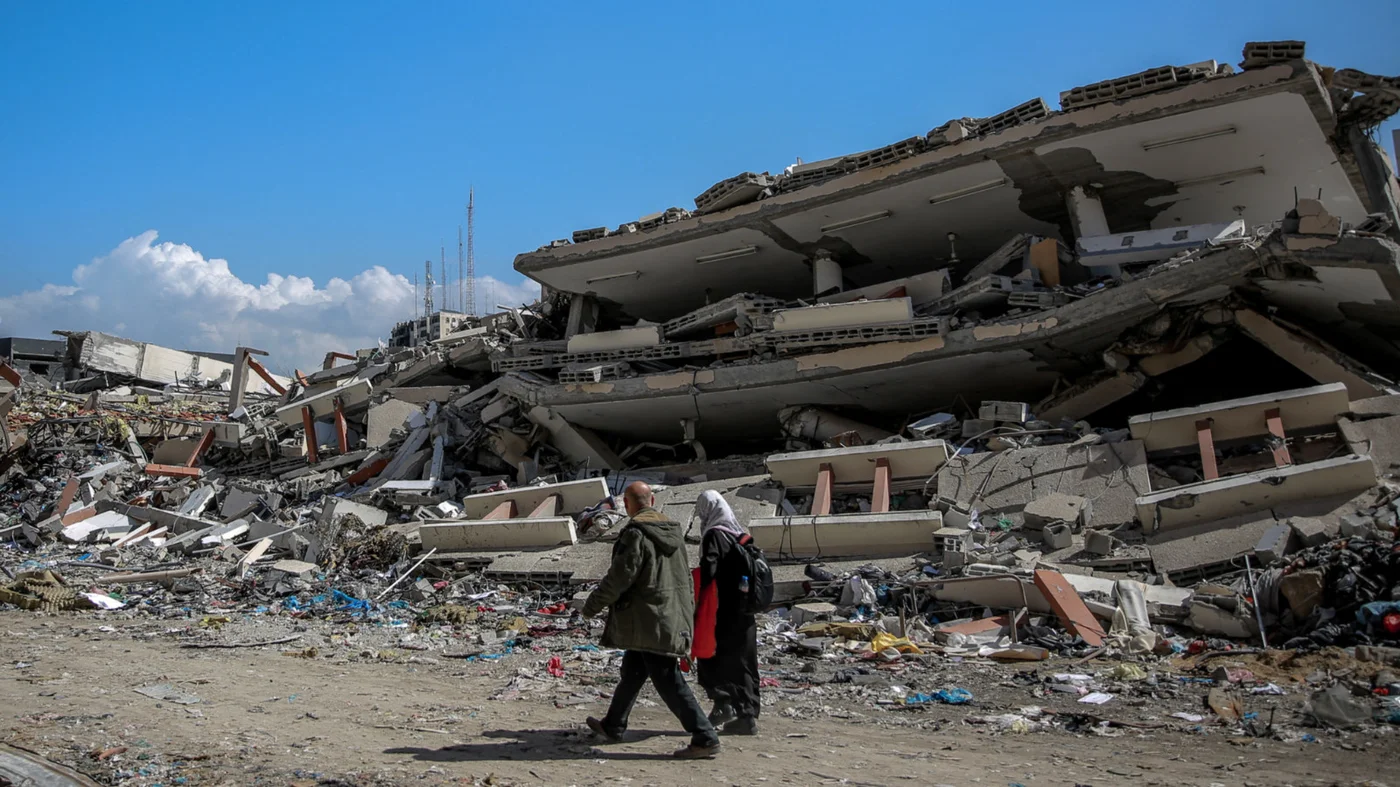
Since the start of Israel’s war on Gaza on 7 October, every university in the enclave has been either damaged or completely destroyed. Human rights groups have described the systematic targeting of higher education as part of an “ongoing crime of genocide,” with long-term consequences for Palestinian students and academic life.
More than 95 university professors have been killed, including 68 senior academics, according to Euro-Med Human Rights Monitor. For Gaza’s 90,000 students, the collapse of the higher education system has left the future of an entire generation uncertain. Below is a summary of the institutions affected.
Islamic University of Gaza
Founded in 1978 and once home to over 17,000 students, the Islamic University was destroyed on 10 October after Israeli forces alleged weapons production on campus—an accusation for which no evidence has been presented. The university had previously been hit in 2008–2009 and 2014.
Al-Israa University
The youngest university in Gaza, established in 2014, was preparing to open a public museum for its 10th anniversary. Israeli soldiers occupied the building for 70 days before demolishing it with explosives on 17 January.
Al-Quds Open University
Once Palestine’s largest non-campus university with 60,000 students across the West Bank and Gaza, its Gaza branch was turned into a military barracks and later bombed on 15 November.
Al-Azhar University
Founded in 1991 during the First Intifada, Al-Azhar hosted 12 faculties and 17,000 students. Its campus south of Gaza City was bombed on 6 November, leaving large sections destroyed.
Palestine Technical College
Established in 1993 and serving around 1,800 students, the college in Deir el-Balah has now become a shelter for displaced Palestinians.
University College of Applied Sciences (UCAS)
Founded in 1998 with 8,500 enrolled students, UCAS also operated a donor-funded start-up incubator. On 22 January, Israeli forces shelled the campus while it was sheltering displaced families.
University of Palestine
Founded in 2005 and located in al-Zahra, the university has served as a shelter during the war. On 17 January, more than 300 mines were detonated on its grounds.
Al-Aqsa University
Originally founded in 1955 as a teacher training institute, Al-Aqsa University had 26,000 students and 32 lab spaces by 2022. Israeli forces shelled the campus on 22 January, despite it being used as a shelter.
Gaza University
Established in 2006 with ten faculties, Gaza University was destroyed by an Israeli air strike in December.
Hassan II University of Agriculture and Environmental Sciences
Founded in 1992 with support from Morocco’s King Mohammed VI, this institution in Beit Hanoun was destroyed in December.
Dar al-Kalima University: Gaza Training Centre
Opened in 2020 to support young artists and cultural programming, the centre hosted workshops, exhibitions, and art therapy for children. Israeli forces destroyed the facility in late March during Holy Week.
The destruction of Gaza’s universities represents a profound blow to education, heritage, and professional development in the region. Rebuilding these institutions will take decades, with long-lasting repercussions for students, faculty, and the future of Palestinian society.
Learn more here:
https://www.middleeasteye.net/explainer-gaza-israel-palestine-war-university-destroy
RefugePoint Marks 20 Years with a Landmark Anniversary Gala

RefugePoint marked its 20th anniversary with a major celebration titled Finding Refuge Together, bringing together supporters, partners, and global advocates for refugee protection. The event highlighted two decades of the organization’s work advancing lasting solutions for refugees and set the stage for an expanded vision for the years ahead.
The evening featured a prominent conversation between Nobel Peace Prize Laureate Nadia Murad and acclaimed actor and activist Don Cheadle, both honored with RefugePoint’s Champion of Change recognition. Their dialogue explored themes of justice, displacement, and the global responsibility to protect vulnerable communities.
Speakers throughout the event reflected on RefugePoint’s founding mission and its evolution. Founder and CEO Sasha Chanoff reiterated the ongoing urgency of refugee protection, emphasizing what he called “a new pledge: a promise of belonging for those who are displaced… a promise that no one will be left alone or forgotten.”
Guests also heard from members of the refugee community, including Mangok, a former RefugePoint client now resettled in Boston, who underscored the shared obligation to extend protection:
“The burden of freedom is that you can’t endure someone else not having it.”
The gala program included video storytelling, reflections from partners, and a closing celebration that underscored both the seriousness of the work and the strength of the community supporting it. Early footage from StopGoLove Films offered attendees a preview of a forthcoming short film documenting the evening.
Donations and pledges from the event continue to be tallied, with RefugePoint noting that contributions will directly support expanded pathways and services for refugees in the coming year.
A short video highlight from the celebration is available here:
https://www.youtube.com/shorts/KLg9EcKlyRc
Click here to donate.
River Traveller — A Majestic Journey Along the Brahmaputra

Speaking Tiger Books brings forth a remarkable new work by acclaimed journalist and author Sanjoy Hazarika — River Traveller, an epic narrative that traces the life, history, and mysteries of one of the world’s great rivers: the Brahmaputra.
The Brahmaputra is no ordinary river. Rising in the Tibetan plateau, sweeping across three nations, and travelling more than 2,900 kilometres before emptying into the Bay of Bengal, it stands among the longest and widest rivers on Earth. For centuries, it has nurtured civilizations, shaped cultures, and sustained agrarian systems — while its unparalleled force has also reshaped landscapes and humbled human ambition.
In River Traveller, Hazarika draws on over two decades of journeys along and across the river, documenting its power, its beauty, and the diverse worlds it touches. Part reportage, part travel narrative, and part historical reflection, the book captures the river as both a living entity and a silent witness to the passage of empires, conflicts, and communities.
Hazarika’s chronicle takes readers through:
Tibet’s cultural resilience, as communities confront modern pressures under Chinese rule
Arunachal Pradesh and Assam, where the river’s shifting channels shape both daily life and regional identity
Bangladesh, where the Brahmaputra’s vastness meets the delta’s delicate ecosystem
Stories of explorers, map-makers, spies, kings, and colonial administrators who sought to understand and command the river
Accounts of natural disasters, political turmoil, and environmental challenges that continue to define the region
Balancing a journalist’s sharp eye with a storyteller’s depth, Hazarika examines everything from extremism to ecological stewardship, from ethnography to the river’s enduring cultural symbolism.
River Traveller is ultimately a sweeping study of human life intertwined with one of the planet’s greatest waterways — a portrait as expansive and powerful as the Brahmaputra itself.
For readers interested in travel writing, South Asian history, environmental studies, or the complex interplay between nature and society, this book is an essential addition to the shelf.
Learn more or get your copy: https://speakingtigerbooks.com/product/river-traveller/
Defending Academic Freedom at the University of Texas
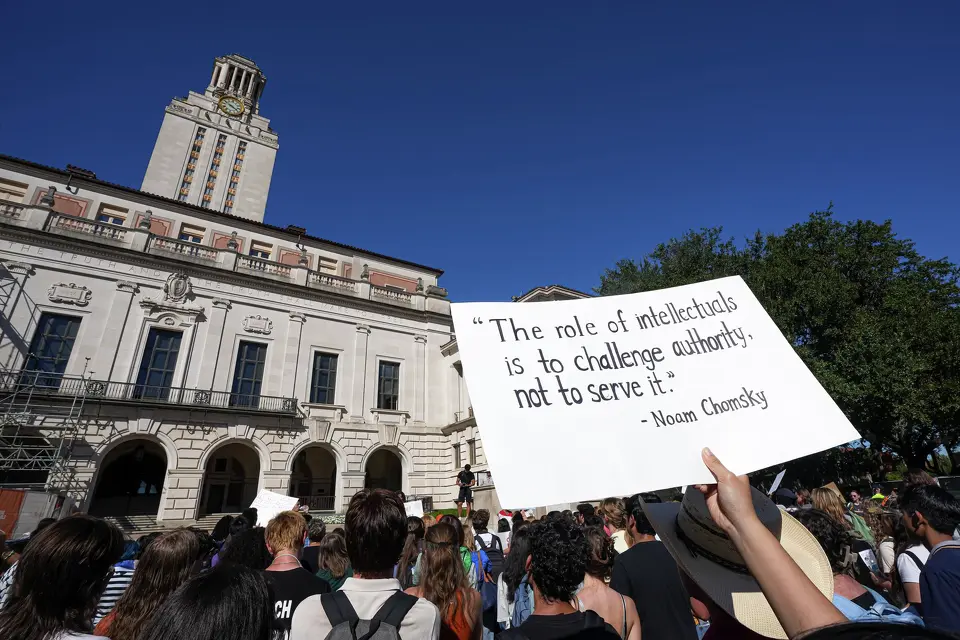
A powerful and urgent conversation is unfolding at the University of Texas, where faculty, students, and academic freedom advocates are responding to President Donald Trump’s proposed “Compact for Academic Excellence in Higher Education.” The pact, sent to UT and eight other universities, offers increased federal funding in exchange for adopting politically driven restrictions — including defining gender in narrow terms and banning academic units that “belittle” conservative ideals.
In an important opinion piece, longtime UT professor John Hoberman warns that accepting the compact would compromise the university’s integrity, independence, and commitment to free inquiry. Hoberman, who has taught racial and cultural studies courses at UT for more than four decades without any administrative interference, argues that the compact represents a dangerous break from Texas’s historical respect for academic freedom.
A Clear Threat to University Autonomy
Following the proposal, UT System Board of Regents Chair Kevin Eltife expressed willingness to collaborate with the Trump administration, making UT the only institution so far to publicly welcome the plan. By contrast, universities such as MIT and Brown swiftly refused to sign, citing grave concerns about violating academic independence.
Hoberman notes that the compact effectively functions as political extortion: comply with a loyalty oath or risk financial punishment. The proposal would:
Impose externally defined ideological conformity
Restrict academic units based on political preferences
Demand student selection based exclusively on standardized metrics
Allow government intervention in faculty speech and research
These measures, Hoberman writes, would erode the core conditions that allow great universities to flourish — namely, freedom of thought, open inquiry, and resistance to political coercion.
Scholars of Academic Freedom Speak Out
A bipartisan group of six leading scholars — Robert P. George, Tom Ginsburg, Robert C. Post, David M. Rabban, Jeannie Suk Gersen, and Keith E. Whittington — issued a joint statement reaffirming why such a compact is incompatible with the mission of truth-seeking institutions.
Their key concerns include:
Restrictions on foreign students based on politically defined ideology
Mandated political “diversity” within academic departments
Standardized-only admissions requirements imposed by government fiat
Limits on faculty autonomy in teaching and research
Censorship of speech related to U.S.-designated terrorist organizations
They emphasize that no idea — conservative or liberal — should be immune from scrutiny, and that universities must be spaces of debate, critique, and intellectual challenge. Government-directed ideological insulation, from either side, runs counter to the spirit of higher education.
The Stakes for the University of Texas
Hoberman warns that endorsing the compact would send UT into “free fall,” reversing decades of academic progress and damaging its national reputation. The compact’s intrusion into academic life — from dictating curriculum boundaries to punishing extramural speech — would dismantle the very foundation of scholarly independence.
He argues that professions draw people with particular temperament and values. Universities naturally attract those committed to open inquiry, just as policing attracts more conservative temperaments. Attempting to forcibly reshape academia into a MAGA-aligned space is not only authoritarian but unrealistic.
A Call for Collective Action
Hoberman concludes with a simple message:
It is not too late.
All nine targeted universities must stand together to reject political interference and defend academic freedom — before it disappears.
Read the original article by John Hoberman:
https://docs.google.com/document/d/1bLu3mTidXAKplIreQZ-aIDRzQmTIEOUu/edit?usp=sharing&ouid=111033924517633597069&rtpof=true&sd=true
Read Hoberman’s published article here:
https://www.statesman.com/opinion/columns/your-voice/article/opinion-ut-not-trade-academic-freedom-political-21103031.php
Learn more about John Hoberman:
https://www.the-trebuchet.org/blog/johnhoberman
MCAAD Launches New Site, Bluecadet Heads to MCN 2025, and a New Hiring Opportunity

The Milken Center for Advancing the American Dream (MCAAD) has officially launched its new website — a milestone moment shaped through a close partnership with the Bluecadet team. From early strategy and content development to design and build, the new platform reflects MCAAD’s mission to broaden access to opportunity in health, education, entrepreneurship, and financial empowerment.
Explore the new MCAAD site here:
https://www.mcaad.org/
Bluecadet at MCN 2025 — Minneapolis, October 20–22
Bluecadet will be part of the Museum Computer Network (MCN) 2025 Conference, held in Minneapolis from October 20–22.
Creative leader Rob Hassler will join the Ignite Reception on Monday, October 20, alongside other innovators across the museum and experience design world.
If you’ll be attending MCN and want to connect, Rob welcomes outreach: rob@bluecadet.com
Bluecadet Is Hiring: Creative Director, Web
Bluecadet is also searching for a Creative Director, Web — an opportunity for someone who moves confidently between design excellence, UX strategy, and team mentorship.
This leadership role focuses on creating accessible, content-rich, and mission-driven digital experiences for clients across the nonprofit and cultural sectors.
Ideal candidates bring:
Strong UX and responsive design expertise
A commitment to accessibility
Experience leading multidisciplinary creative teams
A collaborative, thoughtful design philosophy
Apply for the Creative Director, Web role here:
https://bluecadet.bamboohr.com/careers/92?source=aWQ9MjA%3D
For more about Bluecadet’s work and mission, visit here.
Gaza Food Aid Benefit Concert — Supporting World Central Kitchen

A powerful evening of music, poetry, and solidarity is coming to West Roxbury. The Gaza Food Aid Benefit Concert will take place on Friday, October 17, from 7:00 to 9:00 PM EDT, bringing together global musicians and poets in support of the life-saving work of World Central Kitchen in Gaza.
Hosted at the Theodore Parker Unitarian Universalist Church
📍 1859 Centre Street, West Roxbury, MA
the event invites community members to gather in person or join via livestream to stand with families facing hunger and humanitarian crisis.
Event Details
Date: Friday, October 17
Time: 7:00–9:00 PM EDT
Location: Theodore Parker Unitarian Universalist Church
Livestream: https://youtube.com/live/wJ1PJlJQg_vE
Tickets: $20 — https://gazafoodaidconcert.eventbrite.com
Donations: https://donate.wck.org/give/721615#!/donation/checkout
The concert is produced by Musicians for the Greater Good, a collective dedicated to using art to amplify justice, compassion, and community action. All proceeds will support World Central Kitchen, which continues to provide essential food assistance to civilians in Gaza.
How to Participate
Whether you attend in person or tune in online, your presence makes a difference. Community members are also encouraged to donate directly to support the humanitarian response.
For more information, visit: https://musiciansforthegreatergood.org
This event is an opportunity to unite through art, stand in solidarity, and help deliver nourishment and hope where it is urgently needed.
Exploring the Future of Physical + Digital Storytelling with Sasha Wallinger

This week’s Futurespaces session brings a compelling conversation at the intersection of design, technology, museums, and immersive storytelling. On Thursday, October 16 at 11 AM PST / 2 PM EST, join Sasha Wallinger, the inaugural Marketing and Communications Director at the MIT Museum, for an exploration of how physical and digital worlds continue to reshape one another.
Event Details
Thursday, October 16
11 AM PST | 2 PM EST
RSVP Here.
What to Expect
As museums, galleries, and cultural brands increasingly navigate hybrid worlds, the storytelling landscape is evolving. Sasha Wallinger—whose work spans fashion, art, technology, and experiential design—will discuss how these transformations are shaping new visitor journeys.
Drawing from her leadership at the MIT Museum, she will highlight the Remembering the Future exhibition, a project that melds material and experiential design to invite audiences into immersive encounters across both physical and digital space. Wallinger will shed light on how the museum is redefining engagement, encouraging visitors to move fluidly between environments that expand the possibilities of art and science communication.
This session is ideal for designers, technologists, museum professionals, educators, and anyone curious about the future of cultural experiences.
About Futurespaces
Futurespaces is a platform dedicated to contemporary experience design, focusing on how emerging technologies and innovative design strategies can deepen human connection.
Founded and led by Josh Goldblum, a leader in experiential design and founder of Bluecadet, Futurespaces offers webinars and in-person tours that reveal how cutting-edge experiences are conceived, developed, and brought to life.
A Powerful Conversation on Chicago’s Street Outreach You Need to Hear

A new episode of the Healthy Chicago Podcast is making waves — and for good reason. This 30-minute conversation is one of the clearest, most honest windows into the reality of street outreach, a cornerstone of Chicago’s community violence intervention (CVI) strategy.
The episode features two leaders who began their journeys on the front lines:
Sam Castro, Director of Strategic Initiatives and Partnerships at the Institute for Nonviolence Chicago
Elvis Ortega, Street Outreach Lead at the Community Safety Coordination Center and the Mayor's Office of Community Safety
Both are former outreach workers who now help shape the city’s CVI landscape. Their conversation is candid, grounded in lived experience, and full of insight into what makes street outreach not just important — but essential.
What the Episode Covers
Castro and Ortega open up about:
A street outreach worker’s “license to operate”
How exposure outings shift participants’ worldviews
The professionalization of the CVI field
Healing from trauma and supporting frontline workers
The unique ability of outreach workers to reach individuals at the highest risk of gun violence
Their reflections underscore a powerful truth: former drivers of violence have become some of the most effective agents for peace. Working with residents, community groups, and law enforcement, outreach workers are helping reshape safety in neighborhoods long impacted by gun violence.
A Conversation Everyone Should Hear
The episode is under 30 minutes — perfect for a lunch break, your commute home, or even while prepping dinner.
More importantly: share it.
Send it to anyone curious about street outreach, skeptical about CVI, or unfamiliar with the work happening across Chicago to prevent violence before it occurs.
As Sam Castro reminds us:
“We need everybody. We can’t do this alone.”
Ending gun violence is a shared responsibility. Listening — and sharing — is a powerful first step.
Choose Peace.
Watch the episode here:
Healthy Chicago Podcast – Sam Castro & Elvis Ortega
Slaughter for Hire: The Wagner Group’s Global Legacy of Violence

In The New York Review of Books, journalist Joshua Hammer exposes the chilling trajectory of the Wagner Group — a shadow army whose rise and fall mirrors Russia’s evolving use of mercenary warfare to project power, exploit resources, and instill fear from Africa to Ukraine. His piece, “Slaughter for Hire,” traces the group’s operations across continents and the violent legacy of its leader, Yevgeny Prigozhin, a former restaurateur turned warlord whose death in 2023 marked the symbolic collapse of his empire.
Hammer recounts firsthand testimony from a contact in Timbuktu, Mali, who described the terror unleashed by Russian mercenaries—extortion, arson, and executions—forcing thousands to flee to Mauritania. Once welcomed by Mali’s regime to replace departing UN peacekeepers, these fighters now operate as the Africa Corps, under direct control of Russia’s Defense Ministry. Yet their tactics and brutality remain unchanged, a continuation of Wagner’s unchecked reign.
From its beginnings in 2017, Wagner entrenched itself in nations such as Libya, Sudan, Mozambique, and the Central African Republic—backing dictators, suppressing opposition, and bartering violence for access to gold mines and oil fields. The group also gained global infamy for its ferocity in Ukraine, from the Donbas to Bakhmut, where Prigozhin’s men—often recruited from prisons—became synonymous with bloodshed.
Prigozhin’s audacious rebellion against Moscow in 2023 briefly exposed the fractures within Vladimir Putin’s war machine. His sudden death in a plane explosion later that year, widely viewed as retribution, closed a dark chapter of state-sanctioned mercenary warfare. Still, as Hammer notes, Wagner’s operations live on in different guises, continuing to shape conflicts where accountability is nonexistent and profit fuels power.
The article reviews three new books that investigate Wagner’s evolution and Prigozhin’s life—from petty criminal to Kremlin proxy to mutineer. Among them is The Wagner Group: Inside Russia’s Mercenary Army by Jack Margolin, which provides an in-depth look at how this network blurred the line between private enterprise and state violence, leaving behind a legacy of chaos and exploitation.
Learn more here: Slaughter for Hire – The New York Review of Books