
Alex Gladstein - How to Dictator-Proof Your Money

Cash is king, even if you are an activist leading a democratic movement against some of the world’s worst dictators. That’s why Bitcoin has quickly become the currency of choice for dissidents working everywhere.
April 2024 - Reposted from Journal of Democracy
Human-rights activists around the world have a new tool: unstoppable electronic cash. From Russia to Cuba to Nigeria, advocacy groups and nonprofit organizations are increasingly adopting Bitcoin — an open-source, decentralized, censorship-resistant digital currency — to help keep their donations coming and their payrolls flowing, even when authoritarian regimes and state forces shut down their bank accounts.
In almost every dictatorship, the financial system is weaponized. Whether it be Erdogan in Turkey, the military regime in Zimbabwe, the Gnassingbé family in Togo, the Maduro junta in Venezuela, or Putin in Russia, a “first-choice” tool of autocrats when dealing with dissidents or political opponents is financial deplatforming. Protests are expensive, and if organizers can no longer receive donations or pay community members, democratic momentum can fizzle out. Within this context, Bitcoin’s rise as a dissident currency of choice starts to make sense.
Bitcoin’s spread as a currency of choice for activists accounts for a small portion of its global appeal as money for people living in antidemocratic countries or with access to nothing more than weak currencies. As of today, only about 1.2 billion people enjoy the benefit of a liberal democracy that protects property rights and free speech and a native reserve currency such as the dollar, euro, or yen. Everyone else — meaning more than 80 percent of humanity — lives either under tyranny or a weak currency that is prone to devaluation and very hard to use abroad.
In Gaza today, one of the only ways to get money into the besieged territory is with Bitcoin. In Cuba, a good way to short-circuit the Communist Party’s predatory dual-currency system is to send Bitcoin to family and friends, which they can freely trade for goods, services, or Cuba’s digital currency. In Ukraine, in the days after Vladimir Putin’s invasion in 2022, the banking system went down, but Bitcoin kept working, and groups like the Open Dialogue Foundation were able to save lives by using it to get equipment and aid where it needed to go. In India, Prime Minister Narendra Modi has recently frozen the bank accounts of the country’s main opposition party, and has frequently targeted the accounts of environmental groups, labor organizers, and abolitionists. But Bitcoin is beyond his grasp.
In Venezuela, where hyperinflation destroyed a once-proud and productive country, and created the world’s largest humanitarian crisis, Bitcoin played a key role in helping people escape with their wealth intact. Many like Mauricio Di Bartolomeo, who now runs a successful payments company in Canada, were able to emigrate with their wealth intact and accessible via a seed phrase of twelve words that could be written down, sent abroad, or memorized.
In Afghanistan, the humanitarian Roya Mahboob started paying her female employees in Bitcoin in 2013, as male relatives would seize cash and other digital-payment forms were sanctioned or not available. Bitcoin, she said, gave the girls and women that she worked with freedom and sovereignty. Since the fall of Kabul to the Taliban in 2021, Bitcoin remains a critical way for her to get money into Afghanistan to fund underground education for girls who have been out of school for more than two years. Dollars simply don’t work for this purpose, but Bitcoin does, with the teachers on the receiving end able to walk into town and swap the digital currency for cash at hawala brokers.
Bitcoin was invented in 2009, and only really began to find widespread global use after its price bubble in 2017. For many years, it didn’t make a lot of sense as an activist currency, simply because it was something few people would accept. But that has changed dramatically. Today, in nearly every place on earth, there is someone happy to buy Bitcoin in exchange for local currency — whether on Telegram, in person, on WhatsApp, or on some kind of exchange — making it an ideal technology for getting value to some of the toughest places in the world where the banking system can no longer safely meet activists’ needs.
In Hong Kong, activists send Bitcoin to colleagues inside the now-occupied city, who withdraw it at ATMs without needing to show ID, keeping out of the Chinese Communist Party’s watchful eye. In Belarus, democracy protesters keep their marches going and journalists keep their stories flowing with Bitcoin. In Zimbabwe, the military regime is trying to impose a new currency, causing chaos in exchange markets. But Satoshi Nakamoto’s invention keeps working, processing new transactions every ten minutes, without government interference.
Perhaps the most surprising case was revealed at the 2022 Bitcoin Conference in Miami by North Korean human-rights advocate Yeonmi Park. She explained to the audience that most people who escape from North Korea are vulnerable women, who are often sex-trafficked or enslaved without ID and without even speaking the local language. Christian missionaries are one of the only groups working to free them. She explained that it was hard to send dollars to help the pastors on the ground in northeastern China do this work, but with Bitcoin it was much easier. If Bitcoin can work on the North Korean border, or in Gaza, or in the Democratic Republic of the Congo, then it can work just about anywhere.
Some of these early adopters are gathering on the University of Virginia campus this weekend, as the Serbian-based Center for Applied NonViolent Action and Strategies (CANVAS) hosts its 5th People Power Academy, an event focusing on equipping the leaders of global democratic movements with better tactics and tools for revolutionary change.
CANVAS itself, founded by Srdja Popovic, has recently incorporated Bitcoin education into its global programs. The Freedom Academy — a project of the World Liberty Congress, founded by Garry Kasparov, Masih Alinejad, and Leopoldo López — is in its second year of Bitcoin education, having hosted trainings and events to help its community members in Africa, Europe, and Latin America use this new tool to overcome authoritarian controls and surveillance. They will be in attendance, as will Anna Chekhovich, the financial director of the Alexei Navalny–founded Anti-Corruption Foundation, which started using Bitcoin in 2016 as a reaction to the increasingly censorious and confiscatory Putin regime. Also present will be Félix Maradiaga, a Nicaraguan civil society leader who recently spoke at the National Press Club in Washington, DC, about the Ortega regime’s strategy of freezing the bank accounts of anyone it doesn’t like, ranging from activists to the Catholic Church.
The Human Rights Foundation (HRF) — where I serve as chief strategy officer — has run Bitcoin and human-rights programming since 2017. Each year, we add more, as we see governments around the world step up their attempts to fluster dissidents and opposition groups by cutting off their funding. HRF focuses on authoritarian regimes, where this behavior is unfortunately commonplace. But the world arguably saw the first major practical use of Bitcoin in 2011, when Julian Assange posted a Bitcoin address on the WikiLeaks Twitter page in response to the U.S.-led banking blockade of the whistleblower organization.
Two years later, HRF was contacted by activists on the frontlines of protests against the Viktor Yanukovych regime in Ukraine. They asked us, and our chairman Garry Kasparov, if we could help them with a Bitcoin fundraiser. Their bank accounts were closed or shut off from the outside world. As they titled their Reddit post about the fundraiser, “Only Bitcoin Can Reach Them.” To our surprise, the campaign was a success, and the protesters received the much-needed aid, despite the government’s efforts to keep them isolated. Over the years, we kept seeing cases like this pop up, eventually prompting us to run regular programming connecting Bitcoin developers and entrepreneurs with dissident leaders in authoritarian countries. In 2020, we launched the Bitcoin Development Fund to make grants to related open-source software and educational projects in authoritarian regimes. Since then, we have made more than a hundred grants across more than forty countries, deploying more than US$4 million.
To be clear, there are many challenges with using Bitcoin. The currency remains volatile day-to-day, prompting some activists to supplement Bitcoin use with “stablecoins,” such as Tether, that are pegged to the U.S. dollar but come with the downside of being centralized and freezable. Bitcoin transaction fees can be high (currently around $5 to $10 at the time of writing), so more and more Bitcoin apps are adding technology called the Lightning Network that can send Bitcoin transactions for pennies. Of course, true bad guys can also use Bitcoin — just as they can use encrypted messaging apps such as Signal — as it cannot discriminate and is money for anyone. The biggest obstacle remains education: Most activists still haven’t heard about Bitcoin being a human-rights tool, and it remains difficult for newcomers to sort through the vast sea of scams and Ponzi schemes in the cryptocurrency space to focus on Bitcoin. Given enough time, however, anyone can learn how to overcome these obstacles.
If you are running a human-rights group and your bank account hasn’t yet been frozen, flagged, or compromised, it likely will sooner rather than later. The human-rights defenders gathered at the People Power Academy in Charlottesville know that. The good news is, there’s a tool they can use to keep their work going, even if dictators want them to stop.
Alex Gladstein is chief strategy officer at the Human Rights Foundation and the author of Check Your Financial Privilege and Hidden Repression.
30 Birds Global Ambassador for Women and Girls, Nila Ibrahimi Has just won the 2024 International Children’s Peace Prize!

We are thrilled to announce that 17-year-old Nila Ibrahimi, 30 Birds’ Global Ambassador for Women and Girls, has won the International Children’s Peace Prize 2024!
Three years ago, while Nila was in hiding in Pakistan, she recorded videos for supporters, helping us raise the funds to bring her and hundreds of others to safety.
Today, she runs her own nonprofit, speaks on behalf of 30 Birds on the global stage, and has inspired thousands with her voice and her song.
Nia’s story embodies the leadership journey we hope for all of the girls we support at 30 Birds. Our leadership and education programs are designed to take the girls from merely surviving, to growing and thriving. May Nila’s voice continue to be a catalyst, motivating others to take action in building a world where all Afghan girls can learn, lead, and live freely.
We are collecting letters and notes of congratulations for Nila, so if you’d like to wish her well, please email info@30birdsfoundation.org
Josh Goldblum honored as Blooloop 50 Influencers
Founder and CEO of Bluecadet

The blooloop 50 celebrates the work of fifty key individuals whose creativity, passion and drive has helped shape and improve the industry.
Influencers are those who impact the attractions business with their innovation and creativity. Each year our readers vote in their thousands to recognise the people they think have had the most impact in the last 12 months.
Padden Murphy - America Works: How Entrepreneurial City Leaders Can Shape the Future of Work Now
Author: Padden Murphy
Reposted from Hatch

Dramatic changes to the way we work are already in motion. Automation, artificial intelligence and advanced robotics are having cascading impacts on the workforce. This report presents the state of work in cities today and investigates the five drivers that will shape the next 10 years and strategies for city leaders across four pillars: Opportunity, Talent, Place and Social Infrastructure.
The future of work will be defined by entrepreneurial city leaders. The strategies and case studies outlined in this report showcase mayors and city leaders who turned bold visions for their city into actionable plans with clear goals, owners and integrating community voice.
Many of the challenges cities face, and the strategies outlined in this report, require city leaders to embrace bold ideas, allow for agility and adaptability, and test innovative solutions through policy, programs and public-private partnerships. As conveners, employers and policymakers, city leaders can take entrepreneurial steps to successfully navigate the changing nature of work and build inclusive cities of opportunity and community for years to come. Download the report to learn more.
Yarrow Kraner
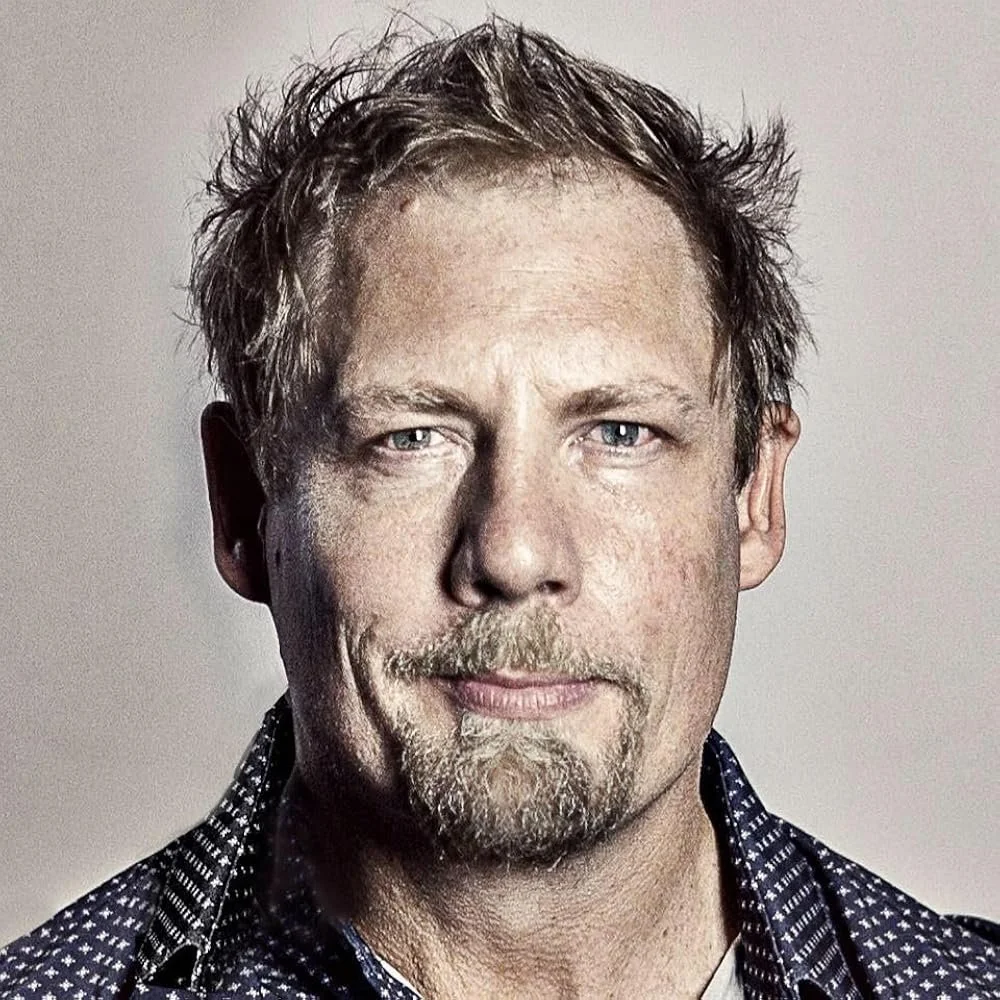
Yarrow is the Founder of HATCH and H360.ai, is an Aspen Institute Fellow, RSA Fellow, and named 2015 top 100 creatives in the U.S. by Origins. He is a pioneer of social networking and has been building communities for twenty-five years. He’s directed projects with Richard Branson, The Rock, Jody Watley, Rakim, and more. In 1999, Yarrow created an online network – The Hero Project, which grew to 1.5 Million users and was acquired by FOX Studios. In 2004, Yarrow founded HATCH, connecting global influencers to accelerate solutions for the UN’s SDGs, which has led to thousands of collaborations, companies formed, and systems change at the policy level within the United Nations. In 2016 Yarrow founded H360.ai, a machine learning impact collaboration platform. H360 connects people to resources and unlocks the potential of communities and organizations, powering a “Network of Networks.” Yarrow is featured in the book Talent for Humanity, is on the Advisory Board for the Water Innovation Accelerator (WIA), was honored with the Audfest Impact Award in 2019, and has led think tanks with Intel, Hasbro, Ernst & Young, NASA, spoken at TEDx, Vivatech, EarthX, Day One in Monaco, Business Innovation Factory Summit (BIF), and the Volcano Summit.
Alex Zerden

Alex Zerden is the founder of Capitol Peak Strategies, a risk advisory firm based in Washington, DC. Capitol Peak works with leading financial institutions, companies and organizations to navigate emerging technologies, financial regulation, and economic crisis. As a regulatory lawyer, economic policymaker, and financial diplomat, Alex brings a depth of public and private sector experience at the intersection of financial services, economics, and national security covering anti-money laundering and countering the financing of terrorism (AML/CFT), economic sanctions, investment security, financial regulation, economic crisis response, anti-corruption, financial enforcement and oversight investigations, and public-private partnerships. Alex has worked across the U.S. government, including at the White House National Economic Council, House of Representatives, Senate Permanent Subcommittee on Investigations (PSI), and the Treasury Department’s Office of International Affairs, Office of Terrorism and Financial Intelligence, and Financial Crimes Enforcement Network (FinCEN). In 2018-2019, Alex deployed to Afghanistan to lead the Treasury Department office at the U.S. Embassy in Kabul as the Financial Attaché. Alex is also an Adjunct Senior Fellow at CNAS, a Senior Advisor to WestExec Advisors, and a Term Member at the Council on Foreign Relations.
Svetlana Savranskaya

Dr. Svetlana Savranskaya is a Senior Analyst at the Archive and since 2001 the director of the Archive’s Russia programs. She leads the Cooperative Threat Reduction Program of the Archive, focusing on the Nunn-Lugar initiative and the ongoing challenges of U.S.-Russia cooperation, and manages the Archive’s relationships with Russian academics and organizations. She served as lead organizer for the historic 2013 Nunn-Lugar conference at Musgrove, and the 2015 Kazakhstan Nunn-Lugar conference in Astana and Kurchatov. Previously, she organized and led six summer schools in Russia, the successful Archive partnerships with Kuban State University, Tbilisi State University, the Gorbachev Foundation, Memorial, the Moscow Helsinki Group, and organizations in the Caucasus culminating in the series of four major international conferences on access to information in the former Soviet space. She earned her Ph.D. in political science and international affairs in 1998 from Emory University, where she studied with Professors Robert Pastor and Thomas Remington. A "Red Diploma" (equivalent of summa cum laude) graduate of the Moscow State University in 1988, she went on to study at the Institute of World Economy and International Relations of the USSR Academy of Sciences in 1989-90, before moving to Emory.
Melanie Robbins

Melanie is a Jewish-American, Israeli advocate for peace, justice and reconciliation with nearly two decades of experience in the field. After her BA in Political Science, Middle East Studies, Women and Gender Studies, Melanie moved to Israel to work in a joint Palestinian-Israeli peace education program, and later became Director of Development for the veteran Israeli peace movement Peace Now. In Israel, Melanie built an alternative tour to the West Bank, bringing hundreds of Jewish-Americans to experience the effects of the Israel-Palestinian conflict and complicate the narratives of this conflict. Melanie earned her MA in Security and Diplomacy from Tel Aviv University’s Executive Leadership program. In 2016, Melanie joined the Anti-Defamation League becoming Deputy Director for the New York – New Jersey regional office. In her role there, she continued to build bridges, between Jewish-Muslim-Arab, Black, and Latin American communities across NY and NJ. After her tenure with ADL, Melanie joined the Jewish Federation of Greater MetroWest as Director of the Global Connections Department (Israel and Overseas Programs). Currently, Melanie works as a media, policy and strategy consultant, focusing on individuals and initiatives which practice principles of democracy, and seek to build an authentically shared society across political, social and religious divides. She remains particularly connected with Palestinians and Israelis who are part of building peace and reconciliation.
Negar Razavi

An anthropologist by training, Negar Razavi joined Princeton University's Sharmin and Bijan Mossavar-Rahmani Center for Iran and Persian Gulf Studies, from Northwestern University. The research project she's working on is titled: "The Security Paradox: Policy Expertise, Transnational Security, and the Politics of Knowing (and Unknowing) Iran from Washington." Intersecting political science and anthropology, Razavi's research brings a critical, people-centered approach to studies of international security, gender, expertise, and empire to U.S.-Iran relations. Her proposed project draws on ethnographic fieldwork in Washington D.C. and Tehran where she evaluated the expanding influence of a transnational network of policy experts in shaping U.S. security policies toward Iran and the broader Middle East. She explores how and why non-state analysts have collectively promoted security approaches toward the Islamic Republic that not only exacerbate insecurities for local communities but seem to contradict the U.S.' stated security objective. Her Ph.D interests in the Department of Anthropology at the University of Pennsylvania State concentrated on political subjectivities, citizenship, and knowledge formation. Her dissertation title: “With Grave Concern”: Policy Experts, National Security, and U.S. Policy towards the “Middle East.”
Claire Putzeys

Claire is the Deputy Director for U.S. Refugee Admissions for the U.S. Department of State. Previously, she was the Director for Refugees on the National Security Council at the White House. She is the former Syria Team Lead at the U.S. Department of State for the Bureau of Population, Refugees, and Migration (PRM). She also held the same position as Team Lead for Iraq and Yemen. Prior to that, she was the Humanitarian Policy Officer for the Bureau of Population, Refugees, and Migration. Her government work also included a Political Assistant role in the U.S. Embassy in Rabat, Morocco and earlier, she was a Refugee Officer for the U.S. Department of Homeland Security. Her earliest work, which confirmed her interest in refugee issues included a consultancy for Mapendo International (now Refuge Point) and work with the Refugee Family Reunification Program for the International Rescue Committee while studying at the Fletcher School of Law and Diplomacy, where she received her MALD degree.
Sherif Mansour

Mansour is an Egyptian-American democracy and human rights advocate, best known for his work defending journalists and helping Arab Spring organizers, as well as for his research expertise in foreign policy. Most recently, he served as the Middle East and North Africa Program Coordinator for the Committee to Protect Journalists, where he managed an international team of researchers and advocates on issues of press freedom, government censorship and surveillance, and journalist safety. Before CPJ, he worked as Senior Program Officer with Freedom House where he managed a multi-million dollar project training democracy activists across the Arab world.
Over the past twenty years, Mansour has provided expert testimonies in Congress, published in the Washington Post, The New York Times, Newsweek, LA Times, Foreign Policy, and appeared live on multiple television outlets, including CNN, BBC, France 24, and Al Jazeera English. He has been recognized for his work by the Diplomatic Courier as a top foreign policy professional and was awarded a Tufts Alumni Award for his human rights work.
He has a master’s in international relations from the Fletcher School at Tufts University, and a bachelor’s in education from Cairo’s Al-Azhar University.
Linda Kulman
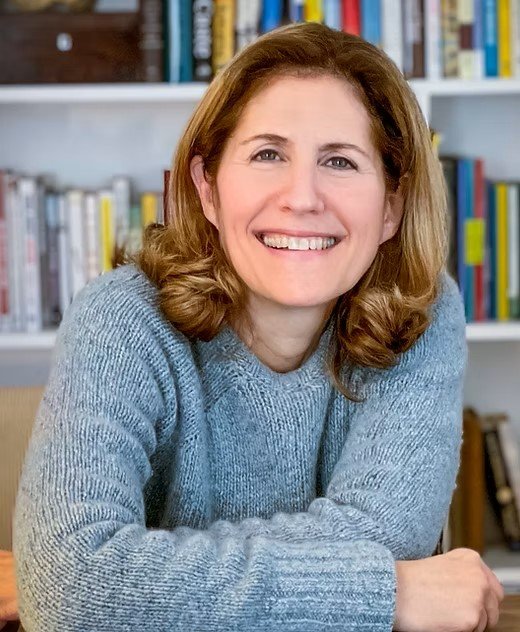
Linda Kulman is a New York Times, Amazon, and Wall Street Journal bestselling ghostwriter who has successfully collaborated on more than a dozen books. Her most recent work is Dr. Anthony Fauci’s memoir, On Call, which debuted as a #1 New York Times bestseller in June 2024. Kulman’s elite list of clients also includes former Morgan Stanley CEO John Mack, two-time heavyweight boxing champion George Foreman, former First Lady Hillary Clinton, Senator George McGovern, former Secretary of the Treasury Nicholas Brady, White House press secretary Karine Jean-Pierre, and Amanda Knox, who was wrongfully imprisoned for murder in Italy. Kulman is known for her expertise at telling each person’s unique story in the most powerful manner possible.
Daniel Kramer

Daniel is a Managing Partner at Duo Group, having several years of experience as a founder and operator of hospitality ventures in Washington, D.C. including Duke’s Grocery, Gogi Yogi, and Duke’s Counter. Most notably is his work with Duke’s Grocery where he draws upon his Jewish and his love for food from celebrating Jewish holidays as a kid in Los Angeles. East London-themed pub and supper spots in Dupont Circle, Navy Yard, Foggy Bottom & British Embassy, featuring scratch made seasonal dishes inspired by that creative culinary scene in the English capital.Prior to opening his first restaurant, Daniel worked in government, consulting, and youth athletics. He is a graduate of Tufts University who was in the Pi Sigma Alpha Honor Society and President of Delta Tau Delta. He also played varsity sports in Lacrosse and golf for all four years where was Captain and All-NESCAC.
Allison Jeffery
Allison Jeffery is a humanitarian protection professional with a decade of experience advancing safety, health, and wellbeing for children, women, and crisis-affected communities. Her background spans technical advising, program strategy, research, training facilitation, and policy development across NGOs, government, and academic institutions.
Allison was most recently a Protection Advisor with USAID’s Bureau for Humanitarian Assistance (via contractor) and Associate Faculty in the Department of International Health at the Johns Hopkins Bloomberg School of Public Health. Prior to BHA, she worked with Save the Children as a Humanitarian Child Protection Advisor and in the Peace Corps in Guatemala as a Maternal & Child Health Volunteer. She holds a Master’s in Public Health with a concentration in Humanitarian Health from the Johns Hopkins Bloomberg School of Public Health and a BA in International Relations and Spanish from Tufts University. Allison is based in Washington, DC.
Allison sits in the very highest tier of my accomplished alumni, distinguished not only for her breadth of domestic and international experience, but for her character and passionate commitment in the service to others. She was the first in her family to gain a university degree, nourished by wonderful parents, and was known by her student peers as one of the most generous and thoughtful of people. Her intellectual curiosity, clearly marked her for great accomplishments. She is a person of great character and integrity, who unfailingly in her collaborative efforts within EPIIC and in her individual research, demonstrated both her great respect for team efforts and her academic rigor.
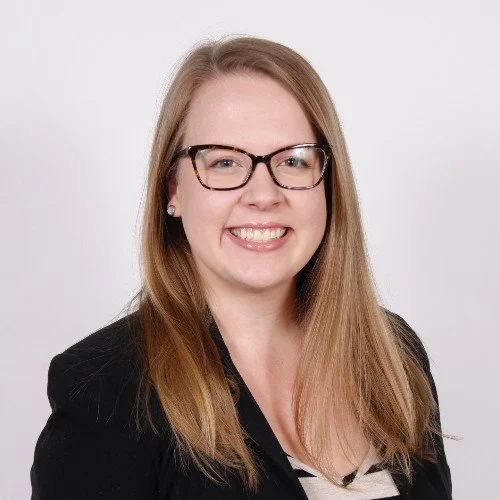
Peter Della-Rocca

Peter Della-Rocca is an analyst on the U.S. Climate team at the Environmental Defense Fund, where he pushes rapid decarbonization on the state level. He leverages timely research and analysis to advocate for responsible climate policy in states including Pennsylvania and Virginia, while contributing to the knowledge base of EDF’s coalition partners in those states. Previously, he worked at the Climate Leadership Council, where he conducted research and advocacy on carbon pricing and related policies. He holds a bachelor’s degree in government from Harvard University.
Valerie Cleland

Valerie is a senior manager for Ocean Energy and Nature for the National Resources Defense Council, Valerie advocates for policies that protect and restore our oceans. Prior to joining NRDC, Cleland was a NOAA Sea Grant Knauss Marine Policy Fellow in the Senate Committee on Commerce, Science, and Transportation where she worked to develop, analyze, and guide oceans legislation through the committee process. She originally hails from the Pacific Northwest where she worked as an environmental scientist on marine and aquatic projects for a small environmental firm and taught sea kayaking. Cleland attended Tufts University and received a master's of marine affairs from the University of Washington. She is based in NRDC's Washington, D.C. office.
Matan Chorev
Reflections on Matan Chorev
By Sherman Teichman
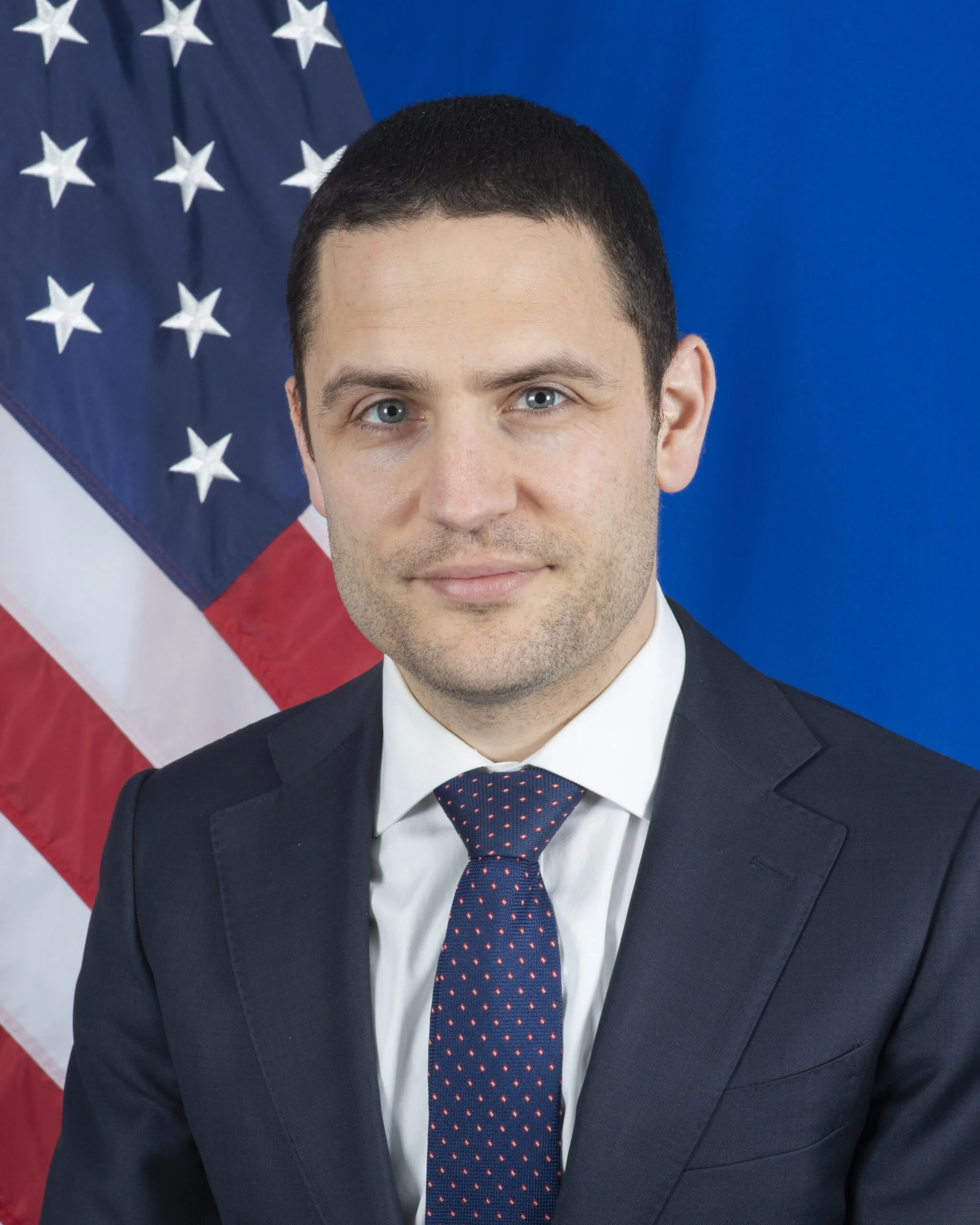
When I reflect on Matan Chorev, I do not see merely the arc of a distinguished career. I see the young man whose cello was never far from reach, whose intellectual restlessness matched his artistic discipline, and whose quiet decency and integrity left indelible impressions. To speak of Matan is to speak of rigor and humanity, brilliance and humility, seriousness of purpose and generosity of spirit.
Born in Jerusalem in 1983 and raised in Boston from 1992 onward, Matan seemed destined for a life that fused art and politics. Trained as a concert cellist, he performed throughout North and South America, Central America, and Israel, studying under Paul Katz at the New England Conservatory. His musicianship was not a distraction from his public life, but an early sign of his discipline and attunement—qualities that would later animate his intellectual and diplomatic work.
At Tufts University, where I first encountered him through my directorship of the Institute for Global Leadership, Matan quickly emerged as one of the most remarkable undergraduate students I have ever mentored. He co-founded the Middle Eastern Student Society (MESS) and helped launch the New Initiative for Middle East Peace (NIMEP), the MENA student think tank and cultural diplomacy project of the IGL. Through his enrollment in EPIIC and IGL immersive education opportunities, he conducted fact-finding missions in Israel and the West Bank, Egypt, Turkey, and Iraqi Kurdistan. His subsequent graduate work at the Fletcher School of Law and Diplomacy culminated in his MALD thesis, Iraqi Kurdistan: Internal Dynamics and Statecraft of a Semi-State, reflected the same clarity, depth, and moral seriousness that characterized his earliest work. He holds degrees from Tufts University, the New England Conservatory, and The Fletcher School of Law and Diplomacy.
At Tufts, he co-authored influential student policy papers, including No Simple Answers: Tufts Students Explore the Complexities of the Arab-Israeli Conflict.
Tufts recognized him with the James Vance Elliott Political Science Prize and the Marshall Hochhauser Prize of the Experimental College, awards that reflected not just intellectual brilliance but his ability to broaden and enrich civic and campus life. Yet what I remember most are not the accolades but the times of debate and discussion, where Matan’s incisiveness was always tempered with decency. He always won the great respect of his peers. As one of my most trusted teaching assistants, he inspired students to find their voice, guiding them while holding himself and them to unyieldingly high standards.

Matan Chorev’s Marriage with Claire Putzeys

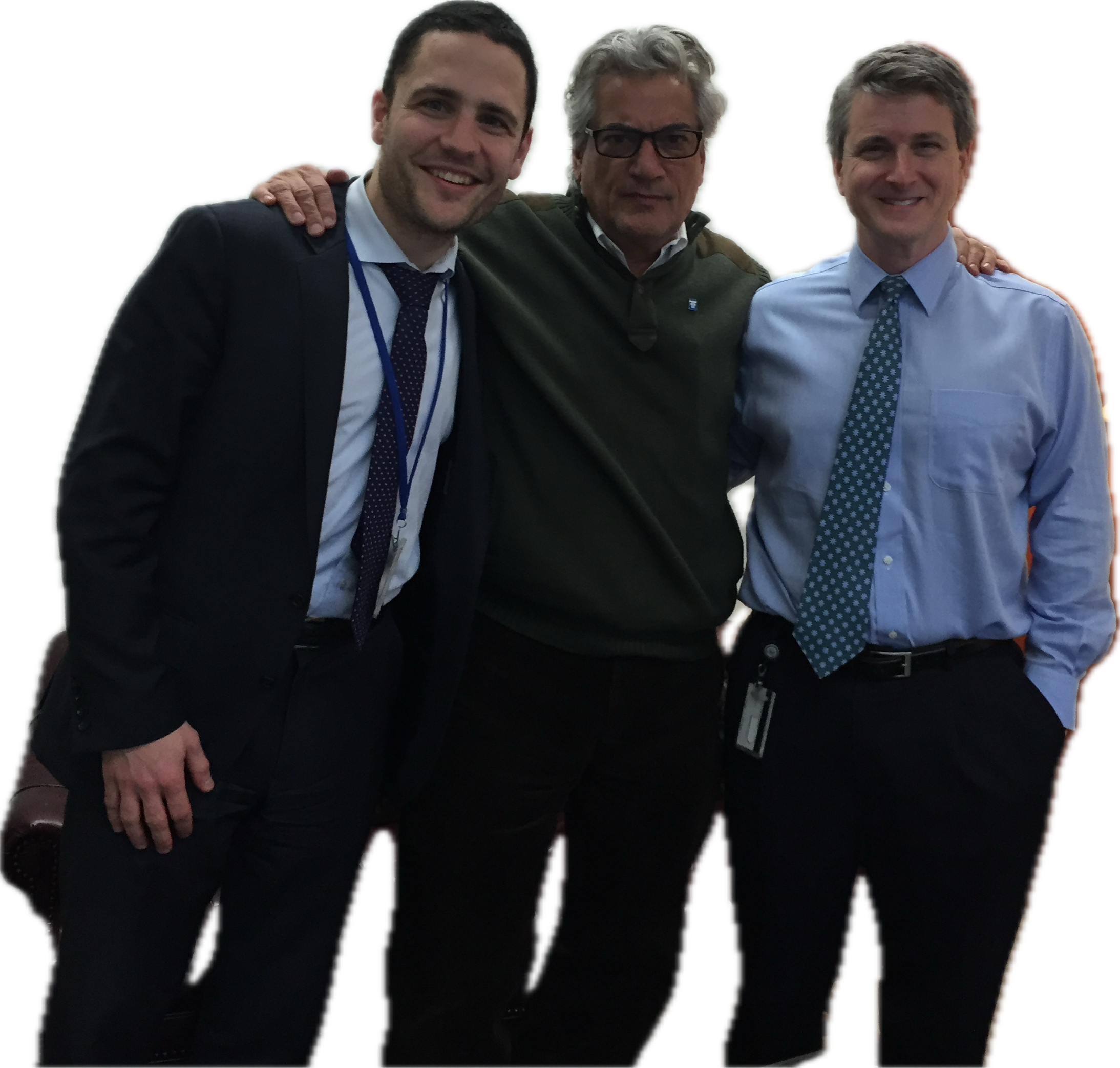
With Matan and with another of my accomplished alumni friends, Dan Feldman
It was my great privilege and honor years later to when he asked me to officiate his marriage to another of my wondrous students, Claire Putzeys. That ceremony, held great meaning for me, to be able to help join two extraordinary lives rooted in service, integrity, and care for the world. To me, their partnership has always embodied the balance between private devotion and public calling that defines their lives*.
Professionally, his trajectory has been extraordinary. At Harvard’s Belfer Center for Science and International Affairs, he became Executive Director of the Future of National Security Project and co-led, with another of my alumni Jake Sherman, the seminal institutes workshop Prospects for Security and Political Reconciliation in Afghanistan. This effort encouraged policymakers to look beyond material incentives in reintegration programs and to confront the realities of reconciliation, then even with the Taliban with intellectual honesty.
He later entered government service. At USAID, he served in Morocco and Yemen, working on crisis governance and stabilization then becoming speechwriter and senior advisor to William J. Burns, then U.S. Deputy Secretary of State, and most recently the former Director of the CIA. He also served as a Rosenthal Fellow at the Office of the Deputy Assistant Secretary of Defense for Policy Planning. Matan was also intimately involved with the Geneva talks with Iran which produced which produced the now aborted significant diplomatic agreement which helped curtail Iran’s development of a nuclear weapon. Burns praised Matan in his memoir The Back Channel, acknowledging his precision, and care with the preparation of the book specifically the fastidious treatment of declassifying documents.
Matan was chosen by Burns to become his Chief of Staff of the Carnegie Endowment for International Peace (2015–2020) which Burns directed. Subsequently, he was Chief of Staff of the National Security and Foreign Policy team on the Biden-Harris Transition, where he was also the principal author of the 2020 Democratic Party Foreign Policy Platform. Critically, he then served as Principal Deputy Director of the Secretary of State’s Policy Planning Staff (a formidable position first created by George Kennen), helping to shape U.S. foreign policy in a time of historic global change.
Today, he continues this work at the RAND Corporation, where as Associate Director of the Global and Emerging Risks Division, he examines the profound uncertainties of our era with the same balance of foresight and precision that has defined his career. He is also a David Rockefeller Fellow at The Trilateral Commission and a term member of the Council on Foreign Relations. His most recent article is America Should Assume the Worst About AI.
And yet, beyond the distinctions and titles, what I return to is his human decency. The way he treats colleagues with respect, adversaries with fairness, and friends with loyalty. The humility that tempers brilliance. The cello, the scholarship, the diplomacy—these were not separate pursuits but strands of a life woven together by discipline, empathy, and integrity.
As an educator, there is no greater satisfaction than seeing a student grow into not just a professional of consequence, but a person of principle. In Matan, I see both. I admire him deeply—not just for what he has accomplished, but for the manner in which he has chosen to live, to serve, and to care.
Matan’s publications reflect both range and depth. His writings are distinguished not merely by their analytic precision but by their moral weight.
Chorev, Matan. “The Dilemma of the Semi-State: Internal Dynamics and Statecraft of Iraqi Kurdistan.” Fletcher School MALD Thesis, 2007.
Chorev, Matan (with Jake Sherman). “Prospects for Security and Political Reconciliation in Afghanistan.” Belfer Center for Science and International Affairs, Harvard Kennedy School, 2008.
Chorev, Matan (with Conor Foley). “Ruthless Humanitarianism: Why Marginalizing Private Peacekeeping Kills People.” In Private Military and Security Companies: Ethics, Policies and Civil-Military Relations, Routledge, 2008.
Chorev, Matan (with Kristian Horvei). “Combating Terror Financing: Foreign Policy Implications for the United States.” Insights, Institute for Global Leadership at Tufts University, 2005.
Chorev, Matan (with Negar Razavi and Matt Edmundson). “No Simple Answers: Tufts Students Explore the Complexities of the Arab-Israeli Conflict.” NIMEP Insights, 2006.
Contributions in Turkish Policy Quarterly, Journal of Peace Operations, Hemispheres, Al-Nakhlah, and Insights (Tufts Institute for Global Leadership).
*→ The moment also provided me with a memorable moment of levity. Many of my former students were present at the ceremony, looking at their stopwatches and iPhones because knowing of my tendency to speak spontaneously and knowing that Matan had given me a strict 4 minutes to talk about them both, there was an under and over bet about whether I could hit the mark. My remarks ended at the nanosecond of 4 because my wife insisted that I write my comments out and I timed them.
Tom Blanton

Tom Blanton is the director since 1992 of the independent non-governmental National Security Archive at George Washington University (www.nsarchive.org). He won the 2004 Emmy Award for individual achievement in news and documentary research, and on behalf of the Archive received the George Polk Award in 2000 for “piercing self-serving veils of government secrecy.” His books have been awarded the 2011 Link-Kuehl Prize from the Society for Historians of American Foreign Relations, selection by Choice magazine as “Outstanding Academic Title 2017,” and the American Library Association’s James Madison Award Citation in 1996, among other honors. The National Freedom of Information Act Hall of Fame elected him a member in 2006, and Tufts University presented him the Dr. Jean Mayer Global Citizenship Award in 2011 for “decades of demystifying and exposing the underworld of global diplomacy.” His articles have appeared in Diplomatic History, Foreign Policy, The New York Times, and the Washington Post, among many other journals; and he is series co-editor for the National Security Archive’s online and book publications of more than a million pages of declassified U.S. government documents obtained through the Archive’s more than 60,000 Freedom of Information Act requests.
Ralph Alswang

One of the nation's premiere photographers for more than 25 years, Ralph worked for Newsweek, Reuters, and, for eight years, at the White House under Bill Clinton as the President and First Lady’s official documentary photographer. This job took him to every state in the union and to more than 60 countries, where he captured history as it was unfolding. Ralph has photographed hundreds of celebrated people and events. Here is his site.
Ahmed Fouad Alkhatib

Ahmed Fouad Alkhatib is an American writer and analyst who grew up in Gaza City, having left in 2005 as a teenage exchange student to the United States. He writes extensively on Gaza’s political and humanitarian affairs and has been an outspoken critic of Hamas and a promoter of coexistence and peace as the only path forward between Palestinians and Israelis. Alkhatib is a resident senior fellow with the Scowcroft Middle East Security Initiative at the Atlantic Council’s Middle East Programs. He has a bachelor’s degree in business administration and a master’s in intelligence and national security studies. His writing has been published in US and Israeli outlets, and his opinions and comments have been featured in the international press.