Adam Goodman
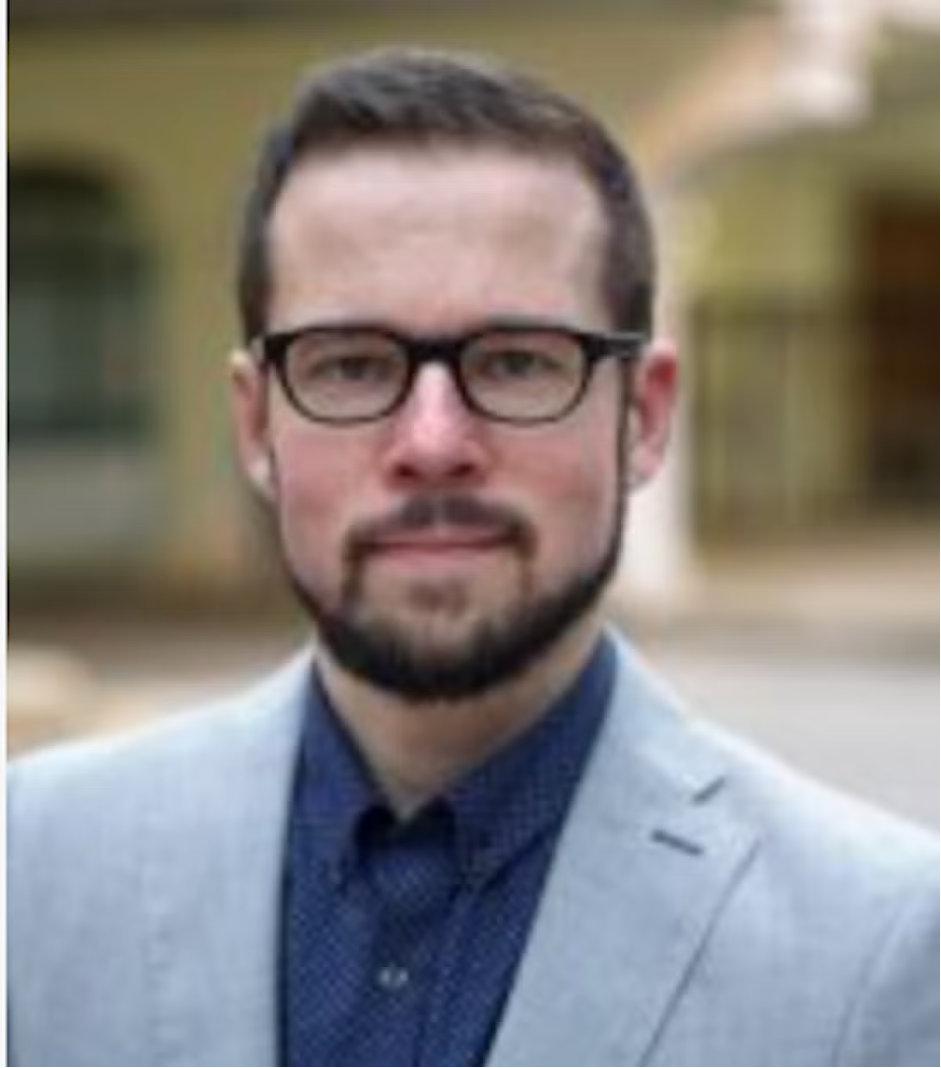
Adam Goodman is a historian whose work rigorously situates the politics of migration, exclusion, and state power within the longue durée of United States history. He serves as Associate Professor of History and Latin American and Latino Studies at the University of Illinois Chicago (UIC), where his scholarship and teaching explore the interconnections between migration policy, law, social movements, and racial and ethnic identity in the twentieth and twenty-first centuries.
Goodman’s academic formation culminated in a Ph.D. in History from the University of Pennsylvania, one of the leading doctoral programs in U.S. and transnational migration history. Prior to his appointment at UIC, he held a Provost’s Postdoctoral Fellowship in the Humanities at the University of Southern California and was a visiting scholar at the Universidad Nacional Autónoma de México in Mexico City—positions that reflect his commitment to comparative and transborder historical inquiry. He also spent the 2022–23 academic year as an Andrew W. Mellon Foundation Fellow at the Center for Advanced Study in the Behavioral Sciences at Stanford University.
Goodman’s scholarship centers on the historical mechanisms of immigration control and expulsion in the United States, with particular attention to how legal, administrative, and cultural forces have shaped the governance of mobility and belonging. His most influential book, The Deportation Machine: America’s Long History of Expelling Immigrants (Princeton University Press, 2020), reconstructs over 140 years of U.S. deportation practices, demonstrating that expulsive logics and bureaucratic apparatuses are not recent aberrations but deeply embedded features of the modern state. Drawing on extensive archival research across English- and Spanish-language sources, the work unpacks how formal deportations, coerced “voluntary” departures, and fear-driven self-deportation together constituted a systemic “machine” that operated with profound human cost long before the contemporary moment.
The Deportation Machine received wide academic recognition: it was a finalist for the Los Angeles Times Book Prize in History, won the PROSE Award in North American History from the Association of American Publishers, and received the Henry Adams Book Prize from the Society for History in the Federal Government, among other honors.
In addition to his monograph, Goodman has published influential articles in venues such as the Journal of American History and has written essays and commentary for The Nation and The Washington Post, bringing historical insight to contemporary debates on migration policy and border politics. He appears regularly in English- and Spanish-language media, including BBC Radio 4, Univisión, and Latino USA, reflecting his dual commitment to academic rigor and public engagement.
Goodman plays a significant role in collaborative knowledge projects such as the #ImmigrationSyllabus, an initiative that curates historical resources for educators and the public. He also serves on the Statue of Liberty-Ellis Island Foundation History Advisory Committee and has coordinated interdisciplinary seminars on borderlands and Latino/a studies, underscoring his engagement with community-oriented scholarship and intellectual networks.
Across his work, Goodman exemplifies the historian as both archival investigator and public interpreter of how states construct, contest, and enforce boundaries of inclusion and exclusion. His contributions deepen understanding of how historical structures of power shape present-day policy landscapes, making his voice central to scholarly and civic conversations about migration, citizenship, and social justice.