Tel Aviv Marks 30 Years Since the Assassination of Prime Minister Yitzhak Rabin

A major public gathering took place in Tel Aviv yesterday to commemorate the 30th anniversary of Prime Minister Yitzhak Rabin’s assassination. More than 150,000 people assembled in Rabin Square for what has become the largest peace-focused rally in three decades, underscoring the scale of public engagement around democracy, coexistence, and the fate of remaining hostages.
The event brought together a wide spectrum of political and civil society figures. Speakers included Head of the Opposition Yair Lapid, Democrats Party Chairman Yair Golan, former hostage and Kibbutz Nir Oz member Gadi Mozes, former Minister Tzipi Livni, and Dr. Nasreen Haddad Haj-Yahya, Vice President of the New Israel Fund board. Across their remarks, speakers emphasized a shared message: the need to return to a path grounded in peace, equality, and partnership with Palestinian neighbors, and to reject hatred, racism, messianism, and political violence.
The rally also served as a defining moment for Israel’s liberal democratic camp, which has spent more than three years mobilizing publicly for democratic protections and for the safe return of kidnapped civilians. Organizers and attendees described the gathering as a powerful expression of collective resolve and a renewed vision of responsible, courageous leadership.
Recordings of the full memorial program are available in Hebrew, English, and Spanish, alongside a playlist of individual speeches and musical performances.
The event was supported by volunteers and partner organizations, including the UnXeptable movement, DID, and United for Israel, whose teams coordinated live translation and on-the-ground logistics.
Watch the event in full or view key speeches here:
A National Push for Psychedelic Research Gains Momentum Across the U.S.
A coordinated national movement is emerging around the future of psychedelic-assisted therapies, with states across the country advancing legislation, opening new funding streams, and forming working groups dedicated to studying the clinical potential of substances such as ibogaine. Researchers, lawmakers, and advocacy organizations are increasingly collaborating to establish regulatory frameworks centered on safety, scientific rigor, and medical responsibility.
Americans for Ibogaine (AFI) has become a key resource within this growing landscape, supporting state-level decision-makers as they explore ibogaine’s potential for treating substance use disorders, trauma, and related mental health conditions.
Arizona: $5 Million for Ibogaine Research
Arizona has opened applications for state-funded clinical trials following a $5 million allocation to study ibogaine’s safety and efficacy for neurological disease. The effort, championed by former U.S. Senator Kyrsten Sinema, highlights Arizona’s expanding role in psychedelic science. Dr. Sue Sisley of the Scottsdale Research Institute described the initiative as a crucial investment in addressing trauma and substance dependence, particularly among veterans and first responders.
California: Streamlining Psychedelic Research Approvals
California Governor Gavin Newsom has signed Assembly Bill 1103, which accelerates state approval of psychedelic research by reducing delays within the Research Advisory Panel of California. The law—supported by Veterans Exploring Treatment Solutions (VETS)—is expected to facilitate faster approval of FDA-authorized studies, including future ibogaine trials.
Colorado: Toward Regulated Therapeutic Access
Colorado is on track to become the first state to establish regulated therapeutic access to ibogaine through its Natural Medicine Health Act. The Natural Medicine Advisory Board has voted in support of adding ibogaine to its definition of “Natural Medicine,” pending compliance with international sourcing rules. Governor Jared Polis has publicly signaled support as rulemaking and budgeting begin.
Indiana: Dedicated Funding for Emerging Research
Indiana’s biennial budget includes $300,000 annually to support ibogaine research, expanding the state’s existing Therapeutic Psilocybin Research Fund. While this does not authorize treatment or patient trials, it marks another meaningful step toward advancing evidence-based research.
Kentucky: Renewed Discussion After State Testimony
Following testimony before the Kentucky Senate Health Services Committee and a public address at Centre College, lawmakers are reassessing how ibogaine research could be incorporated into the state’s opioid response strategy. Legislators are now evaluating options to join other states pursuing ibogaine-supported research initiatives in upcoming 2026 legislation.
Louisiana: State Task Force Examines Psychedelic Therapies
Louisiana’s Task Force on Alternative Therapies for Veterans recently heard expert testimony—including accounts from AFI ambassadors—on psychedelic-assisted treatments for trauma, depression, and co-occurring mental health conditions. The task force will deliver recommendations to the legislature by February 2026.
Massachusetts: Laying the Policy Foundation
Massachusetts continues developing its framework for psychedelic-assisted therapy through Senate Bill 1400, which would authorize a pilot program for research and treatment involving substances such as ibogaine and MDMA. The bill received a favorable recommendation from the Senate Ways and Means Committee and could position the state alongside national leaders in clinical evaluation.
Mississippi: Landmark Legislative Hearing
Mississippi lawmakers held a three-hour committee hearing on ibogaine research, featuring testimony from AFI leadership, veterans, and survivors. A proposal is now under consideration to allocate $5 million from opioid settlement funds toward FDA-approved trials.
New Hampshire: Joining a Multi-State Research Consortium
New Hampshire has pre-filed a bill that would allow the state to participate in a multi-state consortium exploring ibogaine as an investigational treatment for substance use disorder and related conditions. The potential collaboration follows similar initiatives in Texas and other states.
Ohio: Establishing an Ibogaine Study Committee
Ohio enacted legislation in June 2025 to create a study committee focused on evaluating ibogaine for substance use disorder and PTSD in veterans. Recommendations for legislative next steps are expected by the end of 2027.
Texas: $50 Million for FDA-Approved Clinical Trials
Texas has made the largest public investment in psychedelic research in U.S. history—$50 million dedicated to establishing FDA-approved ibogaine clinical trials. The state is now building the program infrastructure, developing safety protocols, and partnering with researchers to move toward participant enrollment.
Looking Ahead: American Ibogaine Meeting (AIM 2.0)
The second American Ibogaine Meeting (AIM 2.0) will take place November 6–9 in Aspen, Colorado, bringing together policymakers, researchers, and state representatives working to build coordinated, responsible pathways for ibogaine research nationwide. Sessions will focus on regulatory planning, public education, and infrastructure development.
As 2026 approaches, the United States is poised for significant advancements in psychedelic science. The emerging state-level momentum reflects a growing commitment to investigating ibogaine’s potential through transparent, research-driven processes.
Learn more at: http://www.americansforibogaine.org/
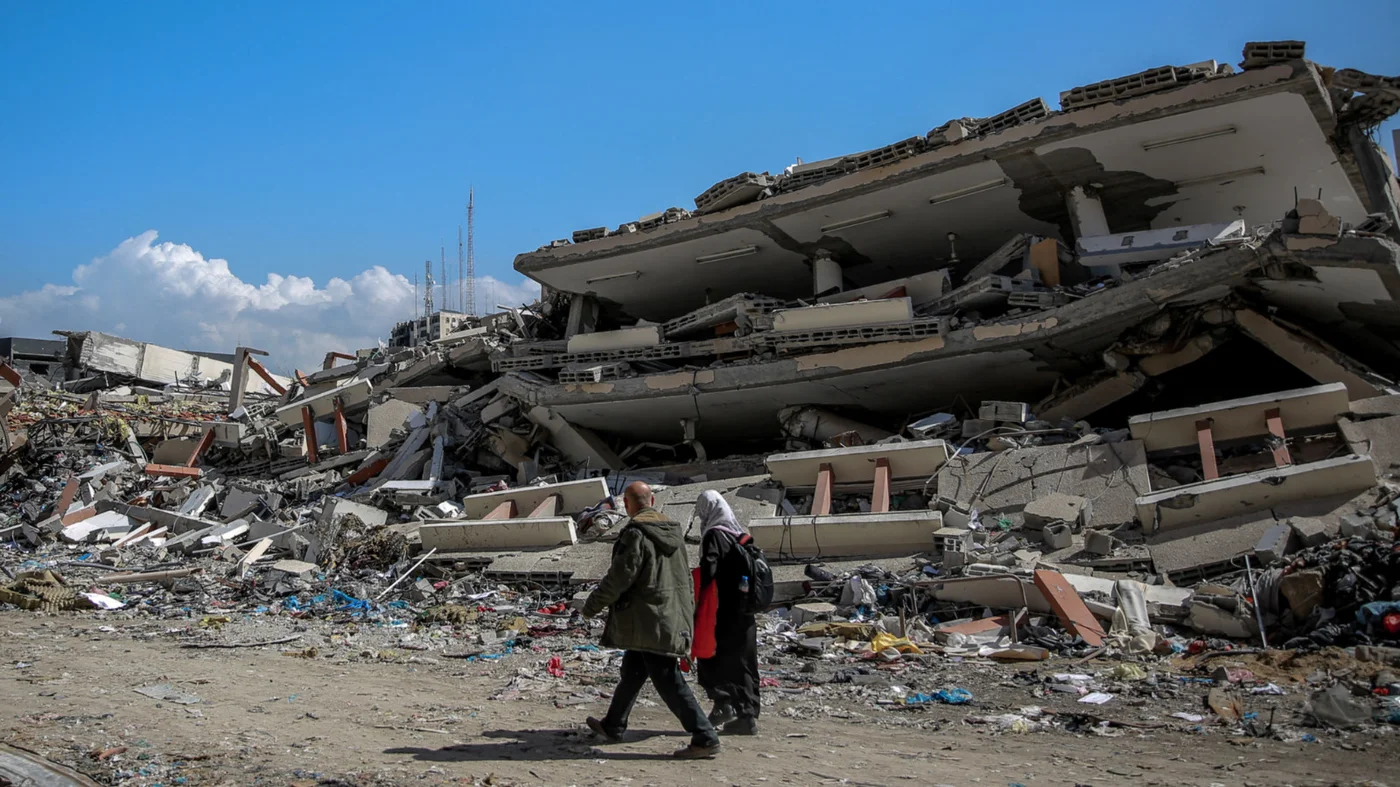
Universities in Gaza Devastated Amid Ongoing War
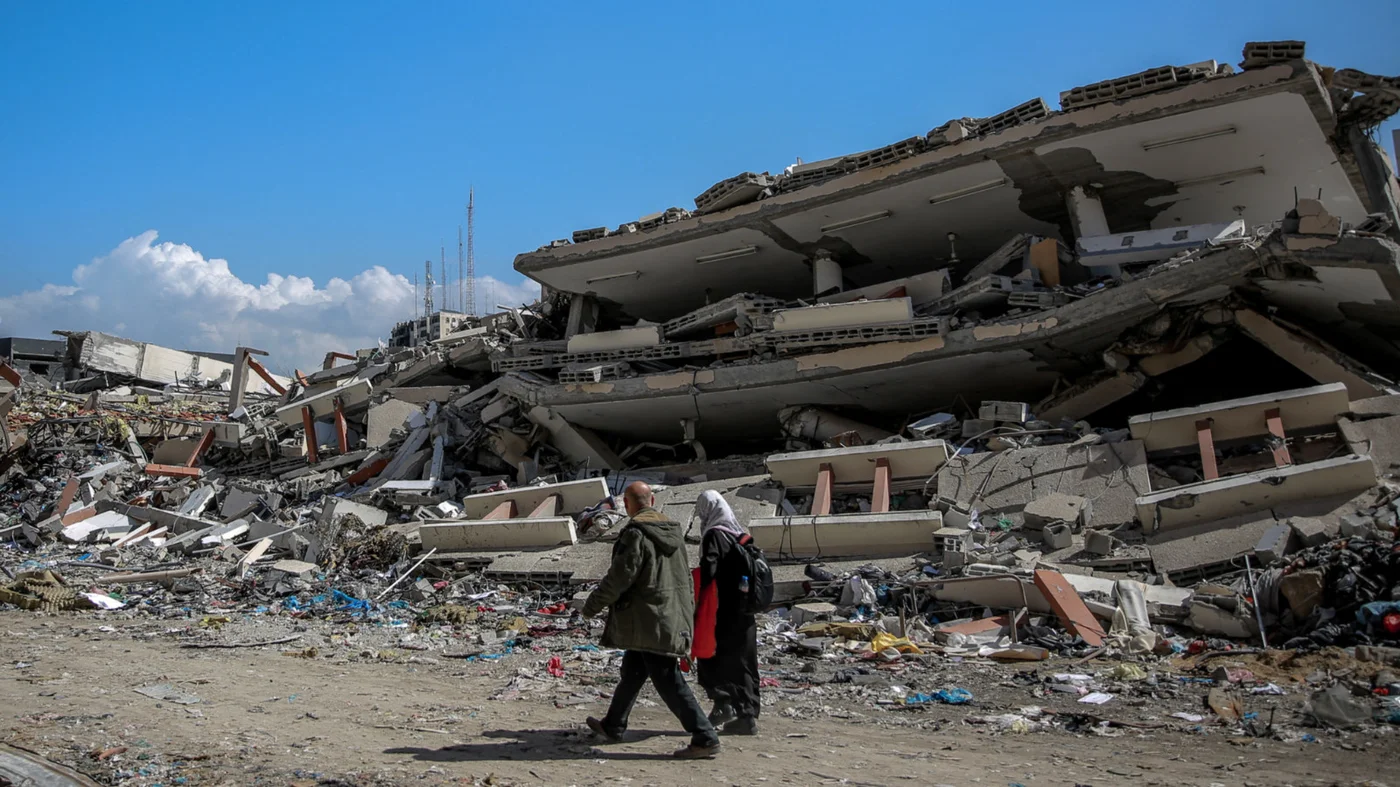
Since the start of Israel’s war on Gaza on 7 October, every university in the enclave has been either damaged or completely destroyed. Human rights groups have described the systematic targeting of higher education as part of an “ongoing crime of genocide,” with long-term consequences for Palestinian students and academic life.
More than 95 university professors have been killed, including 68 senior academics, according to Euro-Med Human Rights Monitor. For Gaza’s 90,000 students, the collapse of the higher education system has left the future of an entire generation uncertain. Below is a summary of the institutions affected.
Islamic University of Gaza
Founded in 1978 and once home to over 17,000 students, the Islamic University was destroyed on 10 October after Israeli forces alleged weapons production on campus—an accusation for which no evidence has been presented. The university had previously been hit in 2008–2009 and 2014.
Al-Israa University
The youngest university in Gaza, established in 2014, was preparing to open a public museum for its 10th anniversary. Israeli soldiers occupied the building for 70 days before demolishing it with explosives on 17 January.
Al-Quds Open University
Once Palestine’s largest non-campus university with 60,000 students across the West Bank and Gaza, its Gaza branch was turned into a military barracks and later bombed on 15 November.
Al-Azhar University
Founded in 1991 during the First Intifada, Al-Azhar hosted 12 faculties and 17,000 students. Its campus south of Gaza City was bombed on 6 November, leaving large sections destroyed.
Palestine Technical College
Established in 1993 and serving around 1,800 students, the college in Deir el-Balah has now become a shelter for displaced Palestinians.
University College of Applied Sciences (UCAS)
Founded in 1998 with 8,500 enrolled students, UCAS also operated a donor-funded start-up incubator. On 22 January, Israeli forces shelled the campus while it was sheltering displaced families.
University of Palestine
Founded in 2005 and located in al-Zahra, the university has served as a shelter during the war. On 17 January, more than 300 mines were detonated on its grounds.
Al-Aqsa University
Originally founded in 1955 as a teacher training institute, Al-Aqsa University had 26,000 students and 32 lab spaces by 2022. Israeli forces shelled the campus on 22 January, despite it being used as a shelter.
Gaza University
Established in 2006 with ten faculties, Gaza University was destroyed by an Israeli air strike in December.
Hassan II University of Agriculture and Environmental Sciences
Founded in 1992 with support from Morocco’s King Mohammed VI, this institution in Beit Hanoun was destroyed in December.
Dar al-Kalima University: Gaza Training Centre
Opened in 2020 to support young artists and cultural programming, the centre hosted workshops, exhibitions, and art therapy for children. Israeli forces destroyed the facility in late March during Holy Week.
The destruction of Gaza’s universities represents a profound blow to education, heritage, and professional development in the region. Rebuilding these institutions will take decades, with long-lasting repercussions for students, faculty, and the future of Palestinian society.
Learn more here:
https://www.middleeasteye.net/explainer-gaza-israel-palestine-war-university-destroy
RefugePoint Marks 20 Years with a Landmark Anniversary Gala

RefugePoint marked its 20th anniversary with a major celebration titled Finding Refuge Together, bringing together supporters, partners, and global advocates for refugee protection. The event highlighted two decades of the organization’s work advancing lasting solutions for refugees and set the stage for an expanded vision for the years ahead.
The evening featured a prominent conversation between Nobel Peace Prize Laureate Nadia Murad and acclaimed actor and activist Don Cheadle, both honored with RefugePoint’s Champion of Change recognition. Their dialogue explored themes of justice, displacement, and the global responsibility to protect vulnerable communities.
Speakers throughout the event reflected on RefugePoint’s founding mission and its evolution. Founder and CEO Sasha Chanoff reiterated the ongoing urgency of refugee protection, emphasizing what he called “a new pledge: a promise of belonging for those who are displaced… a promise that no one will be left alone or forgotten.”
Guests also heard from members of the refugee community, including Mangok, a former RefugePoint client now resettled in Boston, who underscored the shared obligation to extend protection:
“The burden of freedom is that you can’t endure someone else not having it.”
The gala program included video storytelling, reflections from partners, and a closing celebration that underscored both the seriousness of the work and the strength of the community supporting it. Early footage from StopGoLove Films offered attendees a preview of a forthcoming short film documenting the evening.
Donations and pledges from the event continue to be tallied, with RefugePoint noting that contributions will directly support expanded pathways and services for refugees in the coming year.
A short video highlight from the celebration is available here:
https://www.youtube.com/shorts/KLg9EcKlyRc
Click here to donate.
River Traveller — A Majestic Journey Along the Brahmaputra
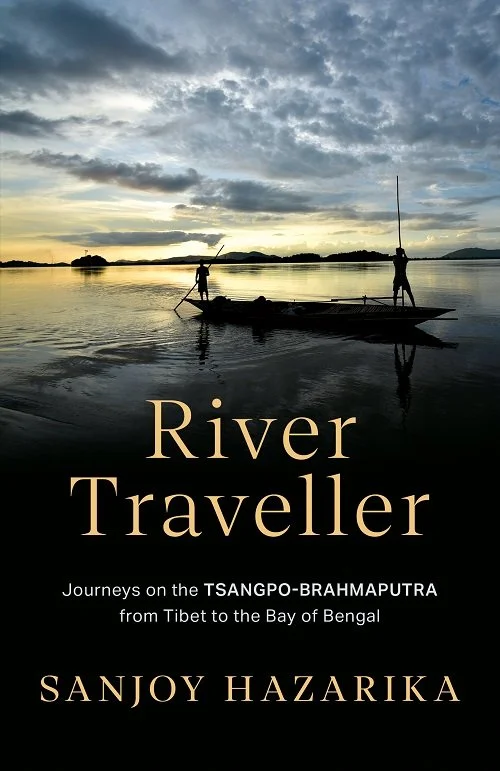
Speaking Tiger Books brings forth a remarkable new work by acclaimed journalist and author Sanjoy Hazarika — River Traveller, an epic narrative that traces the life, history, and mysteries of one of the world’s great rivers: the Brahmaputra.
The Brahmaputra is no ordinary river. Rising in the Tibetan plateau, sweeping across three nations, and travelling more than 2,900 kilometres before emptying into the Bay of Bengal, it stands among the longest and widest rivers on Earth. For centuries, it has nurtured civilizations, shaped cultures, and sustained agrarian systems — while its unparalleled force has also reshaped landscapes and humbled human ambition.
In River Traveller, Hazarika draws on over two decades of journeys along and across the river, documenting its power, its beauty, and the diverse worlds it touches. Part reportage, part travel narrative, and part historical reflection, the book captures the river as both a living entity and a silent witness to the passage of empires, conflicts, and communities.
Hazarika’s chronicle takes readers through:
Tibet’s cultural resilience, as communities confront modern pressures under Chinese rule
Arunachal Pradesh and Assam, where the river’s shifting channels shape both daily life and regional identity
Bangladesh, where the Brahmaputra’s vastness meets the delta’s delicate ecosystem
Stories of explorers, map-makers, spies, kings, and colonial administrators who sought to understand and command the river
Accounts of natural disasters, political turmoil, and environmental challenges that continue to define the region
Balancing a journalist’s sharp eye with a storyteller’s depth, Hazarika examines everything from extremism to ecological stewardship, from ethnography to the river’s enduring cultural symbolism.
River Traveller is ultimately a sweeping study of human life intertwined with one of the planet’s greatest waterways — a portrait as expansive and powerful as the Brahmaputra itself.
For readers interested in travel writing, South Asian history, environmental studies, or the complex interplay between nature and society, this book is an essential addition to the shelf.
Learn more or get your copy: https://speakingtigerbooks.com/product/river-traveller/
Defending Academic Freedom at the University of Texas
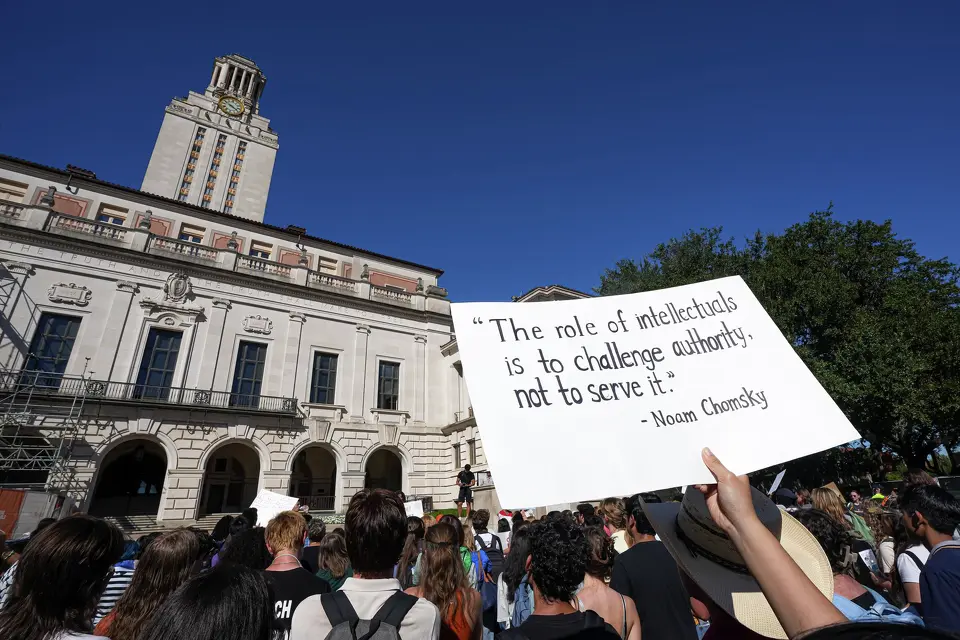
A powerful and urgent conversation is unfolding at the University of Texas, where faculty, students, and academic freedom advocates are responding to President Donald Trump’s proposed “Compact for Academic Excellence in Higher Education.” The pact, sent to UT and eight other universities, offers increased federal funding in exchange for adopting politically driven restrictions — including defining gender in narrow terms and banning academic units that “belittle” conservative ideals.
In an important opinion piece, longtime UT professor John Hoberman warns that accepting the compact would compromise the university’s integrity, independence, and commitment to free inquiry. Hoberman, who has taught racial and cultural studies courses at UT for more than four decades without any administrative interference, argues that the compact represents a dangerous break from Texas’s historical respect for academic freedom.
A Clear Threat to University Autonomy
Following the proposal, UT System Board of Regents Chair Kevin Eltife expressed willingness to collaborate with the Trump administration, making UT the only institution so far to publicly welcome the plan. By contrast, universities such as MIT and Brown swiftly refused to sign, citing grave concerns about violating academic independence.
Hoberman notes that the compact effectively functions as political extortion: comply with a loyalty oath or risk financial punishment. The proposal would:
Impose externally defined ideological conformity
Restrict academic units based on political preferences
Demand student selection based exclusively on standardized metrics
Allow government intervention in faculty speech and research
These measures, Hoberman writes, would erode the core conditions that allow great universities to flourish — namely, freedom of thought, open inquiry, and resistance to political coercion.
Scholars of Academic Freedom Speak Out
A bipartisan group of six leading scholars — Robert P. George, Tom Ginsburg, Robert C. Post, David M. Rabban, Jeannie Suk Gersen, and Keith E. Whittington — issued a joint statement reaffirming why such a compact is incompatible with the mission of truth-seeking institutions.
Their key concerns include:
Restrictions on foreign students based on politically defined ideology
Mandated political “diversity” within academic departments
Standardized-only admissions requirements imposed by government fiat
Limits on faculty autonomy in teaching and research
Censorship of speech related to U.S.-designated terrorist organizations
They emphasize that no idea — conservative or liberal — should be immune from scrutiny, and that universities must be spaces of debate, critique, and intellectual challenge. Government-directed ideological insulation, from either side, runs counter to the spirit of higher education.
The Stakes for the University of Texas
Hoberman warns that endorsing the compact would send UT into “free fall,” reversing decades of academic progress and damaging its national reputation. The compact’s intrusion into academic life — from dictating curriculum boundaries to punishing extramural speech — would dismantle the very foundation of scholarly independence.
He argues that professions draw people with particular temperament and values. Universities naturally attract those committed to open inquiry, just as policing attracts more conservative temperaments. Attempting to forcibly reshape academia into a MAGA-aligned space is not only authoritarian but unrealistic.
A Call for Collective Action
Hoberman concludes with a simple message:
It is not too late.
All nine targeted universities must stand together to reject political interference and defend academic freedom — before it disappears.
Read the original article by John Hoberman:
https://docs.google.com/document/d/1bLu3mTidXAKplIreQZ-aIDRzQmTIEOUu/edit?usp=sharing&ouid=111033924517633597069&rtpof=true&sd=true
Read Hoberman’s published article here:
https://www.statesman.com/opinion/columns/your-voice/article/opinion-ut-not-trade-academic-freedom-political-21103031.php
Learn more about John Hoberman:
https://www.the-trebuchet.org/blog/johnhoberman
MCAAD Launches New Site, Bluecadet Heads to MCN 2025, and a New Hiring Opportunity
The Milken Center for Advancing the American Dream (MCAAD) has officially launched its new website — a milestone moment shaped through a close partnership with the Bluecadet team. From early strategy and content development to design and build, the new platform reflects MCAAD’s mission to broaden access to opportunity in health, education, entrepreneurship, and financial empowerment.
Explore the new MCAAD site here:
https://www.mcaad.org/
Bluecadet at MCN 2025 — Minneapolis, October 20–22
Bluecadet will be part of the Museum Computer Network (MCN) 2025 Conference, held in Minneapolis from October 20–22.
Creative leader Rob Hassler will join the Ignite Reception on Monday, October 20, alongside other innovators across the museum and experience design world.
If you’ll be attending MCN and want to connect, Rob welcomes outreach: rob@bluecadet.com
Bluecadet Is Hiring: Creative Director, Web
Bluecadet is also searching for a Creative Director, Web — an opportunity for someone who moves confidently between design excellence, UX strategy, and team mentorship.
This leadership role focuses on creating accessible, content-rich, and mission-driven digital experiences for clients across the nonprofit and cultural sectors.
Ideal candidates bring:
Strong UX and responsive design expertise
A commitment to accessibility
Experience leading multidisciplinary creative teams
A collaborative, thoughtful design philosophy
Apply for the Creative Director, Web role here:
https://bluecadet.bamboohr.com/careers/92?source=aWQ9MjA%3D
For more about Bluecadet’s work and mission, visit here.
Gaza Food Aid Benefit Concert — Supporting World Central Kitchen

A powerful evening of music, poetry, and solidarity is coming to West Roxbury. The Gaza Food Aid Benefit Concert will take place on Friday, October 17, from 7:00 to 9:00 PM EDT, bringing together global musicians and poets in support of the life-saving work of World Central Kitchen in Gaza.
Hosted at the Theodore Parker Unitarian Universalist Church
📍 1859 Centre Street, West Roxbury, MA
the event invites community members to gather in person or join via livestream to stand with families facing hunger and humanitarian crisis.
Event Details
Date: Friday, October 17
Time: 7:00–9:00 PM EDT
Location: Theodore Parker Unitarian Universalist Church
Livestream: https://youtube.com/live/wJ1PJlJQg_vE
Tickets: $20 — https://gazafoodaidconcert.eventbrite.com
Donations: https://donate.wck.org/give/721615#!/donation/checkout
The concert is produced by Musicians for the Greater Good, a collective dedicated to using art to amplify justice, compassion, and community action. All proceeds will support World Central Kitchen, which continues to provide essential food assistance to civilians in Gaza.
How to Participate
Whether you attend in person or tune in online, your presence makes a difference. Community members are also encouraged to donate directly to support the humanitarian response.
For more information, visit: https://musiciansforthegreatergood.org
This event is an opportunity to unite through art, stand in solidarity, and help deliver nourishment and hope where it is urgently needed.
Exploring the Future of Physical + Digital Storytelling with Sasha Wallinger

This week’s Futurespaces session brings a compelling conversation at the intersection of design, technology, museums, and immersive storytelling. On Thursday, October 16 at 11 AM PST / 2 PM EST, join Sasha Wallinger, the inaugural Marketing and Communications Director at the MIT Museum, for an exploration of how physical and digital worlds continue to reshape one another.
Event Details
Thursday, October 16
11 AM PST | 2 PM EST
RSVP Here.
What to Expect
As museums, galleries, and cultural brands increasingly navigate hybrid worlds, the storytelling landscape is evolving. Sasha Wallinger—whose work spans fashion, art, technology, and experiential design—will discuss how these transformations are shaping new visitor journeys.
Drawing from her leadership at the MIT Museum, she will highlight the Remembering the Future exhibition, a project that melds material and experiential design to invite audiences into immersive encounters across both physical and digital space. Wallinger will shed light on how the museum is redefining engagement, encouraging visitors to move fluidly between environments that expand the possibilities of art and science communication.
This session is ideal for designers, technologists, museum professionals, educators, and anyone curious about the future of cultural experiences.
About Futurespaces
Futurespaces is a platform dedicated to contemporary experience design, focusing on how emerging technologies and innovative design strategies can deepen human connection.
Founded and led by Josh Goldblum, a leader in experiential design and founder of Bluecadet, Futurespaces offers webinars and in-person tours that reveal how cutting-edge experiences are conceived, developed, and brought to life.
A Powerful Conversation on Chicago’s Street Outreach You Need to Hear

A new episode of the Healthy Chicago Podcast is making waves — and for good reason. This 30-minute conversation is one of the clearest, most honest windows into the reality of street outreach, a cornerstone of Chicago’s community violence intervention (CVI) strategy.
The episode features two leaders who began their journeys on the front lines:
Sam Castro, Director of Strategic Initiatives and Partnerships at the Institute for Nonviolence Chicago
Elvis Ortega, Street Outreach Lead at the Community Safety Coordination Center and the Mayor's Office of Community Safety
Both are former outreach workers who now help shape the city’s CVI landscape. Their conversation is candid, grounded in lived experience, and full of insight into what makes street outreach not just important — but essential.
What the Episode Covers
Castro and Ortega open up about:
A street outreach worker’s “license to operate”
How exposure outings shift participants’ worldviews
The professionalization of the CVI field
Healing from trauma and supporting frontline workers
The unique ability of outreach workers to reach individuals at the highest risk of gun violence
Their reflections underscore a powerful truth: former drivers of violence have become some of the most effective agents for peace. Working with residents, community groups, and law enforcement, outreach workers are helping reshape safety in neighborhoods long impacted by gun violence.
A Conversation Everyone Should Hear
The episode is under 30 minutes — perfect for a lunch break, your commute home, or even while prepping dinner.
More importantly: share it.
Send it to anyone curious about street outreach, skeptical about CVI, or unfamiliar with the work happening across Chicago to prevent violence before it occurs.
As Sam Castro reminds us:
“We need everybody. We can’t do this alone.”
Ending gun violence is a shared responsibility. Listening — and sharing — is a powerful first step.
Choose Peace.
Watch the episode here:
Healthy Chicago Podcast – Sam Castro & Elvis Ortega
Slaughter for Hire: The Wagner Group’s Global Legacy of Violence

In The New York Review of Books, journalist Joshua Hammer exposes the chilling trajectory of the Wagner Group — a shadow army whose rise and fall mirrors Russia’s evolving use of mercenary warfare to project power, exploit resources, and instill fear from Africa to Ukraine. His piece, “Slaughter for Hire,” traces the group’s operations across continents and the violent legacy of its leader, Yevgeny Prigozhin, a former restaurateur turned warlord whose death in 2023 marked the symbolic collapse of his empire.
Hammer recounts firsthand testimony from a contact in Timbuktu, Mali, who described the terror unleashed by Russian mercenaries—extortion, arson, and executions—forcing thousands to flee to Mauritania. Once welcomed by Mali’s regime to replace departing UN peacekeepers, these fighters now operate as the Africa Corps, under direct control of Russia’s Defense Ministry. Yet their tactics and brutality remain unchanged, a continuation of Wagner’s unchecked reign.
From its beginnings in 2017, Wagner entrenched itself in nations such as Libya, Sudan, Mozambique, and the Central African Republic—backing dictators, suppressing opposition, and bartering violence for access to gold mines and oil fields. The group also gained global infamy for its ferocity in Ukraine, from the Donbas to Bakhmut, where Prigozhin’s men—often recruited from prisons—became synonymous with bloodshed.
Prigozhin’s audacious rebellion against Moscow in 2023 briefly exposed the fractures within Vladimir Putin’s war machine. His sudden death in a plane explosion later that year, widely viewed as retribution, closed a dark chapter of state-sanctioned mercenary warfare. Still, as Hammer notes, Wagner’s operations live on in different guises, continuing to shape conflicts where accountability is nonexistent and profit fuels power.
The article reviews three new books that investigate Wagner’s evolution and Prigozhin’s life—from petty criminal to Kremlin proxy to mutineer. Among them is The Wagner Group: Inside Russia’s Mercenary Army by Jack Margolin, which provides an in-depth look at how this network blurred the line between private enterprise and state violence, leaving behind a legacy of chaos and exploitation.
Learn more here: Slaughter for Hire – The New York Review of Books
Feromics: Redefining Discovery Through Functional Immunomics

Feromics, a cutting-edge biotechnology company based in Boston, is pioneering transformative breakthroughs in functional immunomics—a frontier science dedicated to uncovering key immune cell pathways that could revolutionize the next generation of immunotherapies for cancer and autoimmune diseases.
At the core of Feromics’ innovation is its proprietary Intelligent Design™ technology, which merges AI-driven bioinformatics with deep biological insights. This unique approach enables the identification of function-specific immune pathways that regulate cellular behaviors such as cancer cell killing, guiding the design of safer and more effective treatments.
A Mission Rooted in Precision and Personalization
Feromics' strategy focuses on precision, personalization, and innovation. By creating proprietary libraries of interacting disease and immune cells, the company’s AI-integrated analysis uncovers novel therapeutic targets that enhance CAR-T and CAR-Treg design, optimize donor cell selection for allogeneic immunotherapies, and streamline the transition from research to clinical application. Their approach tailors treatments to each patient’s immune profile—an essential step toward realizing the promise of personalized medicine.
Partnerships and Recognition
Feromics believes in the power of collaboration. Through strategic partnerships, they aim to empower discovery across the biotech and pharmaceutical landscape, expanding the reach and impact of immunotherapy innovation.
The company’s groundbreaking work has been recognized by the Advanced Research Projects Agency for Health (ARPA-H), which awarded Feromics a $4 million, three-year contract to develop precision medicine technologies that improve patient treatment selection in cancer immunotherapy. Supported under Contract No. 75N91024C00036, this initiative underscores Feromics’ growing influence in shaping the future of biomedical science.
The Founders Behind the Vision
Feromics was co-founded by Shai Schubert, Ph.D. and Tania Konry, Ph.D., whose collaboration traces back to Konry’s laboratory at Northeastern University. Beginning in 2013, their research team of engineers, biologists, and computer scientists developed the single-cell assay models that now drive Feromics’ technology.
Dr. Schubert, who serves as CEO, brings extensive experience in biotechnology and medical device innovation. His mission centers on developing transformative treatments for underserved patient populations, guided by a career that bridges scientific excellence and entrepreneurial leadership.
A Legacy of Innovation
From more than 52 scientific publications and patents to collaborations with major pharmaceutical companies, Feromics continues to build on a decade of rigorous research and discovery. With a vision to transform how immune pathways are understood and harnessed, the company is driving biomedical innovation from concept to clinic.
To learn more about Feromics and its groundbreaking work in functional immunomics, visit here.
Why Bitcoin Is Freedom Money: HRF’s Latest Contribution to the Journal of Democracy

The Human Rights Foundation (HRF) has announced the publication of a powerful new essay by Alex Gladstein, HRF’s Chief Strategy Officer, titled “Why Bitcoin Is Freedom Money,” in the October 2025 issue of the Journal of Democracy (Volume 36, Number 4, Johns Hopkins University Press).
In this thought-provoking piece, Gladstein explores how Bitcoin serves as a tool of financial freedom in authoritarian societies, where governments often weaponize banking systems to surveil, silence, and punish dissent. In many such regimes, activists, journalists, and civil society groups are denied access to traditional financial channels, making it nearly impossible to fund essential human rights work.
Drawing on real-world examples from Nigeria, Cuba, Russia, Togo, and beyond, the essay demonstrates how Bitcoin enables individuals to transact freely, securely, and beyond the reach of state control, offering a lifeline to those resisting repression. Gladstein argues that in an age where governments can track, freeze, or devalue citizens’ money with a click or algorithm, decentralized digital currencies represent a new frontier of human rights and autonomy.
He writes:
“What you spend says more about you than what you say. Governments can see who buys what, who pays whom, and who donates to which cause. Enemies of the state can be shuttered with the arbitrary click of a button—no court warrant needed.”
The essay also highlights the destructive economic policies of authoritarian leaders—such as Egypt’s Abdel Fattah al-Sisi, whose repeated devaluations of the Egyptian pound have eroded public welfare—underscoring how Bitcoin offers citizens an alternative to manipulated and collapsing state currencies.
Read the full essay here: Why Bitcoin Is Freedom Money
The Human Rights Foundation (HRF) is a nonpartisan nonprofit organization dedicated to promoting and protecting human rights globally, with a particular focus on closed societies. Through advocacy, education, and innovative initiatives like this, HRF continues to illuminate how technology can safeguard the most fundamental of freedoms — including the right to think, speak, and transact without fear.
RefugePoint’s 20th Anniversary Gala: Finding Refuge Together

RefugePoint will celebrate its 20th Anniversary Gala, Finding Refuge Together, on Tuesday, October 14, 2025, at the Museum of Fine Arts, Boston — an evening uniting art, activism, and impact in support of refugees worldwide.
Hosted by comedian and actor Anthony Anderson, the event will feature a powerful on-stage conversation between Nobel Peace Prize Laureate Nadia Murad and award-winning actor Don Cheadle, both of whom will receive RefugePoint’s Champion of Change Award for their extraordinary humanitarian leadership.
Nadia Murad, a survivor of the Yazidi genocide, has become a global advocate for survivors of sexual violence and persecuted communities. Don Cheadle, celebrated for his acting and activism, has long worked to end genocide in Darfur and serves as a UN Goodwill Ambassador for the Environment.
The gala will include performances by Deo Mwano, Arson Fahim, the Wula Drum & Dance Ensemble, and DJ Val Fleury, alongside a globally inspired dine-around reception and live auction. Additional honorees include Barrie Landry, Isabel Allende, and Goodwin for their exceptional commitment to supporting refugees.
As RefugePoint marks two decades of life-changing partnerships with displaced people, this milestone event celebrates progress made and the continuing work toward dignity and opportunity for all refugees.
Founded and led by Sasha Chanoff, RefugePoint is a humanitarian organization that finds lasting solutions for the world’s most at-risk refugees and supports the humanitarian community to do the same. Over the past two decades, RefugePoint has helped reshape how the world approaches refugee resettlement, self-reliance, and long-term stability.
📅 Date: Tuesday, October 14, 2025
🕓 Time: 4:30 – 6:30 PM
📍 Location: Museum of Fine Arts, Boston
🎟️ RSVP by October 9: Reserve Your Seat
Event Partners: AJ Events, Boston Common Magazine, Josh Cellars, Ketel One Vodka, Small Universe, and WBUR.
Join an evening of global solidarity and celebration — where art and activism come together to find refuge, together.
Seats are limited and filling fast—reserve your spot by October 9 to be part of this inspiring evening of global solidarity.
Learn more here.
Finding Refuge Together: RefugePoint’s 20th Anniversary Gala Brings Art, Activism, and Global Change to Boston

RefugePoint has announced an extraordinary lineup for its 20th Anniversary Gala, Finding Refuge Together, taking place on Tuesday, October 14, 2025, at the Museum of Fine Arts, Boston. The black-tie celebration will unite leaders, artists, and humanitarians for an unforgettable evening blending art, activism, and impact.
Headlining the event are award-winning actor Don Cheadle and Nobel Peace Prize Laureate Nadia Murad, both of whom will receive the Champion of Change Award for their global contributions to justice and human rights. The evening will be hosted by comedian and actor Anthony Anderson, setting the stage for a powerful dialogue between two figures who have dedicated their lives to confronting oppression and creating pathways for hope.
Honoring Courage and Commitment
Nadia Murad, a survivor of the Yazidi genocide, has become one of the world’s leading voices for survivors of sexual violence and persecuted communities. Don Cheadle, acclaimed for his acting and activism, has long championed humanitarian causes, from advocating to end genocide in Darfur to serving as a UN Goodwill Ambassador for the Environment. He is also co-author of Not on Our Watch, a call to action for global responsibility.
A Night of Global Connection
Guests will experience live performances from Deo Mwano, Arson Fahim, the Wula Drum & Dance Ensemble, and DJ Val Fleury, alongside a globally inspired dine-around reception and a live auction of once-in-a-lifetime experiences.
The gala will also honor Barrie Landry, Isabel Allende, and Goodwin for their exceptional dedication to refugee advocacy and humanitarian impact.
As RefugePoint celebrates two decades of partnership with refugees, this milestone event highlights both the remarkable progress achieved and the work still ahead to ensure safety, opportunity, and dignity for displaced people worldwide.
Founded and led by Sasha Chanoff, RefugePoint is a humanitarian organization that finds lasting solutions for the world’s most at-risk refugees and supports the humanitarian community to do the same. Over the past two decades, RefugePoint has helped reshape how the world approaches refugee resettlement, self-reliance, and long-term stability.
Event Details
Date: Tuesday, October 14, 2025
Time: 4:30 PM – 6:30 PM
Location: Museum of Fine Arts, Boston
Seats are limited and filling fast—reserve your spot by October 9 to be part of this inspiring evening of global solidarity.
Learn more here.
Rabbi Adina Allen’s Rosh HaShana Sermon
The Divinity of Difference
Congregation Netivot Shalom, Rosh Hashanah, Day 1
September 23, 2025 / 1 Tishre, 5786
Rabbi Adina Allen
We have all developed out of the same universal processes into a cosmological sea of complexity and motion. -- Julia Morley
Today we tremble at the edge of creation. The shofar’s ancient cry carries us back to the beginning, the earth is birthed anew. Science, too, sings of that beginning — its own liturgy for life, a poetry written in cells. Cells create by one dividing into two -- energy arcs across the split, and something astonishing happens: complexity stirs, possibility awakens. Out of division comes life.
Life itself begins in the moment of division!
And it’s not only science that makes this claim. Across centuries, our rabbis were tracing the same pattern in their own medium — not in a lab under a microscope, but in the beit midrash within Torah herself.
In an attempt to understand humanity’s origins, our sages asked: Why does Torah not start with the letter Aleph, the first letter? Aleph, tradition teaches, is the numerical equivalent of one. It is the silent breath of Anokhi at Sinai — the unvoiced, undivided ground of existence from which all creation flows. Wouldn’t it make sense for Torah to begin there — in the unity of oneness beneath all things? Yet, our sacred story opens Beresheit bara Elohim. Torah begins not with Aleph -- one, but with Beresheit, Bet, the numerical equivalent of two.
“When you multiply anything by one it remains what it was before” teaches the Be-er Mamorim¹. “While Bet, which is equivalent to the number two, is the first number to represent multiplicity and expansion.” From the very first beresheit moment, Bet is both a divider and a multiplier: light is pulled from the darkness, earth is separated from heaven, the seas are rolled aside so that land can emerge. Aleph underlies all of existence, but creation begins with Bet. Bet which is division, which is difference, which is the ever-unfolding multiplicity of life.
This core truth runs throughout Jewish tradition. Every tractate of the Talmud — what is perhaps the most ingenious creative enterprise of the Jewish people — begins not on page one, but on page two — daf bet. While perhaps a printer’s decision way back when, we can imagine this beginning with bet as a way of kindling that beresheit, creation energy within Talmud, a way of encoding it as a kavanah. For without the bet energy there is no Talmud, no dialogue, discussion or debate without that initial division that bet initiates.
While we may celebrate this in the Talmud, enjoying the twists and turns that the discourse takes, in the actual experience of our lives, division and difference tend to unsettle us. Think about a time when you heard a close friend express a view different from yours, different from what you might have expected them to say. Questions might swirl (what did they mean by that? Did I really hear them right?), discomfort might arise (with the person, with the thought of engaging in a potentially tense moment of confrontation/conflict, imagining we might lose this friendship or even our place in community), we may become tight, protective, unsure how to proceed from this place of separation. In these moments it can feel like uniformity or acquiescence is the safest way to avoid a potential rupture.
Yet, Torah shows us the problem with uniformity. Soon after that opening bet of Beresheit -- the unfolding of the multiplicity of life -- the story of the Tower of Babel can be read as a rejection of the plurality of creation. The story begins powerfully, poignantly describing what had become of life on earth: vayehi kol ha aretz sefat echat u’devarim achadim. And so it was that the entire world was of one language — sefat echat — and of the same words — u’d’varim achadim. We might pass over this line quickly, not feeling anything is amiss, or, on the other hand, might read this as something praiseworthy, the people coming together in unity, all able to speak with one voice – yet our commentators insist something here is deeply wrong.
What is it that was so troublesome about this situation? If there was an issue, we might assume that it is what the people were saying, that the content of their words was cruel or incorrect. But the text in fact never explains what the words themselves are -- there are no specific statements to parse. Noticing this omission, HaaEmek HaDavar suggests: it wasn’t because of the content of the words that the Holy One was distressed… it was that they all thought the same thing…” The tower is destroyed by God and the people are scattered to disrupt the uniformity of thought and speech and create a world of difference.
We can feel the echoes of Babel reverberating in our world today -- both the longing for unity and the consequences of enforced conformity. In these heartbreaking and polarizing times, with so much on the line, we tend to double down on our desire for the safety and power that we imagine lies in uniformity. Yet, the enforcement of sefat echat u’devarim achadim attempts to create a pure, simple and unified world without difference and disagreement that denies reality in all of its dynamic, diverse, divergent pieces -- denies the reality of both the outside world, and equally denies each of our complex inner worlds.
Judaism is a tradition that places immense value on words, yet when we attempt to enforce sameness of speech -- slogans, hashtags, rallying cries, tropes -- we do words a disservice. Used in this way the words themselves become inert, deadened, wishful thinking or weapon-like. Like the bricks of the builders of Babel, they become our attempt to be like God, shaping the world in our image and likeness, reaching towards heaven only to become ever more disconnected from the actuality of life here on earth.
But the consequences extend further, deeper. Sefat achat creates a world of enforced sameness, obscuring what is uncomfortable or inconvenient, erasing the fullness of human expression, and reducing God’s image to a single, diminished reflection. Out of fear of giving offense, we echo back what we think is wanted, swallowing the words, the questions, the longings that don’t align. But what we swallow does not disappear — unless it has some way to be expressed and explored, it hardens inside us, blocking authenticity, draining the very energy that might have opened us to one another, to God, to the very differences we long to bridge. The walls may rise higher, but the life within is stifled, and all it was meant to shelter begins to wither.
Bayo Akomolafe, contemporary philosopher and writer whose work I have turned to often in these times, writes, “When a crack appears in the mighty wall, the only thing more worrisome than allowing it to breathe, is sealing it up — for the crack call[s] into question…the nobilities we cherish, the stories we assume to be true. The crack…is a reminder that it is often the fixity of the postures we take on that prove more dangerous than the threats we presume to withstand.”
I know this not only in theory, but in the marrow of my own life, as I know many of us do. This summer I fell out of step with some beloved friends and respected colleagues, part of a larger feeling that those I once felt in sync with were marching to a single drumbeat and I could not bring myself to move in time. There were words they wanted me to say, and ways they wanted me to say them, but I could not. To have spoken their words would have been to silence something true inside me. The weight of that difference was heavy — the pressure to align, to smooth things over, to get on board. And it was painful, and lonely, to wonder if my voice, in its dissonance, still had a place. I needed wisdom that could help me stay with that tension without collapsing into despair, or defensiveness, or disingenuous deference. And that is why the story of Babel speaks to me so piercingly now.
As I read the line sefat echat u’devarim achadim, of one language and one speech, the cadence of the words evokes for me the final line from Aleinu — words we will soon pray as a central part of the musaf Amidah — Adonai echad u’shmo echad — “God is one and God’s name is one”. The parallel is striking: the phrases have the same insistent beat, but with entirely different thrust.
In Aleinu, God is one and God’s name is one -- this is the realm of the Aleph. The domain of oneness is God’s domain. In Babel sefat echat u’devarim achadim — the language is one, the words are one -- this is meant to be the realm of Bet, the realm of humans, serving God, not trying to play God (or be God), in which plurality and difference are essential. The attempt to do away with division and enforce sameness of speech is us playing at being God, is us misunderstanding how to know God, is us forgetting that it is through allowing and tolerating differences in beliefs and positions among us that we understand that God’s oneness that we wish for is, in fact, full of infinite multiplicity, infinite possibility, in ways as humans we cannot fully grasp. What is true is that we don’t know and we cannot prescribe oneness based on our human, incomplete knowing.
Consciously or unconsciously, we all long for oneness — with God, with each other, with the whole of creation, within our own selves. Yet, like our forebears of Babel, our attempts at feeling and finding this oneness become distortions, driving us further from this goal. We build towers of our own — imagining we can control or change other people, or convincing ourselves that if only everyone shared our view, unity could be secured. Yet Babel teaches that this is a distortion of the gift God gave us. Our realm here on Earth is not the silent stillness of Aleph, but the messy, chaotic, creative unfolding of Bet: alive with dissonance and difference.
The Tikkunei Zohar teaches that today, Rosh Hashanah, coincides with the second day of creation - the first time there is division, when the lower waters are split from the upper waters. Rosh Hashanah, then, is both the day that marks the first separation and it is the day that celebrates the creation of the world. It is no coincidence that in our sacred mythology these two facets of existence go hand in hand. Just as the splitting of a cell creates our very selves, the opening Bet of Torah creates the world and all that unfolds from there. Division, dissonance and difference among us is hard and painful, it can break our hearts and can break us apart. And yet, it is in tolerating the cracking of ideas, stories and relationships on which we have relied that breakage can reveal a birthplace for new beginnings.
The world is pulsing with the fierce possibility of this moment. Today, the shofar pierces our defenses, the prayers stir our memories, the liturgy brings us face to face with our deepest longings for the future and the deepest part of ourselves. The world is waiting for you to bring forth what only you can; for each of us to make space for what only others can bring.
Hayom Harat Olam. Today the world is created anew.
Ken yehi ratzon.

Dearest Adina,
You have written powerfully and compellingly, yes as you indicate from your “marrow!.”
Your message is open-hearted and so needed.
Suppression of one’s doubts and fears is dangerous and self defeating - retreat into blind reassurance and uniformity now is ostrich-like behavior - never understood it as anything other than cowardice.
Your understanding of our tradition is unique in both scholarly and psychological ways. Thank you! You teach and inspire.
Bayo Akomolafe is a fascinating integral reference, deliberately illustrative of your erudition and courageous voice, in a very thoughtful provocation. His citizen-subject Minatour essay on democracy is surely relevant.
I’m hoping you have shared it with others of our community. I intend to with my family and friends.
Digesting your essay will ease the fast and refine the senses. So happy you were my student. And continue to illuminate my life
Love,
Sherman






Scholars at Risk Releases Free to Think 2025
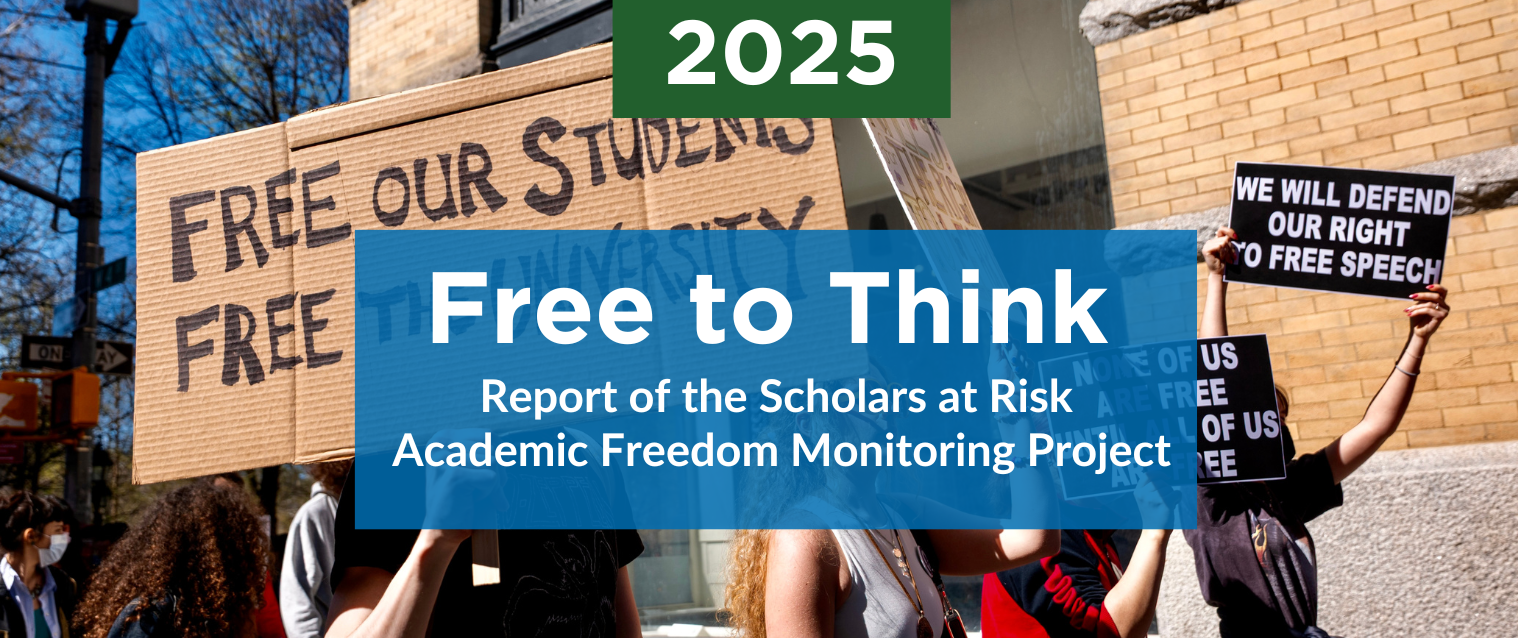
Scholars at Risk (SAR) has published Free to Think 2025, its annual survey of attacks on higher education. Covering July 1, 2024–June 30, 2025, the report documents 395 incidents across 49 countries and territories, underscoring that pressures on universities are intensifying in both authoritarian and traditionally liberal contexts.
Key findings at a glance
Widening geography of risk: While violence and repression persist in authoritarian settings, SAR notes a marked rise in constraints within democracies where elected leaders have moved to curb university autonomy and academic freedom.
Country snapshots:
Afghanistan: The Taliban has removed women, minorities, and dissenting voices from universities under the guise of staffing changes.
Serbia: Faculty who supported student-led anti-corruption protests faced research restrictions and threats to salaries and university funding.
United States: Since January 2025, federal actions—ranging from executive orders and funding revocations to investigations and policy directives—have targeted admissions, hiring, research agendas, speech policies, and finances. Incident counts rose sharply compared to pre-2023 levels.
Bangladesh: Student protests against a government-jobs quota met force described by the UN human rights office as “brutal, systematic repression,” with mass injuries and significant fatalities among students.
Campus protest rules: New restrictions on demonstrations appeared in multiple settings, including India and the U.S., often tightening “time, place, and manner” policies and penalties.
Global trendlines: Data from the Academic Freedom Index (AFi) shows continued contraction of academic freedom in numerous countries, including some listed in this year’s report.
Why it matters
SAR emphasizes that universities function as engines of research, innovation, and informed public discourse. Attacks—ranging from violence and imprisonment to policy interference and travel limits—erode teaching and research quality, chill speech, and undermine democratic institutions.
SAR’s call to action
The report urges:
Awareness: Read and share the report; invest in training, measurement, and monitoring of academic freedom.
Solidarity: Build coalitions among institutions to anticipate and withstand pressures.
Protections: Adopt and implement legal frameworks such as the Principles for Implementing the Right to Academic Freedom (2024).
Method and scope
Incidents are verified through multiple sources and categorized (e.g., killings/violence/disappearances, wrongful imprisonment/prosecution, travel restrictions, loss of position, and systemic “other” constraints). SAR notes that lower reported counts in some countries may reflect successful repression, self-censorship, or data scarcity, not improved conditions.
Read the full report: Free to Think 2025 — Scholars at Risk Academic Freedom Monitoring Project
Professor Jan Bastiaans and the Ibogaine Saga (1988–1993)
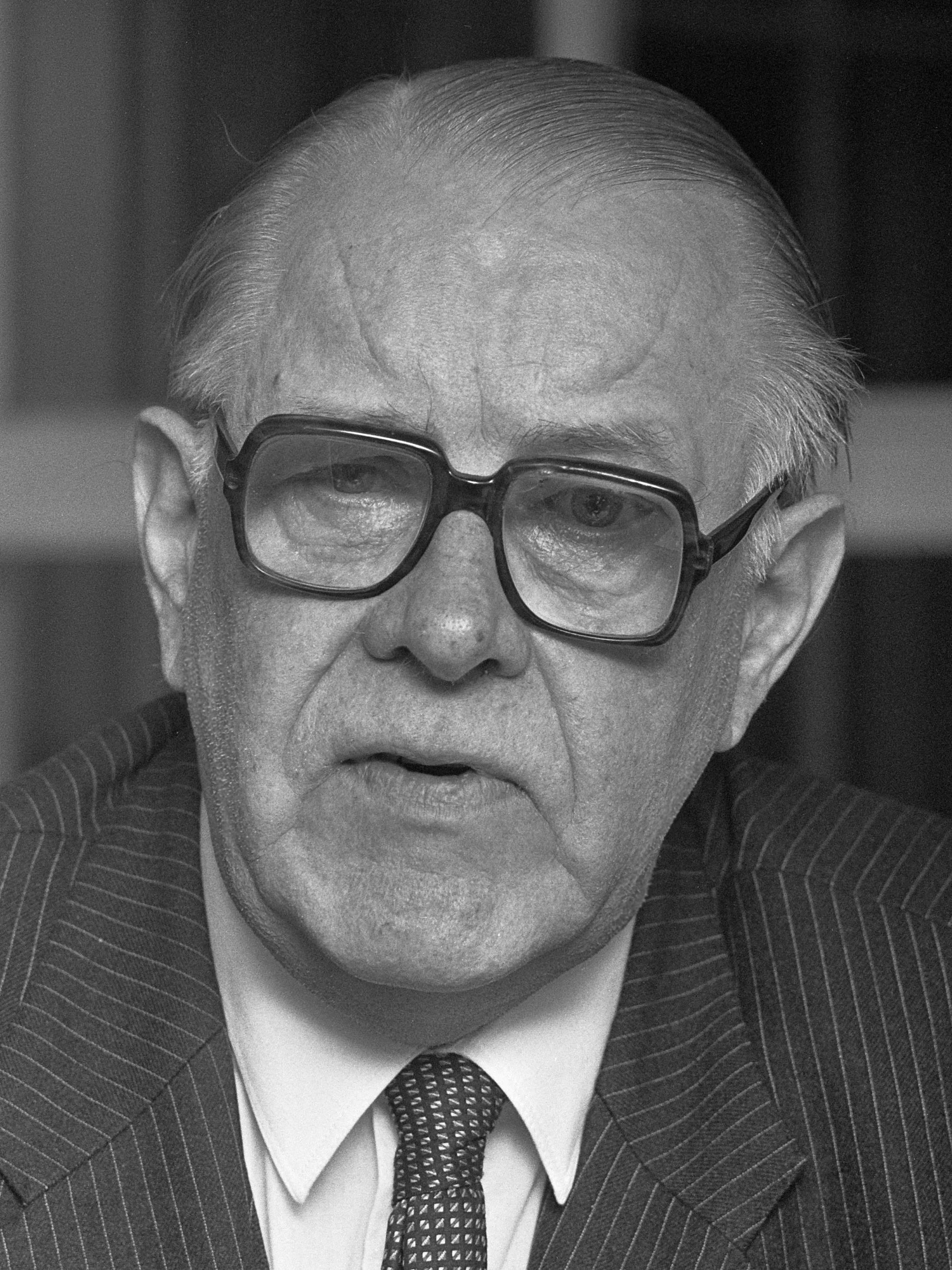
Professor Jan Bastiaans
A newly shared first-person account by Boaz Wachtel traces the formative years (1988–1993) of the modern ibogaine movement in the Netherlands and the role of Dutch psychiatrist Professor Jan Bastiaans—a pioneer in trauma treatment—alongside activists Howard and Norma Lotsof, Robert “Bob” Sisko, and Wachtel himself. The narrative charts ibogaine’s emergence from obscurity to intense medical and public scrutiny, its collision with controversy, and its evolving scientific reassessment decades later.
From “Stringer” discovery to a nascent movement
Origins: Ibogaine—an alkaloid from the West Central African Tabernanthe iboga, long used in Bwiti ritual—surged into Western awareness in 1962 when New Yorker Howard Lotsof, then a young heroin user, reported abrupt cessation of withdrawal and cravings after a single ibogaine experience.
Early circle (“The Group”): Lotsof and his spouse Norma, Bob Sisko (Robert Rand), and Boaz Wachtel collaborated across the U.S. and the Netherlands to collect case histories, engage researchers, and press regulators to study ibogaine’s anti-addictive potential.
Why Bastiaans mattered
Background: Professor Jan Bastiaans, renowned for treating WWII survivors’ trauma (the “KZ-syndrome”) with psychedelic-assisted psychotherapy (notably LSD), recognized early the depth of trauma among people with substance use disorders.
Entry into ibogaine work: Introduced via addiction researchers Charles Kaplan and the Rotterdam Junkiebond network, Bastiaans observed and later supervised a series of detoxification attempts in the Netherlands, lending clinical gravitas to otherwise grassroots efforts.
Hypothesis: Bastiaans intuited that ibogaine’s value might extend beyond blunting withdrawal and cravings to addressing underlying trauma, anticipating later frameworks (e.g., Gabor Maté’s trauma–addiction linkage).
Scientific sparks and institutional attention
Preclinical signals: Late-1980s animal studies (Kaplan and colleagues) indicated ibogaine could attenuate opioid withdrawal.
U.S. traction: By the early 1990s, these reports, plus scattered human case series, helped spur the U.S. National Institute on Drug Abuse to fund preclinical work and approve a Phase I dose-escalation protocol (University of Miami). Funding constraints halted that trial after one subject.
A tragedy—and its fallout
Fatal incident: During a Netherlands treatment effort, a young woman died; toxicology suggested recent heroin smoking and possible potentiation of opioid toxicity in temporal association with ibogaine.
Consequences: No criminal charges followed, but Professor Bastiaans—then 77—saw his medical license suspended over administrative issues tied to experimental treatment permissions. He died in 1997, embittered by professional censure.
Cautionary note: The account underscores safety risks (including QT-interval prolongation) and the dangers of unsupervised or ad hoc use—concerns echoed in later literature. (Current clinical protocols in some countries pair stringent screening and cardiac monitoring with magnesium mitigation strategies.)
Biology that intrigued clinicians
Distinct pharmacology: Unlike classic serotonergic psychedelics alone, ibogaine is described as interacting with multiple receptor systems and neurotrophic pathways (e.g., BDNF, GDNF, NGF), fueling hypotheses about neuroplasticity and addiction circuitry modulation.
Therapeutic framing: Some practitioners characterize ibogaine experiences as psychologically arduous but potentially reorganizing—aligning with Bastiaans’s focus on trauma processing and “liberation” from entrenched patterns.
Decades later: renewed scientific attention
Stanford/Nature Medicine (2024): A prospective observational study led by Nolan R. Williams reported large, sustained improvements in PTSD, depression, and anxiety among U.S. veterans with TBI following a magnesium–ibogaine protocol delivered in Mexico, alongside reductions in substance use. Imaging analyses suggested changes consistent with “younger” brain age on follow-up.
Interpretation: While not definitive clinical proof, findings revived interest in ibogaine’s potential trauma-related benefits—a line of thought Bastiaans had emphasized long before it was mainstream.
What this history contributes
A window into early, risky innovation: The account documents a bottom-up push—imperfect, controversial, and sometimes unsafe—that nonetheless helped seed formal research questions.
A complex legacy: Bastiaans’s ibogaine chapter mirrors his broader career: bold clinical intuition about trauma, pioneering use of psychedelic-assisted approaches, and intense professional blowback.
Present context: Any contemporary exploration of ibogaine remains bound by medical, legal, and ethical safeguards. The story highlights the importance of regulated, evidence-based research and rigorous clinical oversight, especially in populations at high risk.