Dr. Fareed Mustafa Kamil Yasseen
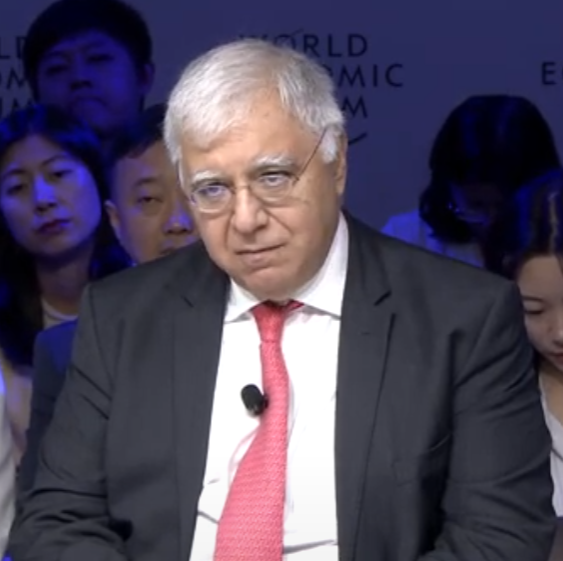
Dr. Fareed Mustafa Kamil Yasseen stands among the most remarkable figures of our time: a bridge between science, diplomacy, and moral courage. Born in Baghdad in 1956 to a distinguished family—his father a diplomat, his mother a university professor—Fareed’s roots reflect intellectual curiosity and a deep commitment to public service.
Educated in Iraq and abroad, Fareed graduated from Baghdad College before pursuing higher studies in Switzerland. He earned a diplôme d’ingénieur physicien and then a Ph.D. in physics from the École Polytechnique Fédérale de Lausanne. His early career was grounded in scientific research in Europe and the United States, where his work in theoretical plasma physics touched on the frontiers of fusion energy and space science.
Yet Fareed’s path transcended the laboratory. In the 1990s, driven by his profound concern for justice, he turned toward activism. He co-founded the Center for the Disappeared, dedicating himself to honoring the memories of Iraqis who vanished under repression. He brought his technical expertise to the United Nations, where, at the Secretariat of the UN Framework Convention on Climate Change, he spearheaded pioneering efforts in internet-based communication—laying groundwork that would later be central to global climate diplomacy.
In 2004, in the throes of a new Iraq, Fareed joined the Ministry of Foreign Affairs. From head of policy planning to diplomatic adviser to Deputy President Adil Abd al‑Mahdi, his role in shaping Iraq’s political reconstruction was instrumental. In 2010, he was appointed Ambassador to France, and later, in 2016, Iraq’s Ambassador to the United States—where he navigated extraordinarily difficult terrain, advocating with grace, firmness, and a visionary sense of reconciliation.
Beyond his diplomatic successes, Fareed has also championed Iraq’s cultural heritage. His efforts helped secure the return of thousands of ancient artifacts, including invaluable cuneiform tablets, illustrating how his loyalty to his homeland is matched by his drive to preserve its soul.
He has earned international recognition for his multifaceted contributions: he is a Member of the American Physical Society and the International Institute for Strategic Studies, he received the Robert and JoAnn Bendetson Public Diplomacy Award from Tufts University, and France bestowed on him the rank of Commander of the National Order of the Legion of Honor. More recently, he has served as Iraq’s Climate Envoy, advising on sustainable development at the highest levels.
Beyond his accomplishments on the global stage, it is the qualities of his character that shine most brightly. Fareed has insisted that I am the guilty party for detouring him from a meaningful academic and scientific career as a physicist by inviting him to an EPIIC symposium on confronting political and social evil and others on religion, politics, and society, and yet another on the Politics of Fear. He has been a wonderful friend and confidant, introducing me to significant figures in the Iraqi struggle for democracy and civil society throughout the Arab world. He is beloved for his humane instincts, unusual candor for a diplomat, and his warm personality. Through Fareed, I have promised several thousands of books, when I permanently retire, from my library to the University of Mosul, which was destroyed during the Saddam Hussein regime, later closed by ISIS in 2014, and suffered further losses from airstrikes during the liberation of the city in 2016–2017.
In every role—scientist, activist, diplomat—Fareed Yasseen has embodied a rare synthesis of intellect, integrity, and compassion. His life’s work is not only a testament to his own character but a beacon for all who believe in the power of ideas, dignity, and the possibility of a better future.